
Caviar appears by name on a West Suffolk NHS list of foods to avoid with MAOI medicines. Yet the medicine documents checked below do not name it at all. The answer lies in the medicine you take, not in a single list of forbidden foods.
Tyramine interactions, histamine fish poisoning and suspected histamine intolerance are often tangled together here. They have different causes and need different advice. Ask your pharmacist or prescriber which guidance applies to you.
Why tyramine matters with MAOIs
MAOIs, or monoamine oxidase inhibitors, block an enzyme that breaks down substances including tyramine, a naturally occurring amine. When dietary tyramine is not broken down, it can cause a dangerous rise in blood pressure known as a hypertensive crisis. These medicines are used for conditions including depression and Parkinson's disease.
Food bacteria can produce tyramine during fermentation, ageing or deterioration. The US PARNATE label, for tranylcypromine, therefore requires people to avoid foods containing significant tyramine during treatment and for two weeks afterwards.
Other MAOIs have different instructions. The European Medicines Agency's Azilect information, for rasagiline, states that it “can be used safely without dietary tyramine restrictions”, following studies at recommended doses for Parkinson's disease. Follow the restrictions for your own medicine and your prescribing advice: neither PARNATE's timetable nor Azilect's guidance applies to every MAOI.
Does the guidance name caviar or fish roe?
Some clinical diet lists name caviar; the medicine documents checked here do not. This distinction matters more than a general list of “MAOI foods”.
| Source | What it says about caviar or roe | Date checked |
|---|---|---|
| UK phenelzine patient leaflet, revised June 2025 | Does not name caviar or roe. Warns against “protein which has been allowed to age, degrade or ferment”. | November 2026 |
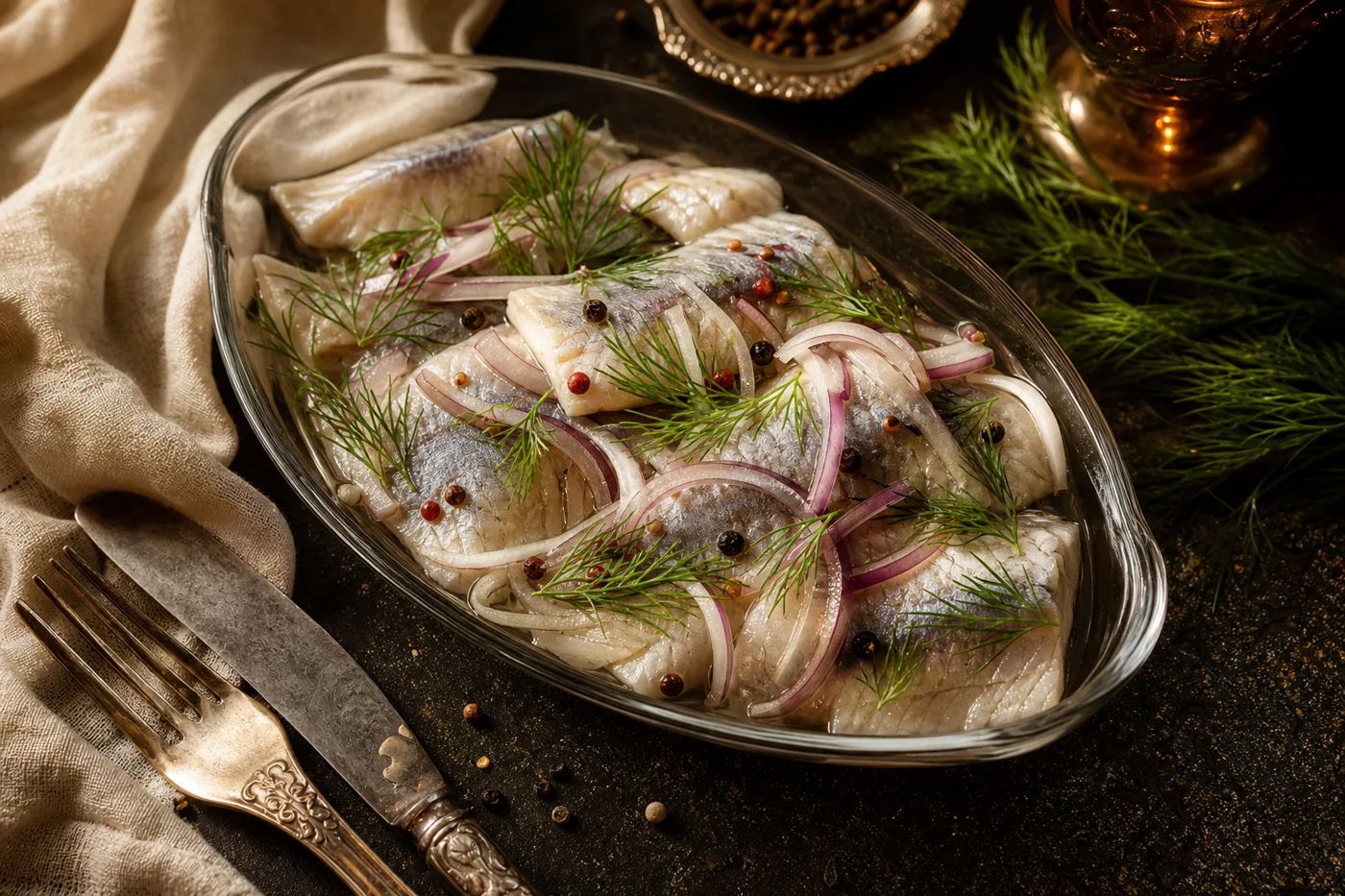
| US PARNATE label, DailyMed version July 2025 | Does not name caviar or roe. Lists pickled herring and spoiled or improperly stored fish among foods to avoid. | November 2026 |
| EMA Azilect product information, updated April 2025 | Does not name caviar or roe. Gives advice specific to rasagiline, rather than a caviar restriction. | November 2026 |
| West Suffolk NHS diet sheet, issued September 2020 | Lists “caviar” under foods to avoid. Its stated review date was September 2022. | November 2026 |
| British National Formulary | Check the current BNF entry for the specific MAOI. | November 2026 |
The West Suffolk sheet is an older local hospital document; its continued availability online does not establish a current national prohibition. Nor does caviar's absence from a medicine leaflet give clearance to eat a particular product.
A 2022 specialist review explains why older food lists can differ from newer recommendations: food production, hygiene and storage affect amine formation. Processing and handling matter; preserved fish products are not all chemically identical. The review does not, however, establish a safe serving of caviar for someone taking an MAOI.
Histamine fish poisoning is a separate problem
Histamine fish poisoning, often called scombroid or scombrotoxin poisoning, occurs when certain fish accumulate histamine through bacterial activity, particularly after inadequate temperature control. Cooking or freezing cannot remove histamine once it has formed. That makes temperature control particularly important.
Never stop, skip or change an MAOI to make room for a food without advice from your prescriber.
Unlike a tyramine interaction, this poisoning can affect people who take no MAOI. The FDA's fishery hazards guidance identifies tuna, mahi-mahi, marlin and bluefish as principal associated fish. Symptoms can begin within minutes to hours and include flushing, hives, headache, gastrointestinal upset and breathing problems.
The resemblance to an allergic reaction can be confusing, but histamine poisoning and fish allergy are different diagnoses. Symptoms alone cannot tell you which problem you have. For the separate immune reaction, see fish allergy and caviar.
What the EU histamine criteria cover
The EU's Regulation (EC) No 2073/2005 sets histamine criteria for specified categories of fishery products, not a single limit for every kind of roe. EFSA's 2026 reporting manual describes the relevant species as fish associated with high amounts of histidine, the amino acid from which bacteria produce histamine.
The listed families include Scombridae, Clupeidae, Engraulidae, Coryphaenidae, Pomatomidae and Scomberesocidae. Familiar examples include tuna, mackerel, herring, sardines and anchovies. Sturgeons are not among these examples, although that alone does not settle the legal position for sturgeon roe.
Regulation (EC) No 853/2004 defines fishery products to include edible parts of fish, which covers roe. The applicable histamine criterion for a roe product therefore depends on its source species and processing. These distinctions do not establish a blanket exemption for roe or mean that all roe shares one histamine limit.
These food safety criteria do not set a personal tyramine allowance for someone taking an MAOI. For other chilled roe hazards, see the separate caviar food safety guide.
How strong is the evidence for histamine intolerance?
There is no reliable laboratory test that can confirm or exclude “histamine intolerance”. A 2021 joint guideline from German, Swiss and Austrian allergy societies describes the evidence as limited and contradictory; measuring diamine oxidase, or DAO, in blood does not settle the diagnosis.
The term describes suspected adverse reactions to ingested histamine, rather than poisoning from a heavily contaminated meal or a tyramine medicine interaction. The proposed explanation often involves reduced breakdown by DAO, an enzyme involved in histamine metabolism.
Symptoms still deserve attention. The guideline favours investigating other explanations and assessing diet individually, rather than imposing unnecessarily broad food exclusions over the long term. A generic “high-histamine” food list cannot diagnose your reaction to caviar or establish a safe amount.
What to take to your pharmacist or prescriber
Bring the exact medicine name, dose and pack leaflet, along with the roe product's ingredients and storage instructions. Ask:
- Does this product's processing fall within my medicine's food restrictions?
- Which advice should I follow if my hospital sheet and pack leaflet differ?
Never stop, skip or change an MAOI to make room for a food without advice from your prescriber. Restrictions can continue after treatment ends. Your pharmacist or doctor should confirm how long they apply to your medicine.
Seek emergency medical help for a sudden severe headache, chest pain or another suspected serious reaction after eating while taking an MAOI. Breathing difficulty or collapse after fish or roe also needs emergency assessment, not a home trial of dietary changes. For broader context, return to caviar and health.
Sources
-
Neon Healthcare Limited. Phenelzine 15 mg film-coated tablets: Patient Information Leaflet. Revised June 2025; published on emc July 2025. Sections 2 and 3, food interactions, emergency symptoms and stopping treatment.
https://www.medicines.org.uk/emc/product/101158/pil -
Advanz Pharma (US) Corp., FDA-approved prescribing information hosted by the US National Library of Medicine. PARNATE: Tranylcypromine tablets. DailyMed version effective July 2025. Sections 5.2, 7.2 and patient information.
https://dailymed.nlm.nih.gov/dailymed/fda/fdaDrugXsl.cfm?setid=b72d8187-dfcc-4ea0-b5e9-c0be95b69a27&type=display -
European Medicines Agency. Azilect: EPAR, product information. Product information updated 8 April 2025. Section 4.5, tyramine and rasagiline interaction.
https://www.ema.europa.eu/en/medicines/human/EPAR/azilect
https://www.ema.europa.eu/en/documents/product-information/azilect-epar-product-information_en.pdf -
West Suffolk NHS Foundation Trust. MAOIs and diet. Reference 6362-1, issued 7 September 2020; stated review date 7 September 2022.
https://www.wsh.nhs.uk/CMS-Documents/Patient-leaflets/NutritionandDieteticService/MAOI-Monoamine-Oxidase-Inhibitors-Diet-Sheet.pdf -
Van den Eynde V, Gillman PK and Blackwell BB. The Prescriber's Guide to the MAOI Diet: Thinking Through Tyramine Troubles. Psychopharmacology Bulletin, 2022, 52(2), pages 73 to 116. Review, particularly food production standards and fish preservation.
https://pmc.ncbi.nlm.nih.gov/articles/PMC9172554/ -
US Food and Drug Administration. Fish and Fishery Products Hazards and Controls Guidance. June 2022 edition, Chapter 7, “Scombrotoxin (Histamine) Formation”.
https://www.fda.gov/food/seafood-guidance-documents-regulatory-information/fish-and-fishery-products-hazards-and-controls
https://www.fda.gov/media/80248/download -
US Centers for Disease Control and Prevention. CDC Yellow Book: Food Poisoning from Marine Toxins. Online 2026 edition, scombroid poisoning section.
https://www.cdc.gov/yellow-book/hcp/environmental-hazards-risks/food-poisoning-from-marine-toxins.html -
European Food Safety Authority. Manual for reporting on 2025 zoonoses, zoonotic agents and on some other pathogenic microbiological agents under Directive 2003/99/EC. 2026, supporting publication EN-9908. Histamine reporting categories and description of Regulation (EC) No 2073/2005 criteria.
https://onlinelibrary.wiley.com/doi/pdfdirect/10.2903/sp.efsa.2026.EN-9908 -
French Ministry of Agriculture. Official food-control document, version 2.5, March 2026. Passage headed “Danger histamine”, listing fish families and examples. The complete document title was not established from the retrieved extract.
https://agriculture.gouv.fr/telecharger/129266 -
German, Swiss and Austrian allergy societies, led by DGAKI. Guideline on management of suspected adverse reactions to ingested histamine. 2021, Allergologie Select, volume 5, pages 305 to 314.
https://pmc.ncbi.nlm.nih.gov/articles/PMC8511827/
This article was researched by comparing named medicine documents.
Last checked: November 2026