The independent caviar reference
The complete guide to caviar
From the living sturgeon to the spoon. Clear, sourced guides for readers anywhere in the world. No shop, no prices, no hype.
From the living sturgeon to the spoon. Clear, sourced guides for readers anywhere in the world. No shop, no prices, no hype.
212 guides published so far, every one sourced and dated, with more on the way. Choose where to begin.
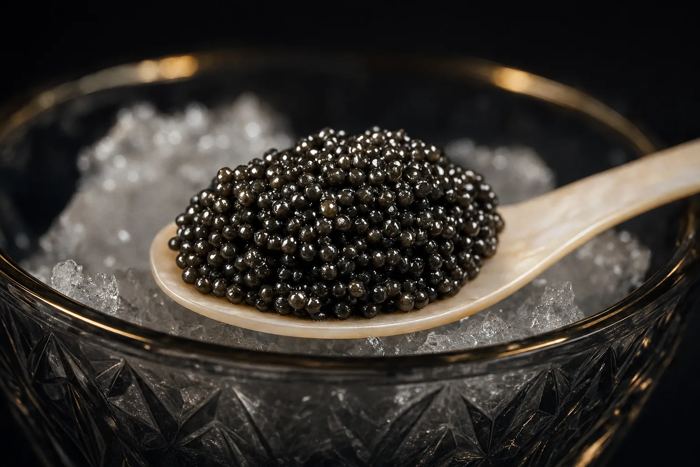
What caviar is, how it is graded, its history and its myths
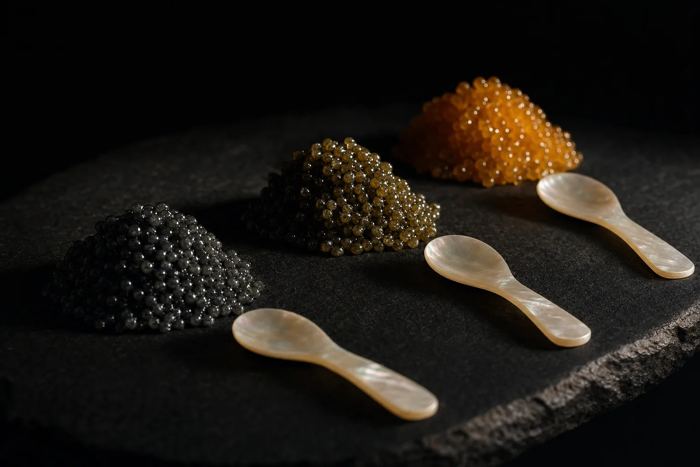
Every sturgeon, the hybrids, salmon roe and the lookalikes
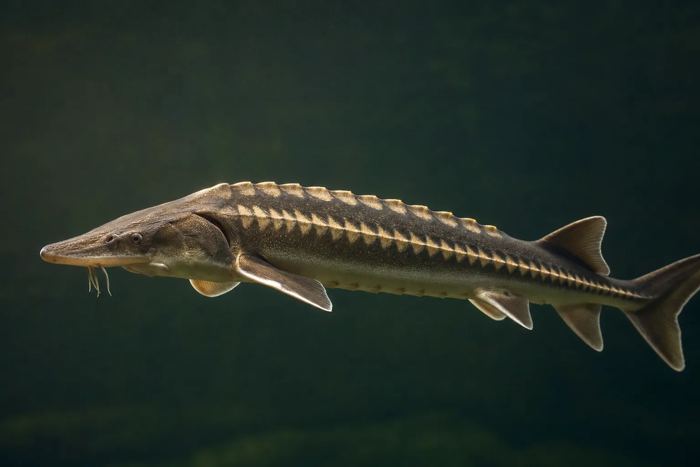
Producing countries, caviar houses, farming and processing
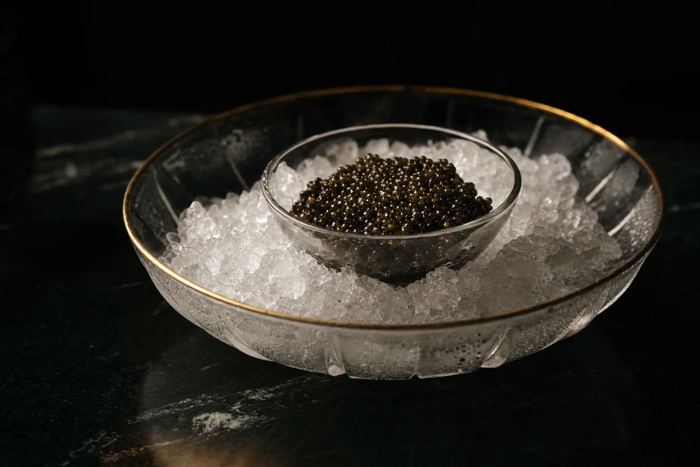
Labels, authenticity and keeping a tin at its best
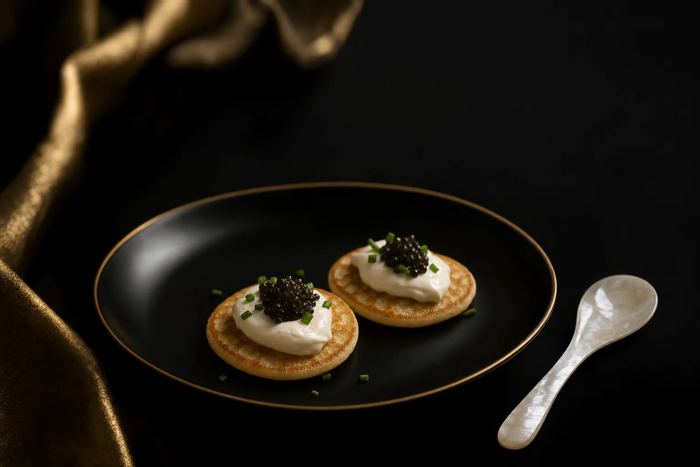
How to serve it, what goes with it, and recipes
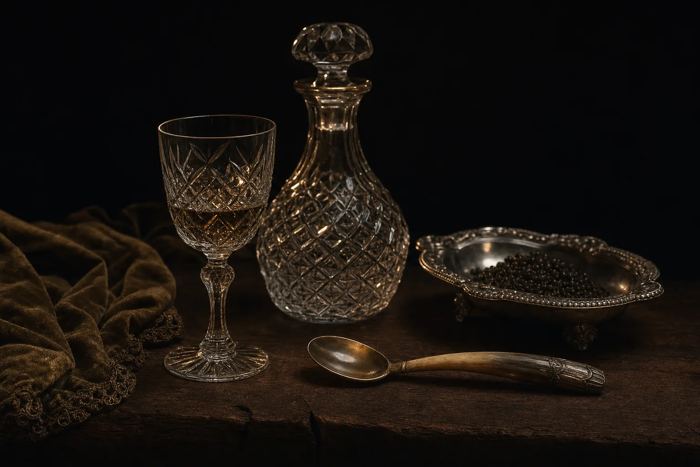
Traditions, bars, art and caviar around the world

CITES, import rules, fraud and saving sturgeon
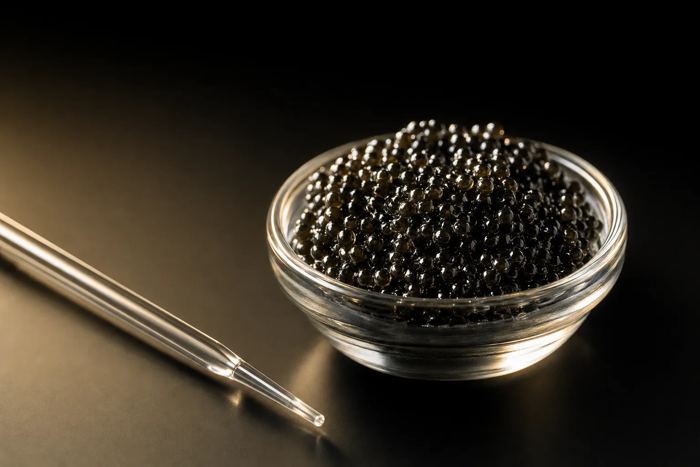
Nutrition, food safety and the science of roe
50 facts from a 200 million year story, each one checked against its source.
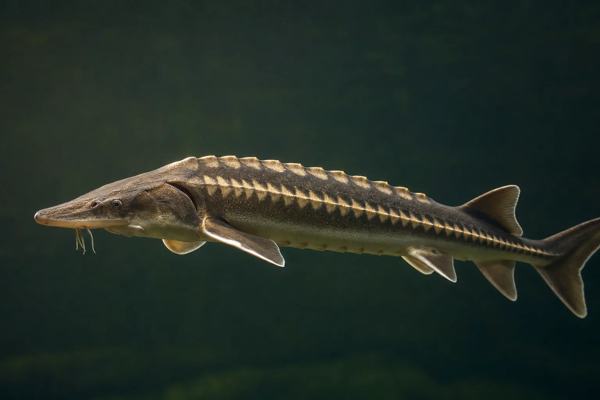
28 entries: all 25 sturgeon species, the 2 paddlefish, and the Gulf sturgeon, a subspecies with its own CITES code. Each shows its label code, its conservation status, and whether its roe reaches the table today.
 Sturgeon engraving, New York Public Library collection
| Common name | Scientific name | CITES code | IUCN Red List (2022) | Roe today | Mature egg diameter |
|---|---|---|---|---|---|
| Beluga | Huso huso | HUS | Critically Endangered | Farmed for caviar | 3.6 to 4.3 mm |
| Kaluga | Huso dauricus | DAU | Critically Endangered | Farmed for caviar | Not yet listed |
| Russian sturgeon | Acipenser gueldenstaedtii | GUE | Critically Endangered | Farmed for caviar | 3.2 to 3.8 mm |
| Siberian sturgeon | Acipenser baerii | BAE | Critically Endangered | Farmed for caviar | 2.4 to 3.0 mm |
| Amur sturgeon | Acipenser schrenckii | SCH | Critically Endangered | Farmed for caviar | Not yet listed |
| White sturgeon | Acipenser transmontanus | TRA | Vulnerable | Farmed for caviar | 3.2 to 4.0 mm |
| Sterlet | Acipenser ruthenus | RUT | Endangered | Farmed for caviar | 2.0 to 2.8 mm |
| Stellate sturgeon | Acipenser stellatus | STE | Critically Endangered | Farmed for caviar | 2.7 to 3.2 mm |
| Adriatic sturgeon | Acipenser naccarii | NAC | Critically Endangered | Farmed for caviar | Not yet listed |
| Shovelnose sturgeon (hackleback) | Scaphirhynchus platorynchus | PLA | Vulnerable | Wild roe fishery (US) | Not yet listed |
| American paddlefish | Polyodon spathula | SPA | Vulnerable | Wild roe fishery (US) | Not yet listed |
| Persian sturgeon | Acipenser persicus | PER | Critically Endangered | Conservation species | Not yet listed |
| Ship sturgeon | Acipenser nudiventris | NUD | Critically Endangered | Conservation species | Not yet listed |
| European sturgeon | Acipenser sturio | STU | Critically Endangered | Conservation species | Not yet listed |
| Atlantic sturgeon | Acipenser oxyrinchus | OXY | Vulnerable | Conservation species | Not yet listed |
| Gulf sturgeon (subspecies) | Acipenser oxyrinchus desotoi | DES | Endangered | Conservation species | Not yet listed |
| Shortnose sturgeon | Acipenser brevirostrum | BVI | Vulnerable | Conservation species | Not yet listed |
| Lake sturgeon | Acipenser fulvescens | FUL | Endangered | Conservation species | Not yet listed |
| Green sturgeon | Acipenser medirostris | MED | Endangered | Conservation species | Not yet listed |
| Sakhalin sturgeon | Acipenser mikadoi | MIK | Critically Endangered | Conservation species | Not yet listed |
| Chinese sturgeon | Acipenser sinensis | SIN | Critically Endangered | Conservation species | Not yet listed |
| Yangtze sturgeon | Acipenser dabryanus | DAB | Extinct in the wild | Conservation species | Not yet listed |
| Pallid sturgeon | Scaphirhynchus albus | ALB | Critically Endangered | Conservation species | Not yet listed |
| Alabama sturgeon | Scaphirhynchus suttkusi | SUS | Critically Endangered | Conservation species | Not yet listed |
| Syr Darya sturgeon | Pseudoscaphirhynchus fedtschenkoi | FED | Critically Endangered | Conservation species | Not yet listed |
| Small Amu Darya sturgeon | Pseudoscaphirhynchus hermanni | HER | Critically Endangered | Conservation species | Not yet listed |
| Large Amu Darya sturgeon | Pseudoscaphirhynchus kaufmanni | KAU | Critically Endangered | Conservation species | Not yet listed |
| Chinese paddlefish | Psephurus gladius | GLA | Extinct | Conservation species | Not yet listed |
Six things people believe about caviar, and what the evidence says. Each links to the guide with the evidence.
Sturgeon are farmed for caviar far beyond the Caspian, in countries including Italy, Belgium, Spain and China.
Sturgeon Farming: The Complete Guide →Egg size depends on the species and the fish. It tells you nothing on its own about freshness, handling or flavour.
Bead Size, Colour and Firmness →Colour varies within a species. It is not a universal sign of quality, and pale or golden roe can be excellent.
What colour really tells you →Quality comes from the species, the age of the fish, water, feed, handling and salting, not from wild or farmed alone.
How Farmed Sturgeon Differ from Wild →Mother-of-pearl, horn, bone and glass are the classic choices. Our guide looks at what the evidence says about metal.
How to Serve Caviar →Vodka is one tradition. Champagne, dry white wine, or nothing at all are just as classic.
Caviar and Vodka →Every legal tin carries a CITES code. Here is what each part means: species, source, country of origin, year, registered plant and lot.
Three short guides, in this order, take a complete beginner from first taste to confident buyer.
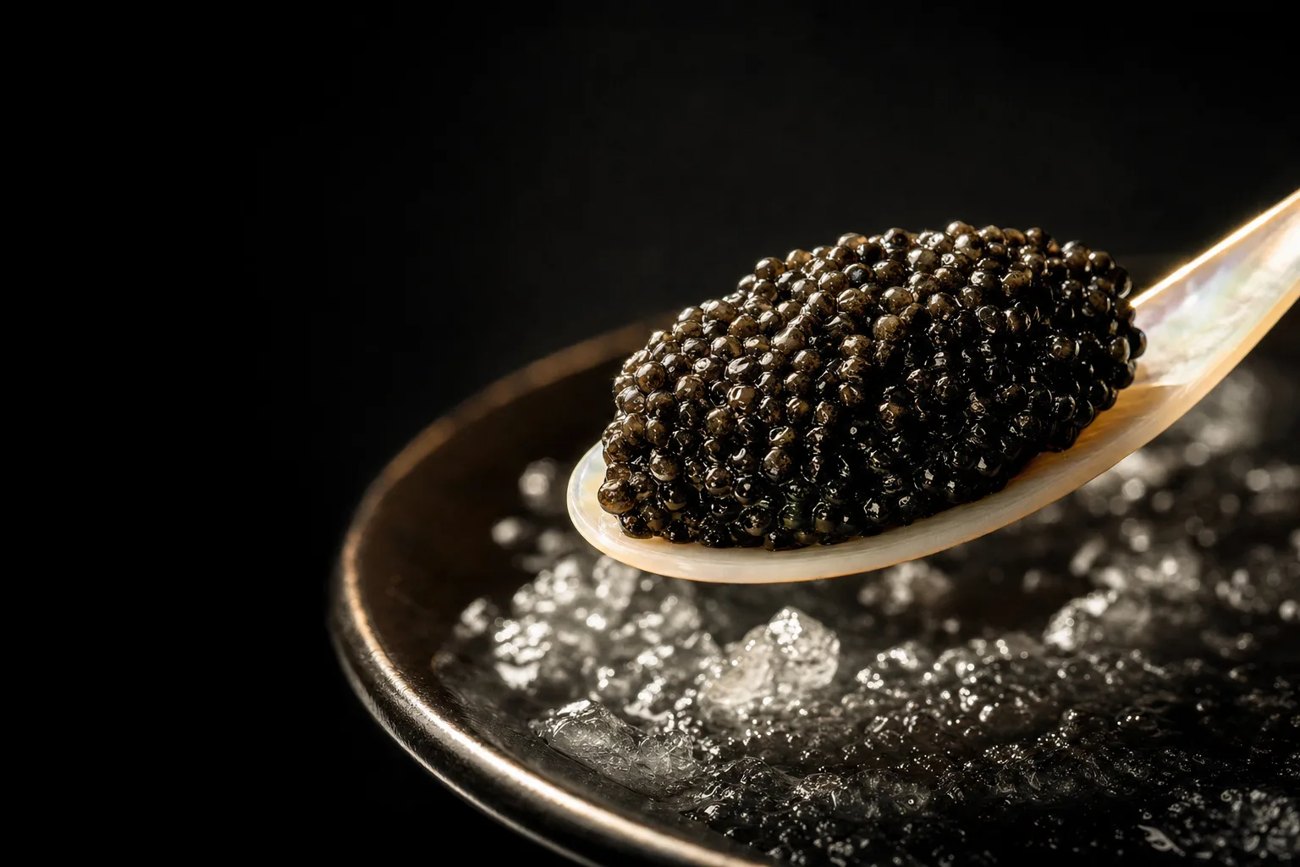
The fish, the salt and the rules, and why the definition depends on who is asking.
Read the guide →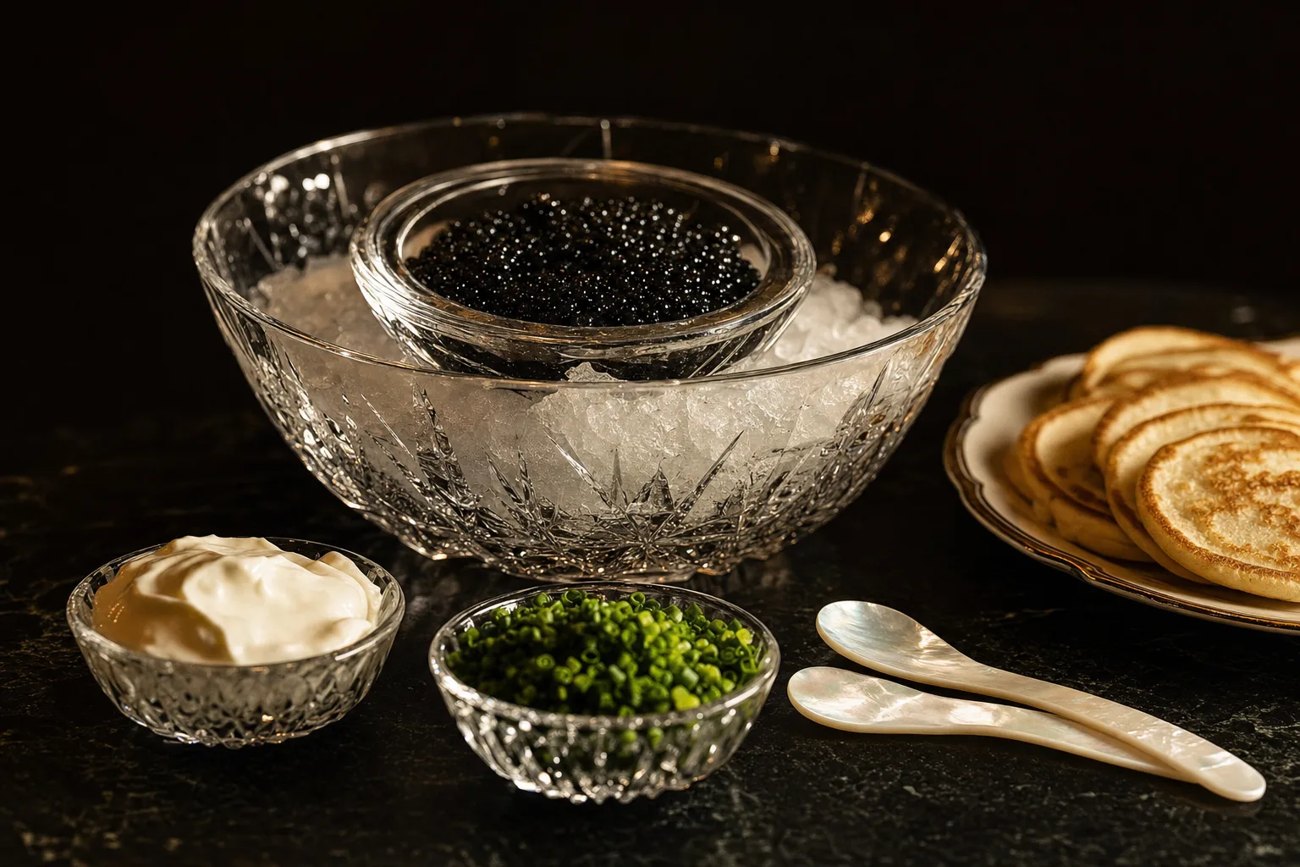
Temperature, spoons, portions and what to serve with it, step by step.
Read the guide →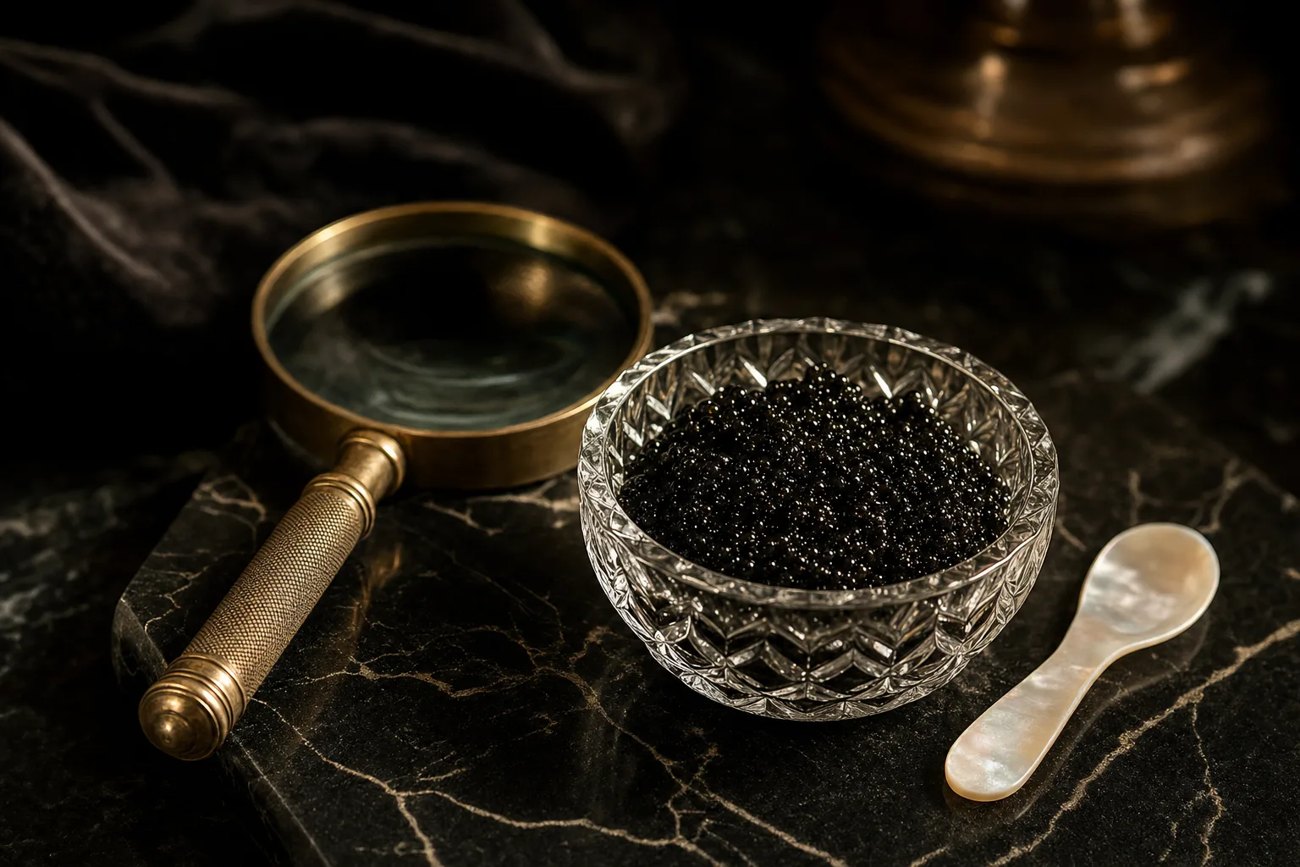
Species, origin and the CITES code, and what a tin cannot prove.
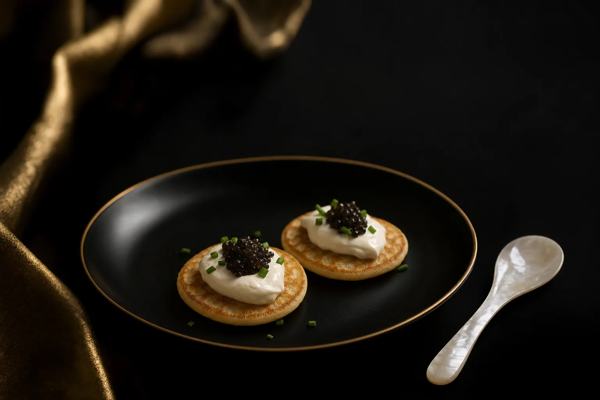
Read the guide →From a classic caviar service to eggs and blini, each plated the way a good restaurant would serve it.
212 guides published so far, each researched, sourced and dated. Start with the essentials.
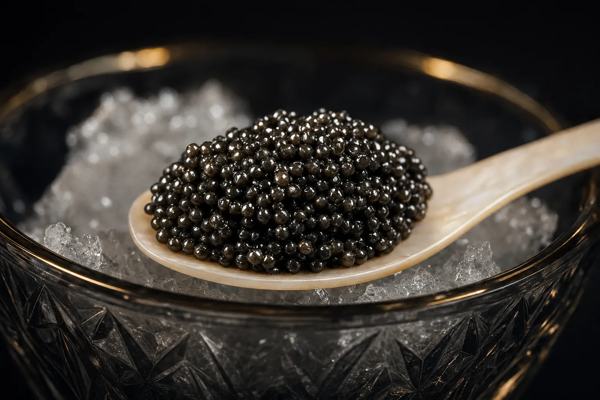
Six classic matches, from Champagne to sake, and the reasons they work.
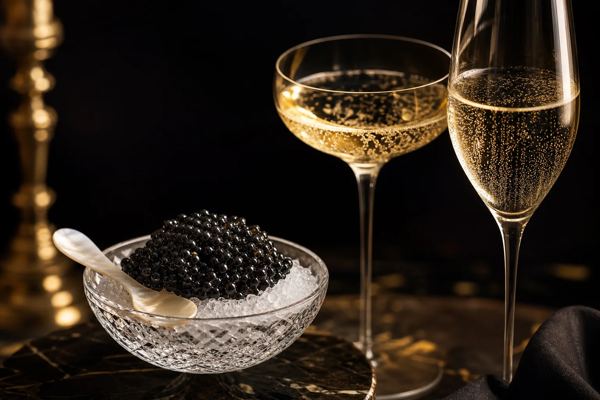
The classic celebration pairing: fine bubbles and bright acidity refresh the palate between spoonfuls.
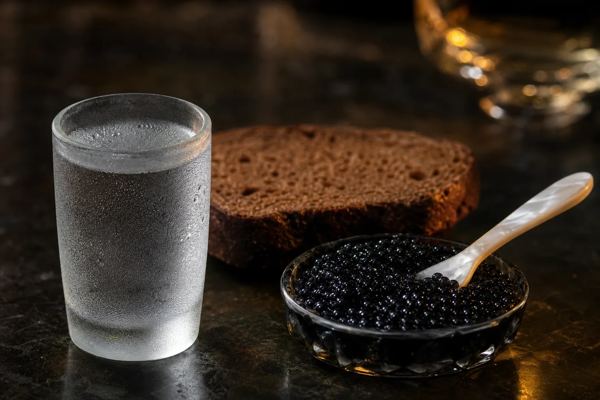
The Russian way: ice-cold and clean, so the caviar does the talking.
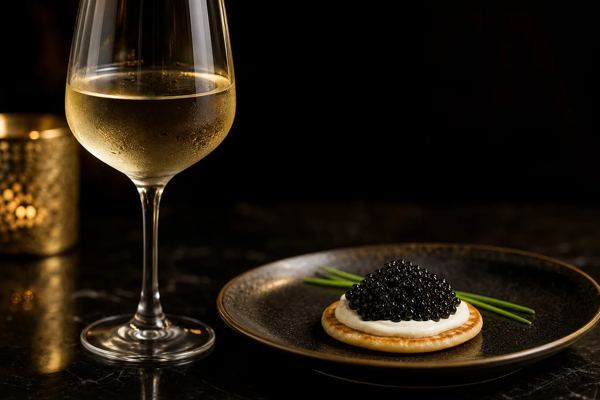
Dry, crisp whites with a mineral edge sit naturally beside the sea saltiness of roe.
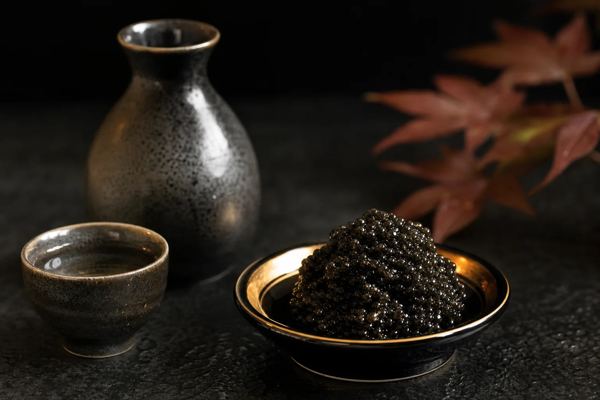
Delicate, clean sake meets roe on its own terms, from ikura to sturgeon caviar.
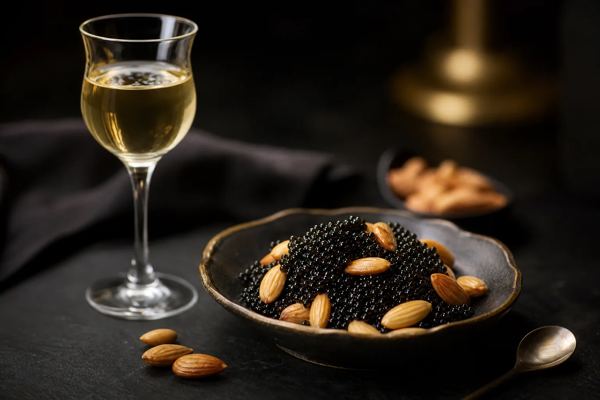
A chilled fino or manzanilla brings its own salinity; a dry martini works too.
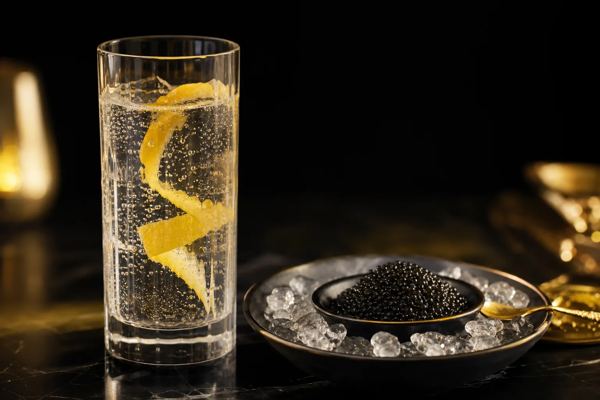
Sparkling water with citrus, or a good alcohol-free sparkling wine, keeps the palate fresh.
Caviar has stood for rarity and refinement for more than four centuries. Here is where it turns up, and what it was meant to say.
“The play, I remember, pleased not the million; ’twas caviare to the general.”
Hamlet, Act 2, Scene 2, William Shakespeare, about 1600. Something too fine for the crowd to appreciate.
How roe is eaten from Moscow to Tokyo, and the traditions behind each table.
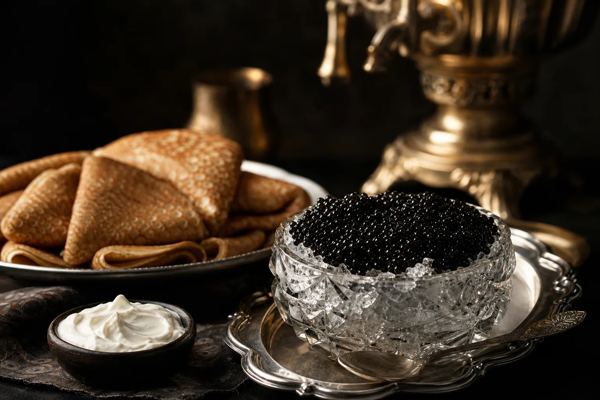
Blini, smetana and ikra at feasts and holidays.
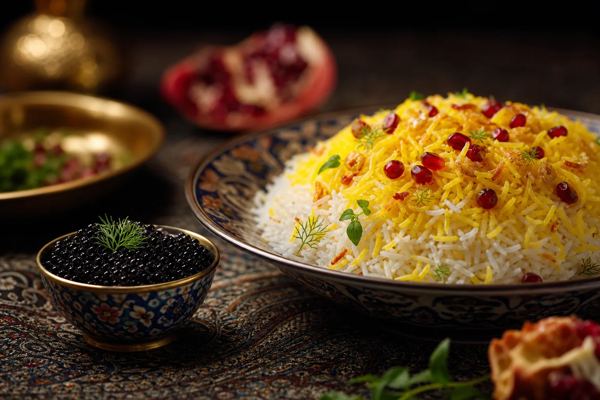
The southern Caspian shore and its long caviar story.
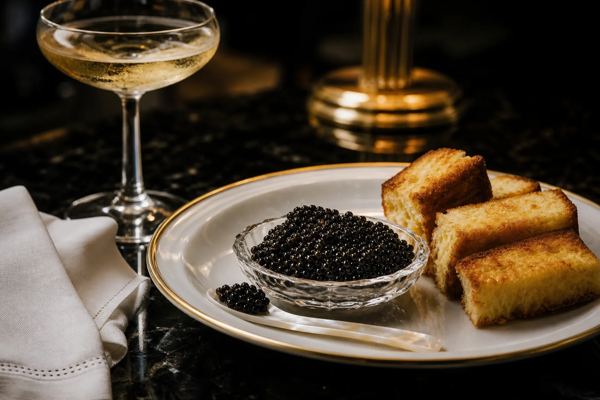
From 1920s Paris to Caviar d'Aquitaine.
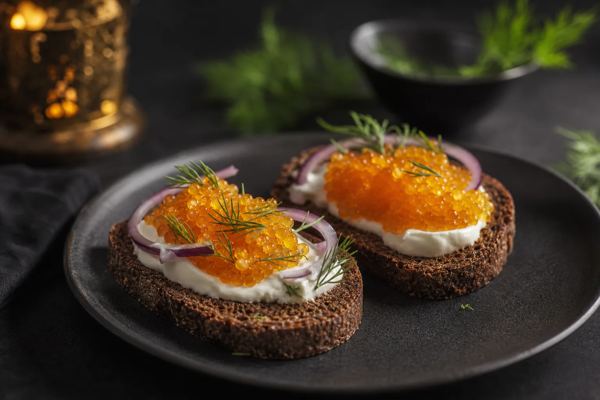
Vendace roe, lumpfish and roe on rye.
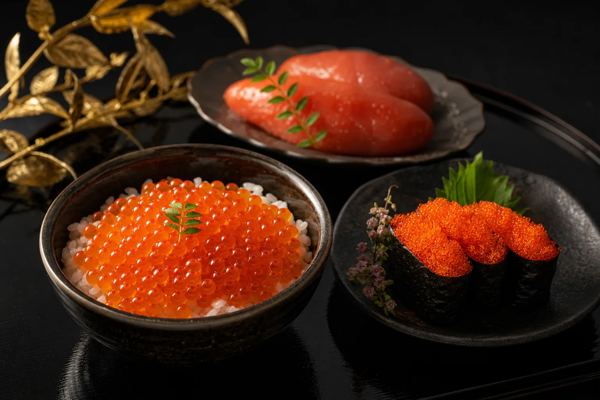
Ikura, tobiko, mentaiko and kazunoko.
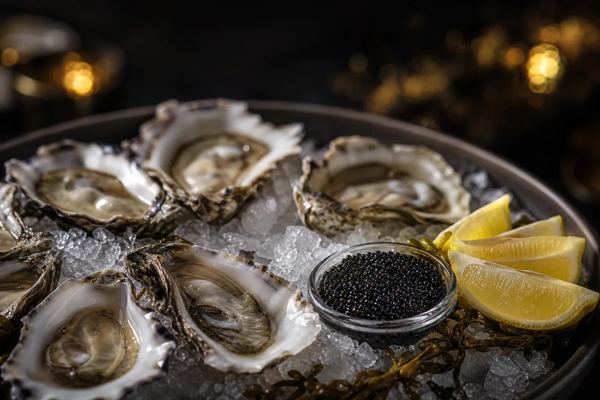
From the 1800s Delaware boom to farmed white sturgeon.
Short, sourced answers for first-timers and for enthusiasts. The full FAQ page and the guides go deeper.
Salted roe of sturgeon. The international food standard, Codex CXS 291-2010, covers the true sturgeon family; other roes, such as salmon or lumpfish, should name their fish.
Mostly a clean sea saltiness with a gentle richness. Flavour and texture vary with the species, the age of the fish and how lightly it is salted, so two tins can taste very different.
This site uses 15 g as a standard serving, about half an ounce. A tasting portion can be smaller; a centrepiece for two may be 30 g or more.
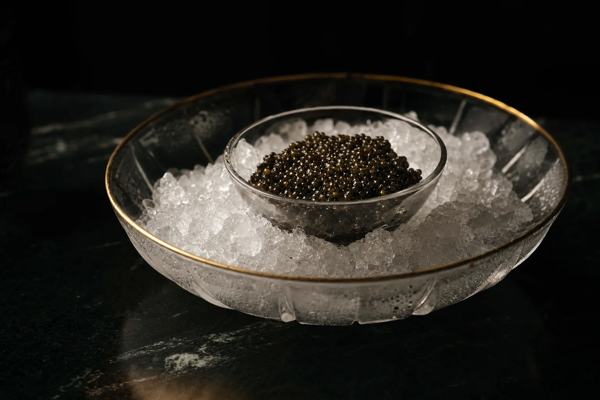
Well chilled, ideally on ice, from the tin or a glass dish, with a mother-of-pearl, horn or glass spoon. Blini and creme fraiche are classic, but good caviar needs very little.
Not long. Follow the producer's label, keep it in the coldest part of the fridge and eat it within the time the label gives once opened.
Advice differs by country and by product, especially for unpasteurised caviar. Our guide gives the official advice country by country; for a personal answer, ask your midwife or doctor.
Different fish. Beluga is Huso huso, native to the Caspian and Black Sea; kaluga is Huso dauricus, from the Amur basin. 'Kaluga beluga' is trade language, not a species.
Russian for 'little salt': a lightly salted style. It is a trade term, not a legal grade, so the tin should still tell you the species and origin.
That is the CITES labelling convention: SCHxDAU is a male Amur sturgeon crossed with a female kaluga. The Codex standard writes hybrids female first, so check which system a label uses.
CITES source codes: W wild, C bred in captivity under strict conditions, F born in captivity without meeting those conditions, R ranched. F and C are not the same thing.
No. It gives traceability: species, source, origin, year, plant and lot. Only testing, such as DNA analysis, can confirm the species inside.
Imports of beluga from the Caspian and Black Sea basins have been suspended since 2005 under 50 CFR 17.44(y). Our guide explains the rule and its narrow exemptions.
Caviar is now farmed far beyond the Caspian, from Europe and China to the Americas and Madagascar. Origin guides are being added region by region.
Italy, France, Belgium, Germany, Spain, Poland, Switzerland, the UK and more
Russia, Iran, Kazakhstan, Azerbaijan, Armenia, Georgia
China and Qiandao Lake, Japan, Vietnam, South Korea
Israel, Turkey, the UAE and the Gulf
California, the Pacific Northwest, the East, the Mississippi basin, Canada
Uruguay, Argentina, Chile, Brazil
Madagascar
caviar.uk is a reference work for readers everywhere, written to the same rules on every page.
We sell nothing and quote no prices. No caviar company pays for a mention.
CITES, Codex, national law, FAO, IUCN and peer reviewed research, listed on every page.
Laws, ownership and conservation status carry the month they were last checked.
Rules for the EU, the UK, the US and other markets, never one country only.


