

The lid should lift cleanly away, leaving the beads beneath it untouched. Opening a press-fit caviar tin takes a steady hand and a little leverage, not force: remove any outer band, slip a caviar opener or blunt, flat tool beneath the rim, and ease the lid upwards without pushing into the eggs.
Keep the tin flat on a non-slip surface. Open it just before serving, with everything else ready.
Before you reach for an opener
Check the container, the use-by date and the storage instructions before you begin. A swollen or leaking tin is a reason to stop, not investigate. Do not open it or taste its contents: the US Food and Drug Administration advises against eating food from leaking or bulging cans. See why tins swell or leak for the warning signs and what to do next.
Food Standards Scotland advises against eating food after its use-by date, even when it looks and smells normal.
Have clean, dry hands, a clean tool and a folded cloth or non-slip mat ready. Set out the serving dishes first. The caviar should not sit on the worktop while you finish preparing; how to serve caviar covers the rest of the setup.
Know the lid before you lift it
A round container does not necessarily need levering open. Codex's sturgeon caviar standard allows internally coated metal tins, glass jars and other suitable food-grade containers, without prescribing a single lid design.
Some vacuum-packed tins have a fitted lid with a sealing gasket beneath it. Packaging manufacturer Desjardin documents vacuum tins separately from traditional tins. Identify the closure in front of you rather than treating every tin alike.
A slipping point can injure your hand or plunge into the eggs.
The broad elastic band around some tins helps hold the lid and rim together. It neither guarantees against leaks nor establishes that the tin has a vacuum seal. Band manufacturer Alliance Rubber describes uses on both bulk tins and consumer packs.
For glass, look for a screw lid, a hinged clip-top lid, or a glass lid held by separate clips. Each opens differently, as described below. Never insert a tin opener against a glass rim.
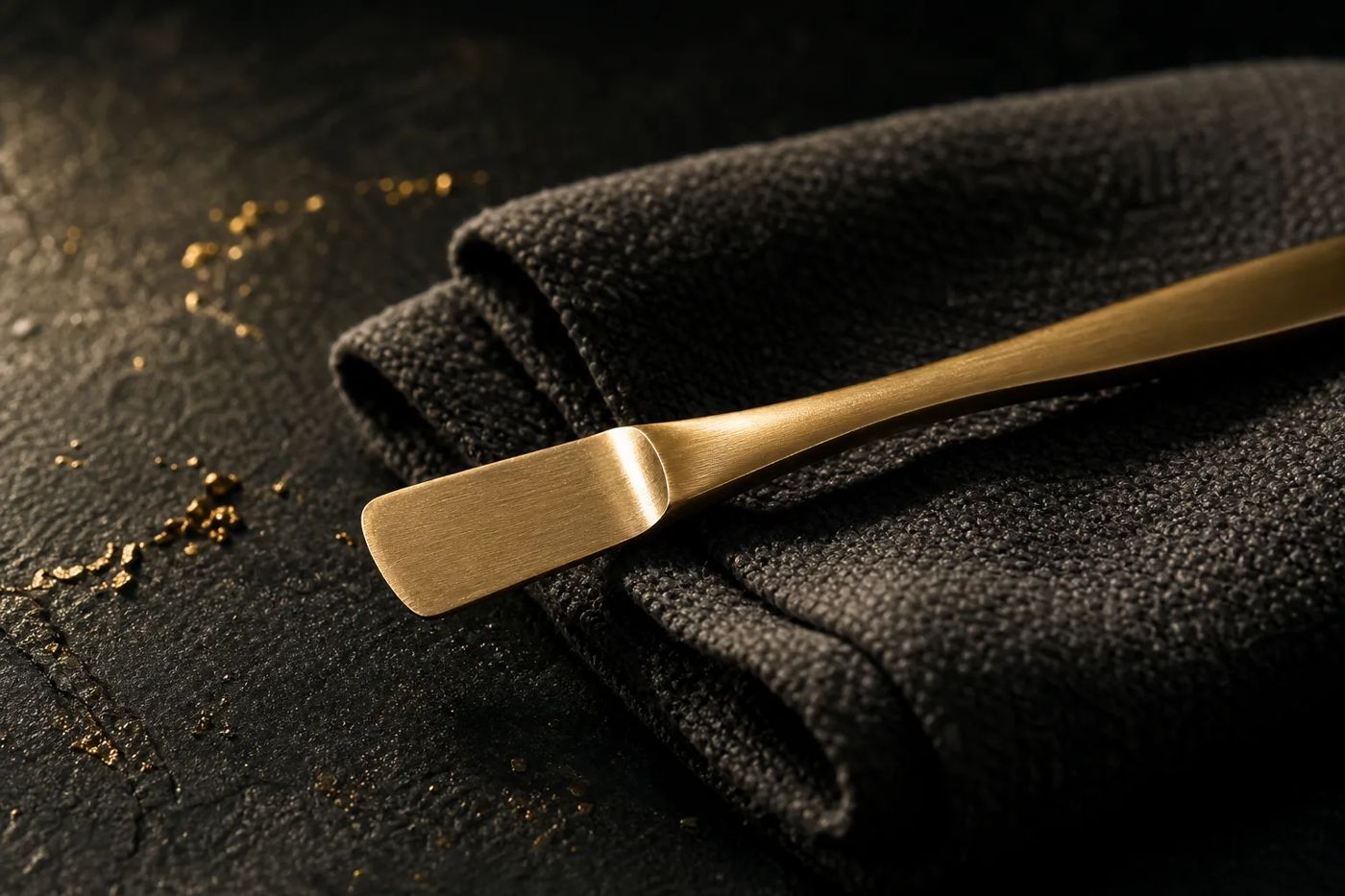
How to open a caviar tin, step by step
-
Remove the outer restraint. Peel away any removable seal or band, following the pack instructions, and set the band aside. Keep the tin flat on the cloth. Your supporting hand should stay clear of the point where the tool enters.
-
Find the lid's lip. Choose a dedicated caviar opener or a clean, blunt, flat-ended tool that fits the gap. Slide only its edge beneath the lid's overhang. Keep it out of the caviar; caviar tin openers explains the tool choices.
-
Ease, rather than wrench. Give the tool a small, controlled turn to lift the edge. If the lid stays tight, move around the rim and repeat gently. Work evenly instead of applying more force to bend one point upwards.
-
Lift the lid clear. Once released, lift it away without dragging its underside across the beads. Rest it on a clean surface, inner face upwards, so it is ready to cover any remaining caviar.
Leave the sharp knife aside. A slipping point can injure your hand or plunge into the eggs. Do not stab through the lid, saw at the rim or keep forcing a closure you cannot identify. Stop and ask the supplier for its opening instructions.
Glass jars and larger tins
A screw-top jar needs a firm grip, not a lever. Hold the dry glass securely and turn the lid anticlockwise, unless the pack says otherwise. A rubber grip can improve purchase. Do not strike the glass or drive a knife under the cap to release it.
For a hinged clip-top jar, release the clasp before lifting the lid. If the rubber seal has a release tab, follow the maker's instructions. On WECK's separate-clip jars, remove the clips, then pull the rubber tab to admit air before lifting off the glass lid.
With a larger tin, check the closure and supplied instructions before starting. It may not open like your usual vacuum tin. Support it on the worktop rather than holding it in your palm.
When the lid comes off
Look at the roe and notice its smell before serving. Mould, foreign material, obvious deterioration or an unpleasant or sour odour are reasons not to taste or eat it. US Department of Agriculture guidance also says not to eat food from containers with a foul smell or contents that spurt out on opening.
These checks can reveal trouble, but they cannot establish safety. A pleasant smell, normal appearance or apparently intact seal does not override the use-by date. Food Standards Scotland warns that food past that date may contain harmful bacteria even when it looks and smells fine. Caviar spoilage warning signs explains when to discard rather than investigate.
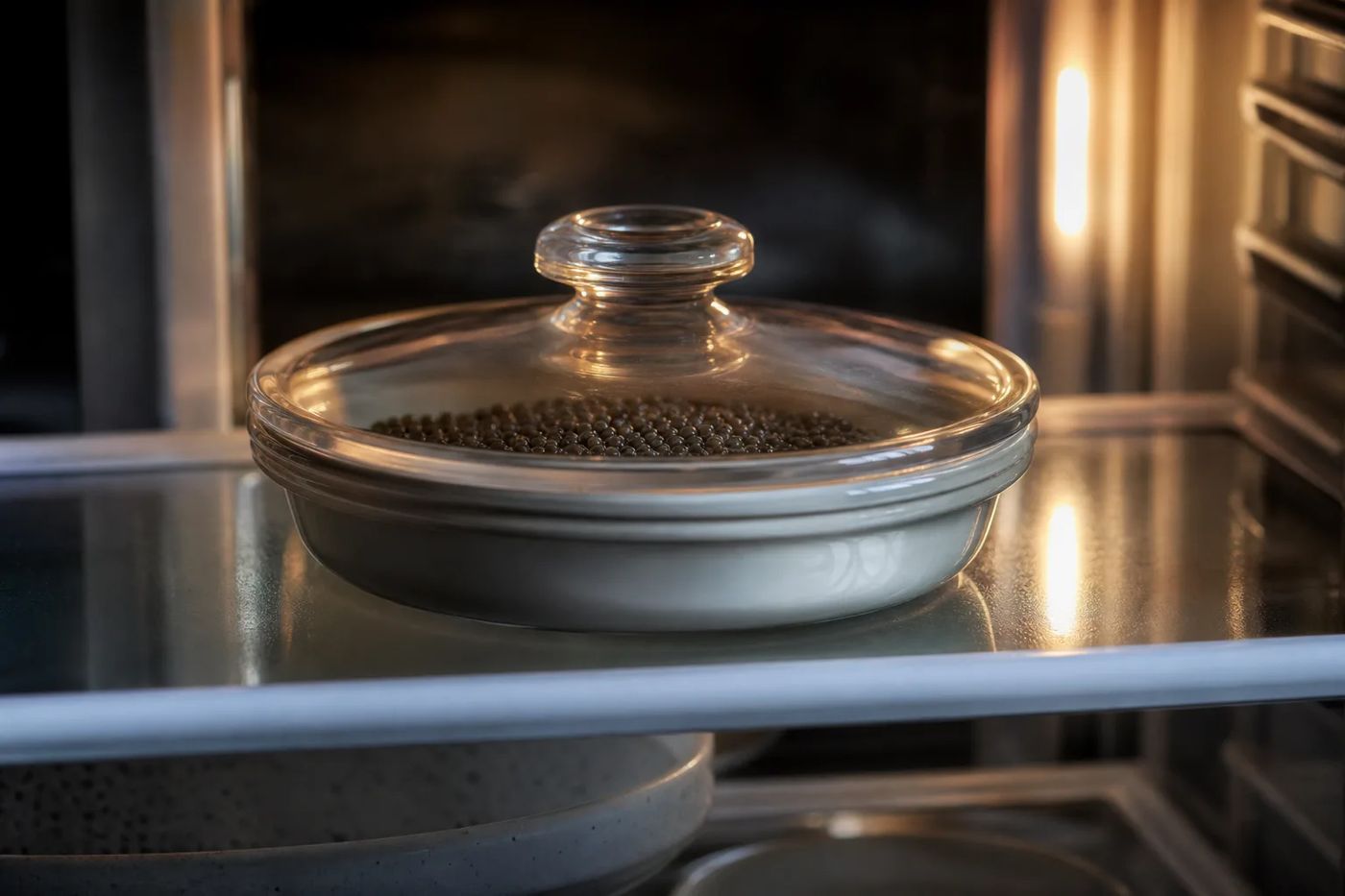
Cover leftovers and refrigerate straight away
Open just before serving to limit time outside refrigeration and unnecessary exposure to air. Keep the lid, and serve with a clean spoon. A spoon that has been in someone's mouth should not return to the tin.
Caviar seller Æmillius recommends gently levelling the remaining surface without pressing down, then replacing the lid snugly. Where substantial empty space remains, its advice is to place food-grade cling film directly against the roe before replacing the lid, limiting air contact.
Return leftovers to the fridge straight away. Follow the product's stated temperature and opened-storage deadline. Codex gives 2 to 4°C (36 to 39°F) for retail storage; UK Food Standards Agency home guidance gives 0 to 5°C (32 to 41°F). If the product requires colder storage, use that colder setting.
A replaced lid does not restore the original vacuum or restart the unopened shelf life. Record when you opened the tin, then follow opened caviar storage guidance for the separate question of how long to keep it.
Sources
-
FAO and WHO, Codex Alimentarius Commission. Standard for Sturgeon Caviar, CXS 291-2010, adopted 2010, amended 2013, 2018 and 2024, with a further modification in 2026. Sections 2.3 and 6 cover packaging, temperature and hygiene. Official standard.
-
Desjardin. Boîtes de caviar métalliques Desjardin and Boîte sous vide pour le caviar, undated manufacturer descriptions, retrieved November 2026. Container range; vacuum-tin construction.
-
Alliance Rubber Company. Rubber Bands for Caviar Tins, undated manufacturer guidance, retrieved November 2026.
-
WECK Jars. Canning Notes, undated manufacturer instructions, retrieved November 2026. The relevant passage explains releasing a sealed glass lid using the rubber-ring tab and warns against sharp objects. Opening instructions.
-
US Food and Drug Administration. Food Tampering, An Extra Ounce of Caution, online consumer guidance, retrieved November 2026. Damaged-container warnings.
-
US Department of Agriculture, Food Safety and Inspection Service. Is food in damaged cans dangerous?, updated September 2024. Container and opening warnings.
-
US Department of Agriculture, Food Safety and Inspection Service. Do foods containing botulism have a bad odor or taste?, updated September 2024. Limitations of smell and taste.
-
Food Standards Scotland. Use-by and best-before dates, undated consumer guidance, retrieved November 2026. Use-by dates, storage instructions and the sniff test.
-
Food Standards Agency. How to chill, freeze and defrost food safely, published December 2017, online version retrieved November 2026. Home refrigeration guidance.
-
Æmillius Caviar. How to store black caviar at home: temperature and shelf life, online seller guidance, retrieved November 2026. Only its practical advice on levelling, covering and promptly refrigerating leftovers is adopted here. Handling guidance.
This piece was researched using official food standards, national food-safety guidance, packaging manufacturers' descriptions and one caviar seller's attributed leftover-handling instructions.
Last checked: November 2026