
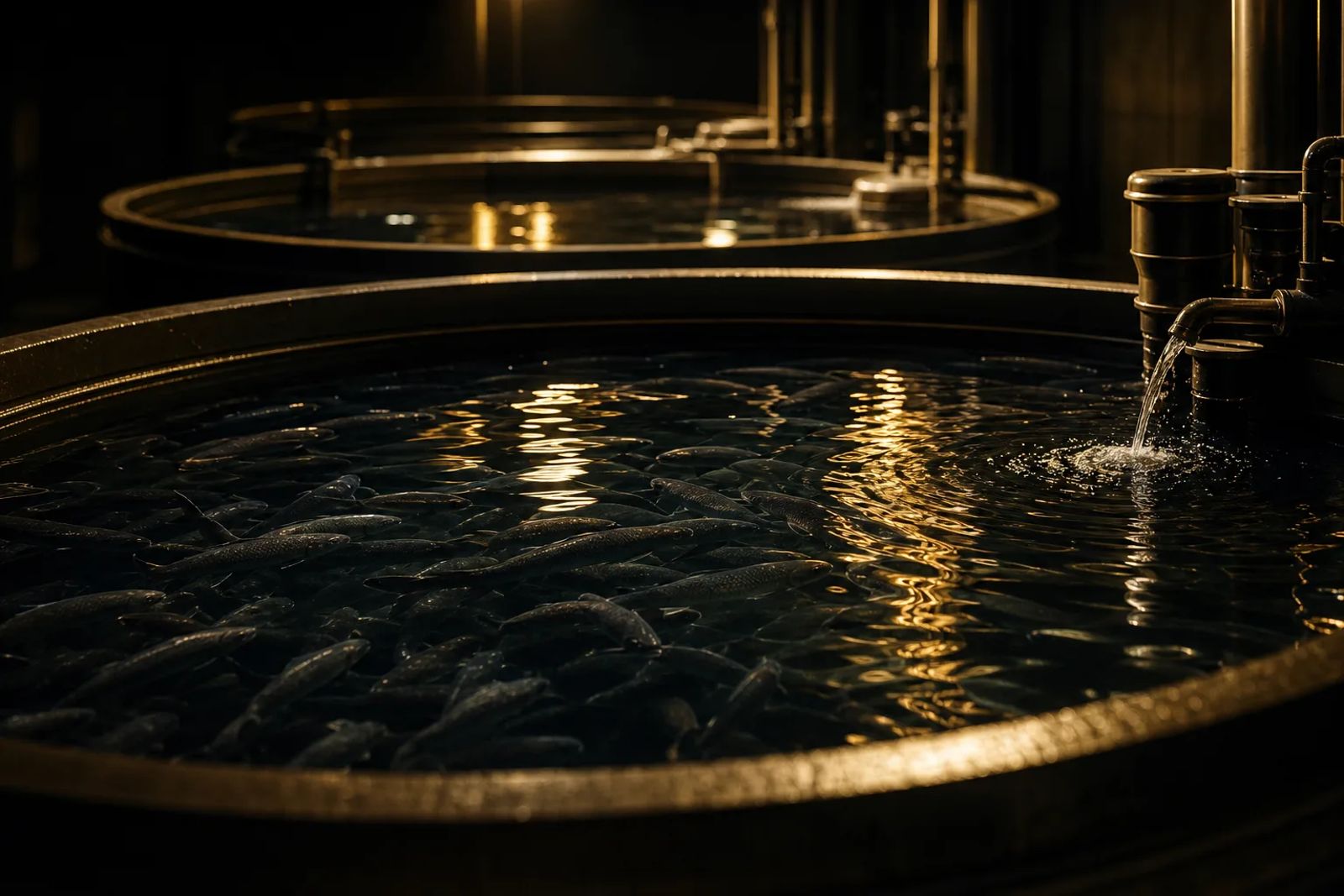
Years of feeding and care on a sturgeon farm cannot turn a wild-caught adult into a captive-bred fish. Its roe remains a derivative of a wild-taken animal. That distinction sits behind the single letter used to declare origin on CITES documents.
W means wild, R ranched, F born in captivity without meeting the full captive-breeding definition, and C bred in captivity under that definition. The exporting country's CITES Management Authority assigns the code from supporting evidence. Understanding that evidence tells you far more than reading the letter alone.
Where CITES source codes are defined
The starting point is Resolution Conf. 12.3 (Rev. CoP20), Permits and certificates. The source-code list appears in section I, paragraph 3(r), rather than an annex of separate definitions. Annex 1, item (i), requires the source on permits and certificates; Annex 2 provides the standard form and instructions.
W, R, F and C are four entries in a longer list. The current resolution contains the others, so these four should never be read as every possible legal origin.
Source and purpose also answer different questions. Selling caviar commercially does not change where it came from or give it a different source.
W, R, F and C at a glance
Each letter describes a particular origin, not simply a farming method. These short extracts from the official definitions sit alongside their practical meaning for caviar. The full wording is in section I, paragraph 3(r), of the resolution.
| Code | Definition and explanation | Caviar application | Legal source | Checked |
|---|---|---|---|---|
| W | “Specimens taken from the wild”. | Roe from wild-taken fish. | Conf. 12.3, I.3(r) | November 2026 |
| R | “Ranched specimens”: animals collected from the wild as eggs or juveniles, then reared under controlled conditions, whose survival to adulthood in the wild would otherwise have been very unlikely. | Applies only when the ranching definition is met. | Conf. 12.3, I.3(r) | November 2026 |
| F | “Animals born in captivity (F1 or subsequent generations)”: animals failing the full Conf. 10.16 captive-breeding definition, including their parts and derivatives. | Roe from captive-born fish whose production does not meet C criteria. | Conf. 12.3, I.3(r) | November 2026 |
| C | “Animals bred in captivity”: animals meeting Conf. 10.16, including their parts and derivatives, exported under Article VII(5). | Roe from fish meeting the full definition. | Conf. 12.3, I.3(r) | November 2026 |
Why C requires more than a farm
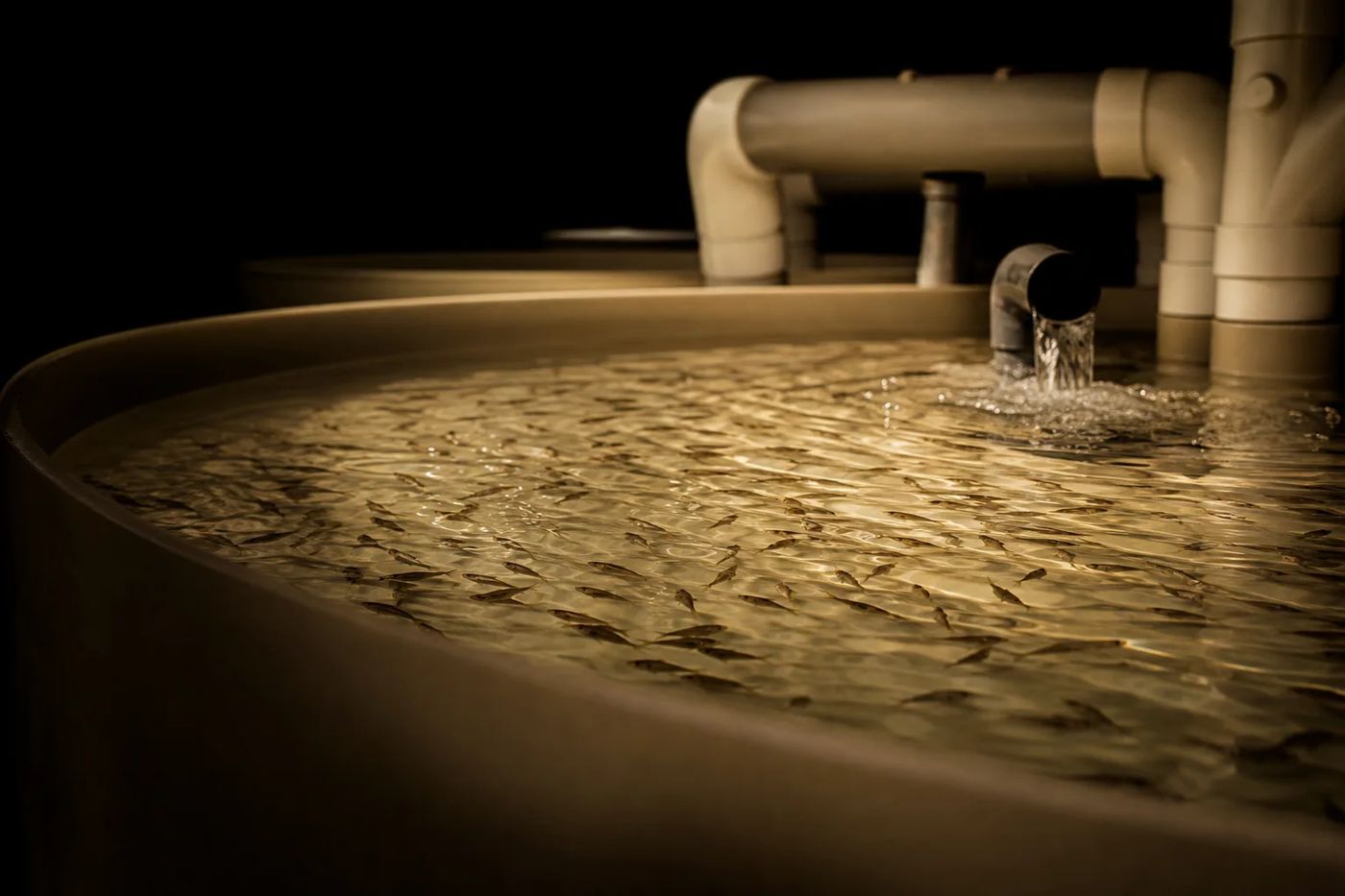
A farm is a place. C is a legal finding about how animals were bred and how their breeding stock was established and maintained.
Resolution Conf. 10.16 (Rev. CoP19), Specimens of animal species bred in captivity, sets the test. A controlled environment must be managed to produce animals, with boundaries designed to prevent animals, eggs or gametes of the relevant taxon entering or leaving. For sexual reproduction, mating or the transfer of gametes must happen within that environment.
Broodstock means the animals used for breeding. The competent authorities must be satisfied that this stock was established legally and without harming the species' survival in the wild. Normally, it must be maintained without wild additions. Permitted occasional additions can address damaging inbreeding, accommodate confiscated animals or, exceptionally, provide breeding stock.
The stock must have produced second-generation offspring or later generations under controlled conditions, or be managed in a way demonstrated capable of reliably producing second-generation offspring. An individual fish can therefore qualify for C without itself being second generation. Equally, reaching second generation cannot remedy unlawful founders or continuing, unrestricted replenishment from the wild.
F captures the distinction between being born in captivity and qualifying as bred in captivity. It can cover first or subsequent generations that fail the full test. It neither means first generation automatically nor legitimises illegal acquisition.
How a sturgeon farm's history affects the code
Follow the fish's history, not just its current address. Roe harvested from a wild-caught adult retains its wild origin, however long the fish has lived on a farm. If that adult instead breeds under controlled conditions, its offspring need a separate assessment against the breeding criteria.
Wild-taken animals or their roe can be presented as captive-produced, using a code to disguise origin rather than explain it.
First-generation offspring, F1, have at least one parent conceived in or taken from the wild. Their roe may qualify as C when the full operation and stock requirements are met, including demonstrated capacity for reliable second-generation production. Otherwise, captive-born offspring may fall under F, subject to the applicable permit findings.
Buying hatchery juveniles does not erase the need for that history. A grow-out farm needs evidence connecting its fish to the originating breeding stock and production system. An invoice saying farmed cannot supply the whole assessment. Hatchery production explains the biology; the legal question is whether the documented stock meets the source definition.
Caviar itself is processed, unfertilised eggs, not a new generation of offspring. For source assessment, trace the female fish that produced the roe. Harvested eggs do not count as another captive generation simply because they are eggs.
R means ranched, not simply reared
R begins with wild collection at the egg or juvenile stage. The animals must then be reared under controlled conditions, and their survival to adulthood in the wild must otherwise have been very unlikely.
That definition does not cover every fish raised outdoors, every hatchery programme or every farm using wild founders. Captive reproduction using wild-caught parents requires its own assessment.
The current use of R for sturgeon caviar remains unconfirmed here: no filtered CITES Trade Database result was available to substantiate it through a reproducible current extract. There is therefore no basis to describe R as absent, common or rare in this trade.
Who decides, and where the code appears
The exporting Management Authority determines the source on its CITES document. It draws on the applicant's records and the necessary scientific advice. Producers supply evidence; they cannot choose whichever letter best suits their marketing. Importing authorities can question documents and ask the issuing authority to verify them.
Resolution Conf. 12.7 (Rev. CoP17) recommends a caviar labelling system with a source field alongside species and other traceability information. The US implements caviar labelling through 50 CFR 23.71; the EU does so through Regulation (EC) No 865/2006. Domestic requirements depend on the applicable jurisdiction.
The source letter is just one part of that label. The label guide explains the other fields and how to read them together.
How the EU, UK and US apply the definitions
EU: Article 5(6) and Annex IX of Regulation (EC) No 865/2006 prescribe source codes on permits and certificates. C and F refer to the captive-breeding criteria in Chapter XIII, particularly Article 54, rather than simply quoting the CITES resolution number. The essential distinction is unchanged: full qualification versus birth in captivity without full qualification.
UK: Great Britain uses amended assimilated wildlife trade legislation. Its Article 54 retains the stock, controlled-reproduction and generation tests. Northern Ireland operates under the relevant EU wildlife trade framework. APHA issues CITES permits for both, but the administrative routes are not interchangeable.
US: 50 CFR 23.24 supplies the codes, section 23.63 the bred-in-captivity findings, and section 23.5 the relevant definitions. The terminology matters: captive-bred wildlife can receive F, while bred-in-captivity qualification supports C. Commercially bred Appendix I specimens from operations not registered with CITES may also receive F; registered operations use D.
Section 23.24 also expressly includes within W wildlife born from wild-collected eggs or from parents that exchanged genetic material in the wild. The separate ranching provisions must also be considered where applicable.
China, Russia and other exporting Parties apply the international source-code framework through their own CITES authorities. A country name cannot establish which code a shipment qualifies for. Nor can a source code override an importing country's additional restrictions. The wider law and regulation hub separates those questions.
What a source code proves, and what it does not
A correctly issued code records an official source classification backed by the relevant findings. The printed letter alone cannot establish that those findings were sound or that the contents match the paperwork. It provides neither a species test nor food-safety approval, a welfare assessment or general sustainability certification.
The laundering risk is substitution. Wild-taken animals or their roe can be presented as captive-produced, using a code to disguise origin rather than explain it. Looking only for C misses the stock history, production records and physical traceability needed to test that declaration. Wild-to-farmed laundering explains the mechanisms; the limits of label evidence addresses authentication.
Before relying on C or F professionally, ask three questions: which fish produced the roe, how were those fish produced, and what evidence did the issuing authority accept?
Reconcile harvest batches with stock and processing records. Refer unresolved discrepancies to the relevant Management Authority. These checks scrutinise the declaration; they do not replace the required permits.
Sources
- CITES, via UNEP InforMEA. Resolution Conf. 12.3 (Rev. CoP20): Permits and certificates, consolidated machine-readable text incorporating CoP20 amendments, 2025. Section I, paragraph 3(r), and Annexes 1 and 2. Retrieved text.
- CITES Secretariat. CITES glossary, undated online edition, retrieved November 2026. Entries covering captive breeding, caviar, ranching and source codes. Some entries cite earlier resolution revisions, so the glossary was not used alone to establish current editions. Glossary.
- CITES Secretariat. Captive-produced animals and artificially propagated plants, undated online programme page, retrieved November 2026. Lists Resolution Conf. 10.16 (Rev. CoP19). Programme page.
- European Commission. Commission Regulation (EC) No 865/2006, consolidated edition dated 18 February 2025. Articles 5, 54 and 66, and Annex IX. Consolidated legislation.
- European Commission. EU Wildlife Trade Reference Guide: Annex IX, undated online edition, retrieved November 2026. Source-code table. Annex IX.
- The National Archives. Commission Regulation (EC) No 865/2006, Article 54, UK amended online text, including amendments effective 31 December 2020. Article 54.
- APHA and Defra. Check if you need a CITES permit to import or export endangered species, current online guidance retrieved November 2026. UK guidance.
- US Fish and Wildlife Service, Office of the Federal Register and Government Publishing Office. 50 CFR Part 23, eCFR text displayed as current to 2 November 2026. Sections 23.5, 23.24, 23.26, 23.63 and 23.71. Part 23.
- CITES Secretariat and UNEP-WCMC. CITES Trade Database, online edition advertising full-download version 2026.1, retrieved November 2026. No filtered sturgeon-caviar extract was obtained. Database.
- European Commission. Commission notice, document 52022XC0811(01), 2022. Guidance on applying captive-breeding criteria and checking supporting evidence. Official notice.
- Journal of Environmental Management. Assessing and improving the veracity of international trade in captive-bred animals, 2024. Research using CITES Trade Database version 2022.1 to assess reported captive production and potential misclassification. Research paper.
- TRAFFIC. Understanding the global caviar market, 2018. Historical corroboration of Resolution Conf. 12.7 (Rev. CoP17), not verification of its post-CoP20 status. Report.
This article was researched through retrieved CITES materials.
Last checked: November 2026