
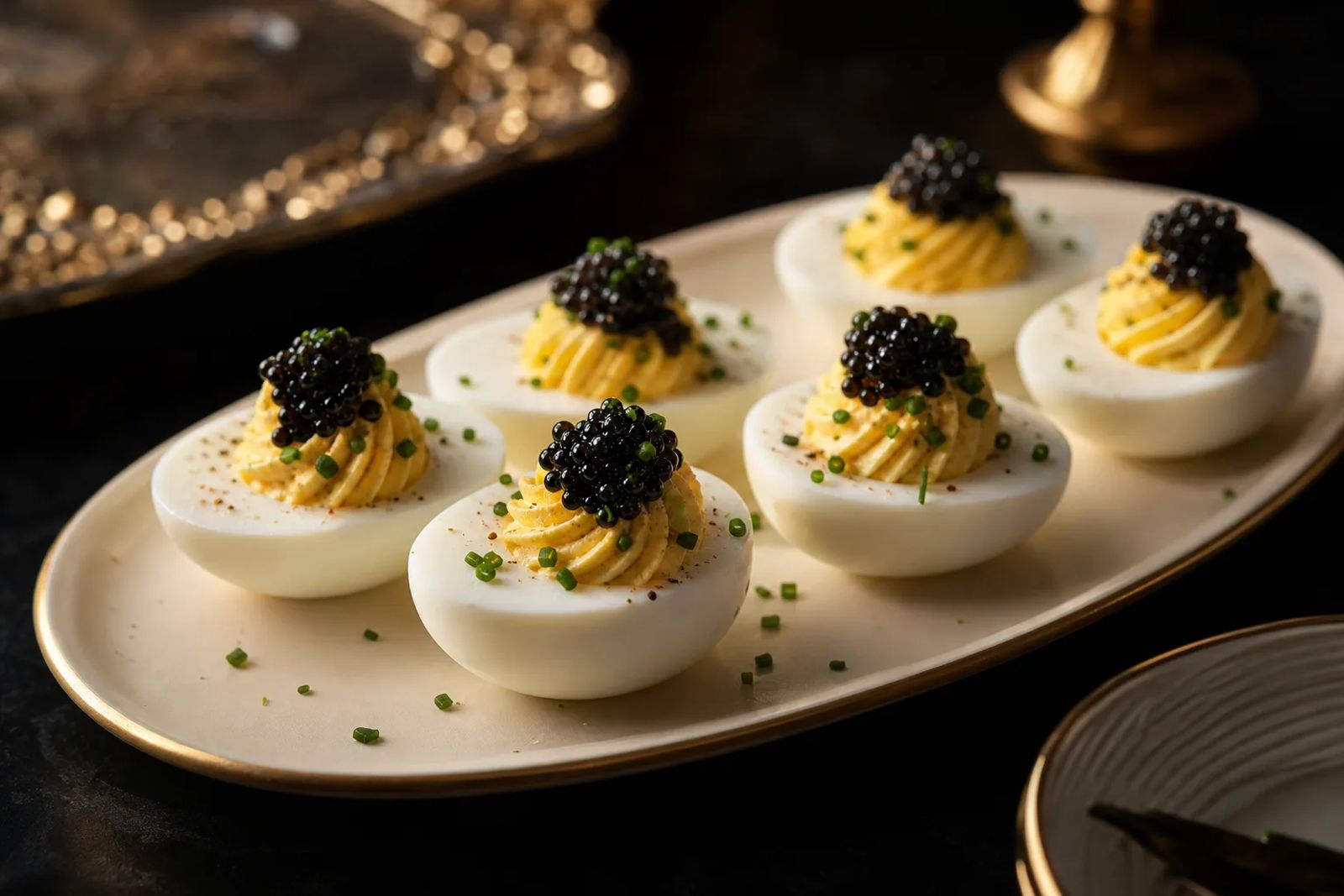
Just 30 g of caviar finishes 24 devilled egg halves: a small crown of salt-cured beads against smooth yolk, mayonnaise and mustard. The filling does the generous work; the roe supplies the salt and the finishing texture.
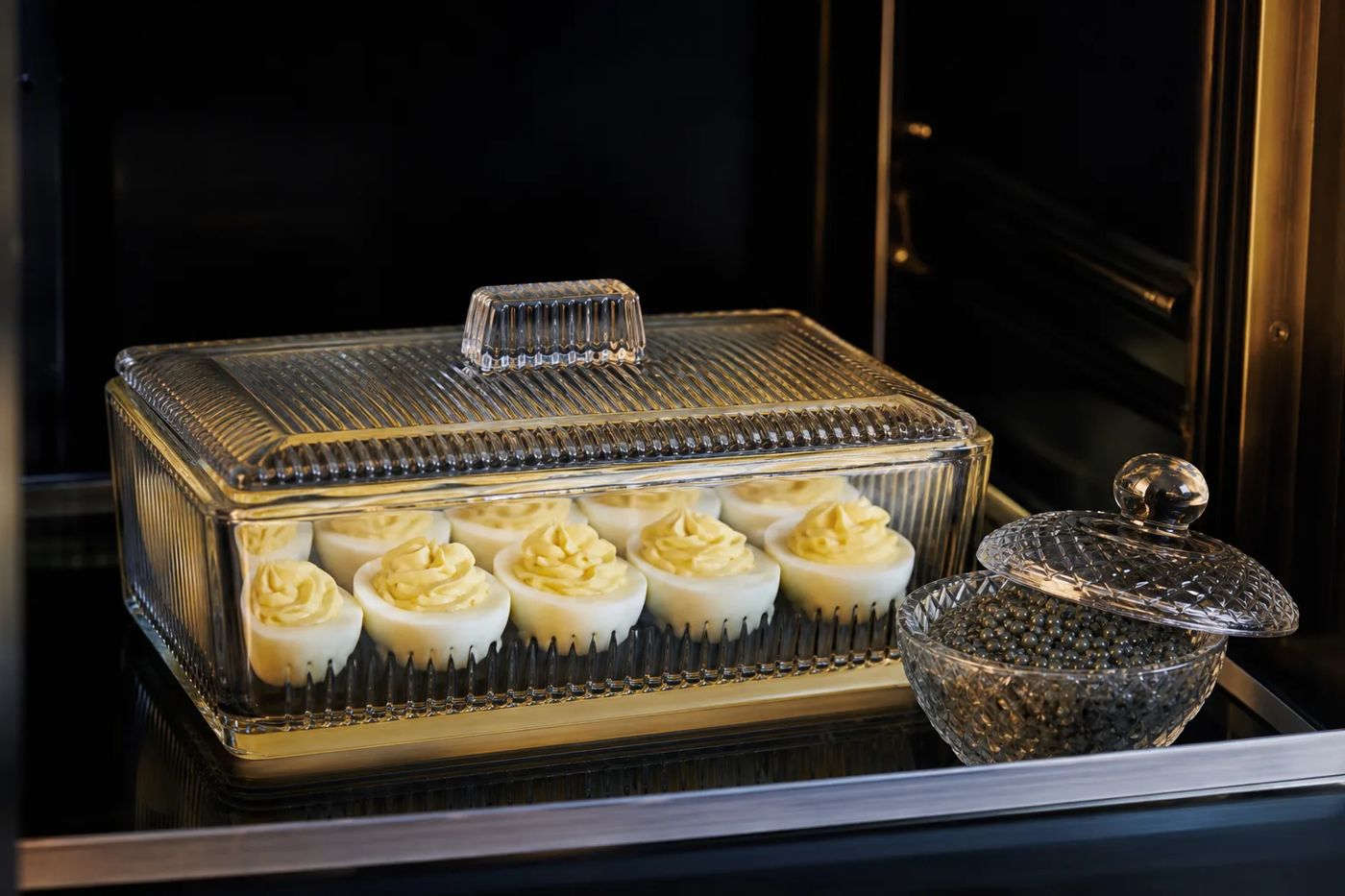
Make the eggs the day before if you like. Keep them refrigerated, with the caviar separate, then add the roe just before serving. The final touch takes moments and helps preserve their texture.
Recipe for devilled eggs with caviar
This recipe is adapted from chef Carrie Walters’s version for Dorothy Lane Market. Added salt is left out initially because the caviar supplies it. The egg-cooking method follows the American Egg Board.
- Makes: 24 egg halves, serving 24 people one small canapé each.
- Caviar per person: 1.25 g, dividing 30 g between the source recipe’s 24 servings.
- Time: 40 minutes with hard-boiled eggs, as stated by Walters; allow extra time to cook and cool raw eggs.
- Equipment: saucepan and lid, ice-water bowl, knife, fork, mixing bowl, two teaspoons or a piping bag, covered tray.
Ingredients
- 12 large hen eggs
- 60 ml mayonnaise made with pasteurised egg
- 15 ml Dijon mustard
- 10 ml rice vinegar
- White pepper, to taste
- 30 g (about 1 oz) salt-cured Siberian sturgeon caviar, Acipenser baerii, for this version
- Snipped chives, optional
The liquid measures are rounded metric conversions of Walters’s US spoon measures. Allergens: egg, fish and mustard; check the mayonnaise and vinegar labels for additional allergens.
Method
- Cook the eggs. Arrange in one layer in the saucepan and cover with cold water by about 2.5 cm. Bring just to the boil, remove from the heat, cover and leave for 12 minutes for large eggs.
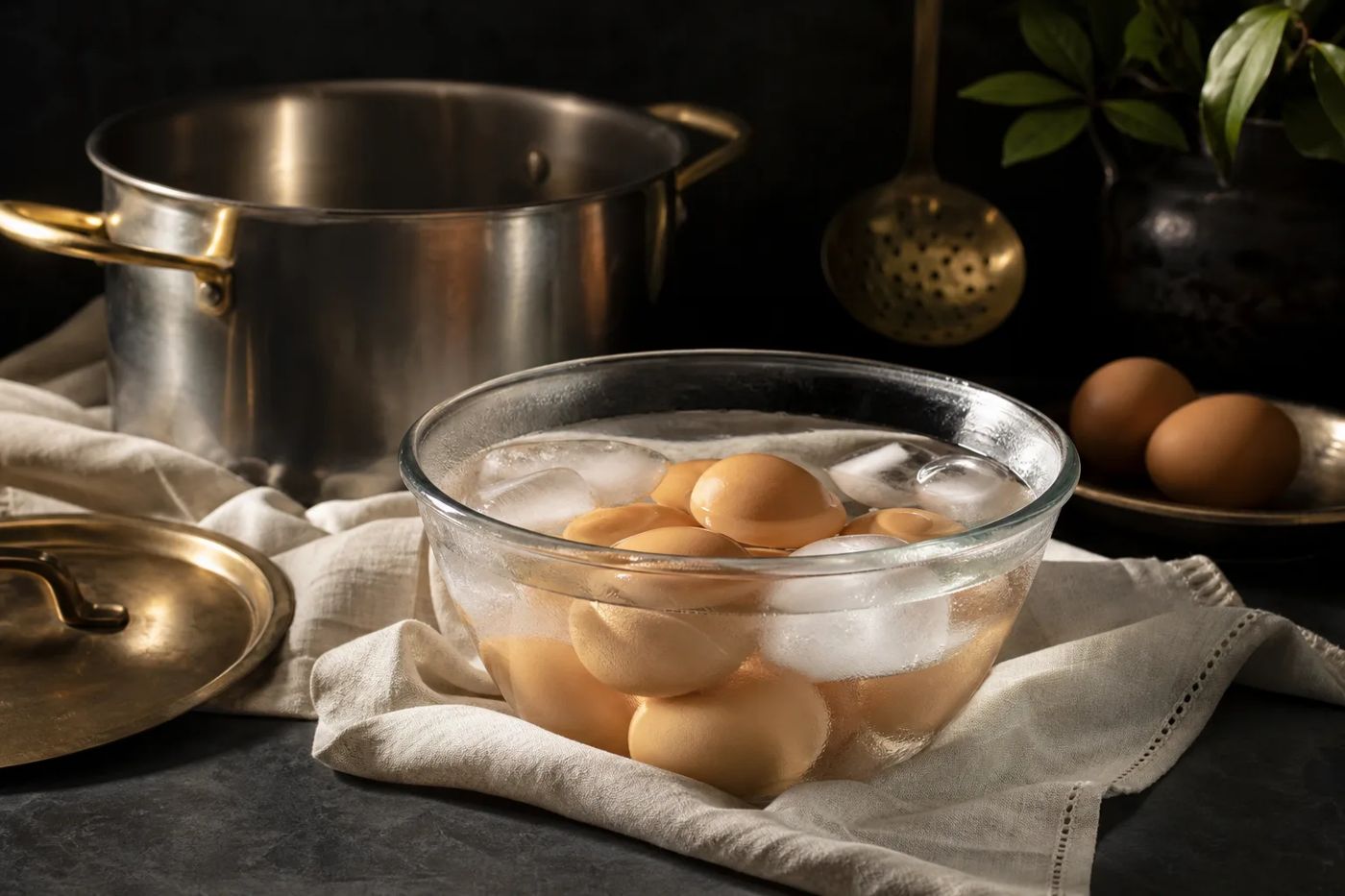
- Cool and peel. Drain immediately and cool completely in ice water. Gently crack the shells all over, then peel from the broad end under cold running water. Wash hands and utensils after handling the shells, before touching the cooked eggs.
- Make the filling. Halve the eggs lengthways and lift the yolks into the mixing bowl. Mash finely, then work in the mayonnaise, mustard, vinegar and a little white pepper until smooth.
- Fill the whites. Spoon the mixture into the hollows or pipe through a wide nozzle. Cover without pressing on the filling and refrigerate at 4°C (40°F) or below, following US FDA advice. Store the separate caviar according to its producer’s instructions.
- Finish just before serving. Divide the caviar evenly between the 24 halves, about 1.25 g each, and add chives if using. Taste one assembled bite before deciding whether the filling needs salt.
Clean peeling and bright yolks
For easier peeling, start with eggs that are not extremely fresh. The American Egg Board recommends buying and refrigerating them a week to ten days before cooking, while staying within their applicable date and storage instructions.
Then watch the cooling as closely as the cooking. The Board explains that excessive heat or cooking time encourages the grey-green ring around the yolk; immediate cooling helps minimise it. Drain the eggs promptly rather than leaving them sitting in hot water.
Which mayonnaise should you use?
Shop-bought mayonnaise made with pasteurised egg is the simplest choice. Homemade mayonnaise usually adds raw yolk to an otherwise cooked filling. Making your own? Find your country’s raw-egg guidance below.
- England, Wales and Northern Ireland: the FSA advises that raw or lightly cooked hen eggs from the British Lion or Laid in Britain assurance schemes can be eaten by most people, including many vulnerable consumers. People with severely weakened immunity should follow their clinician’s advice.
- Scotland: consult current Food Standards Scotland guidance before serving raw egg, particularly to vulnerable people. Mayonnaise made with pasteurised egg avoids using raw yolk.
- US: the FDA advises pasteurised eggs or egg products for recipes served raw or undercooked. It also identifies commercial mayonnaise as containing pasteurised eggs.
- France, an EU example: ANSES advises vulnerable people, including pregnant women, to avoid raw or undercooked eggs. Uncooked egg preparations should be eaten immediately or kept cool and consumed within 24 hours.
- Australia: the May 2025 raw-egg guidelines hosted by FSANZ encourage commercial sauces or pasteurised egg alternatives for food businesses. They recommend these options rather than untreated raw eggs when serving vulnerable people.
Making ahead and keeping them cold
Prepare the untopped eggs the day before, then refrigerate promptly in a covered container. Keep whites and filling separate if you want to pipe them shortly before guests arrive. Otherwise, fill them ahead and cover without flattening the tops.
Plan to serve them the next day. USDA FSIS gives refrigerated cooked egg dishes three to four days, but the caviar’s use-by date and instructions after opening may require a shorter period. The topping, as well as the eggs, determines how long the finished dish can be kept.
At serving time, follow the US FDA limit: no more than two hours out of refrigeration, reduced to one hour above 32°C (90°F). Count preparation and display time together. Put out small batches and keep the reserve eggs refrigerated.
FSANZ’s Australian food-business guidance uses a separate two-hour/four-hour framework, counting time between 5°C (41°F) and 60°C (140°F) cumulatively. For this recipe, discard at the shorter two-hour point, or after one hour above 32°C (90°F), rather than treating four hours as an allowance. See safe serving and time out of the fridge.
Check the topping’s suitability for your guests, too. Ready-to-eat refrigerated foods can carry Listeria, so egg guidance alone is not enough. Anyone pregnant or immunocompromised should check local advice and ask their doctor or midwife about the chilled roe.
Choosing the roe and finishing neatly
For this version, crown the pale filling with chilled, salt-cured Siberian sturgeon caviar, Acipenser baerii. For a different topping, turn to salmon or trout roe: salmon roe appears in Bon Appétit’s devilled egg recipe, while Sammy Monsour and Kassady Wiggins include optional trout roe in a Monterey Bay Aquarium recipe.
Keep the roe distinct from the filling. Surface liquid can wet the yolk mixture, and handling can break the beads and spoil their texture. Lift the roe gently onto the cold eggs just before serving. Do not press it down or stir it into the yolks.
Take particular care with dyed roe against the pale filling. Food publisher The Nibble reports that colour from dyed lumpfish roe can bleed into moist garnishes, especially sour cream. Treat egg filling similarly and add the roe at the last moment. Read more about dyed and natural lumpfish roe.
Where to go next
- Caviar Recipes: discover other dishes built around roe.
- Caviar Canapé Recipes: plan small bites to serve alongside the eggs.
- Eggs, Chives and Shallots: try another egg-based preparation with a different garnish.
Sources
- Dorothy Lane Market, chef Carrie Walters. Caviar Deviled Eggs, published 27 November 2024. Source recipe for the filling, yield, caviar quantity and stated preparation time. Recipe.
- American Egg Board. How to Make Hard-Boiled Eggs, undated online cooking-school edition, checked 2026. Cooking method.
- Food Standards Agency. Advice on safe storage, handling and use of eggs for catering, updated 20 August 2026; applies to England, Northern Ireland and Wales. Guidance.
- US Food and Drug Administration. What You Need to Know About Egg Safety, live consumer-guidance edition checked 2026. Egg safety.
- US Food and Drug Administration. Dairy and Eggs (Food Safety for Moms-to-Be), live consumer-guidance edition checked 2026. Mayonnaise and pasteurised eggs.
- ANSES. Opinion on the updating of the PNNS dietary guidelines for women from menopause and men over 65 years of age, Request No 2017-SA-0143, 23 December 2019, English translation; Salmonella recommendations, page 42. Opinion.
- Food Regulation System, hosted by Food Standards Australia New Zealand. Food Safety Guidelines for the Preparation of Raw and Lightly Cooked Egg Foods, version 1, May 2025. Guidelines.
- US Department of Agriculture, Food Safety and Inspection Service. How do you handle and store eggs safely?, live knowledge-article edition checked 2026. Handling and storage.
- Food Standards Australia New Zealand. 2-hour / 4-hour rule, live food-business guidance checked 2026. Time-control guidance.
- US Food and Drug Administration. What You Need to Know About Preventing Listeria Infections, live consumer-guidance edition checked 2026. Listeria guidance.
- Bon Appétit, Michael McLaughlin. Deviled Eggs with Sour Cream, Chives, and Salmon Roe, 30 November 2002. Salmon roe recipe.
- Monterey Bay Aquarium, Sammy Monsour and Kassady Wiggins. Smoked trout deviled eggs, undated online recipe, checked 2026. Trout roe recipe.
- The Nibble. Caviar Glossary, Page 6: Lumpfish, Osetra & Other Terms With L, M, N & O, updated June 2025. Lumpfish roe entry.
This piece combines an attributed chef’s recipe with an egg-board cooking method and national food-safety guidance; it does not report a site kitchen test.
Last checked: November 2026