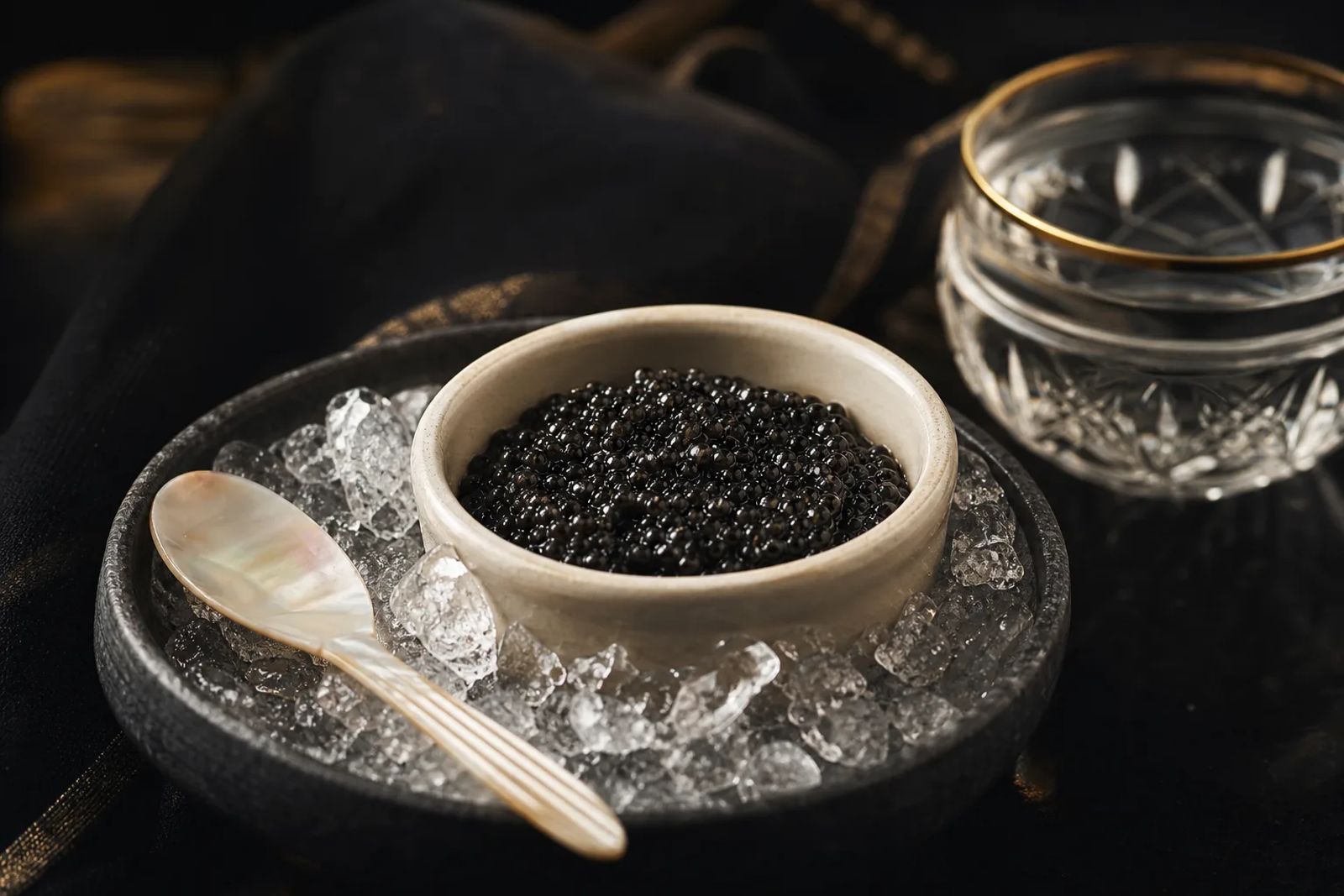
A bead of caviar may melt or break with a distinct pop. Lesley Jacobs Solmonson describes that range in her account of tasting with Petrossian's Christopher Klapp. To feel the difference, take a small spoonful, well chilled, and gently press the beads against the roof of your mouth with your tongue. Calvisius recommends this approach: texture first, then the flavour that remains after swallowing. Give the first taste your full attention before adding anything else.
Before you open the tin
Have everything ready before the caviar leaves the fridge: a clean spoon, a bowl of crushed ice, drinking water and any accompaniments. Read the label, including its storage temperature and instructions after opening. The tin should stay refrigerated while you find the equipment, not sit on the table waiting for you.
Storage and serving temperatures are different. Codex CXS 291 specifies +2 to +4°C for packaging, storage and retail, and 0 to −4°C for wholesale handling. Calvisius specifies 0 to 4°C (32 to 39°F) before serving; Petrossian pages suggest serving between 4 and 10°C, depending on the page. These temperature instructions are not universal safety thresholds; your product's storage directions take priority. Do not store the tin at serving temperature.
Choose a comfortable spoon
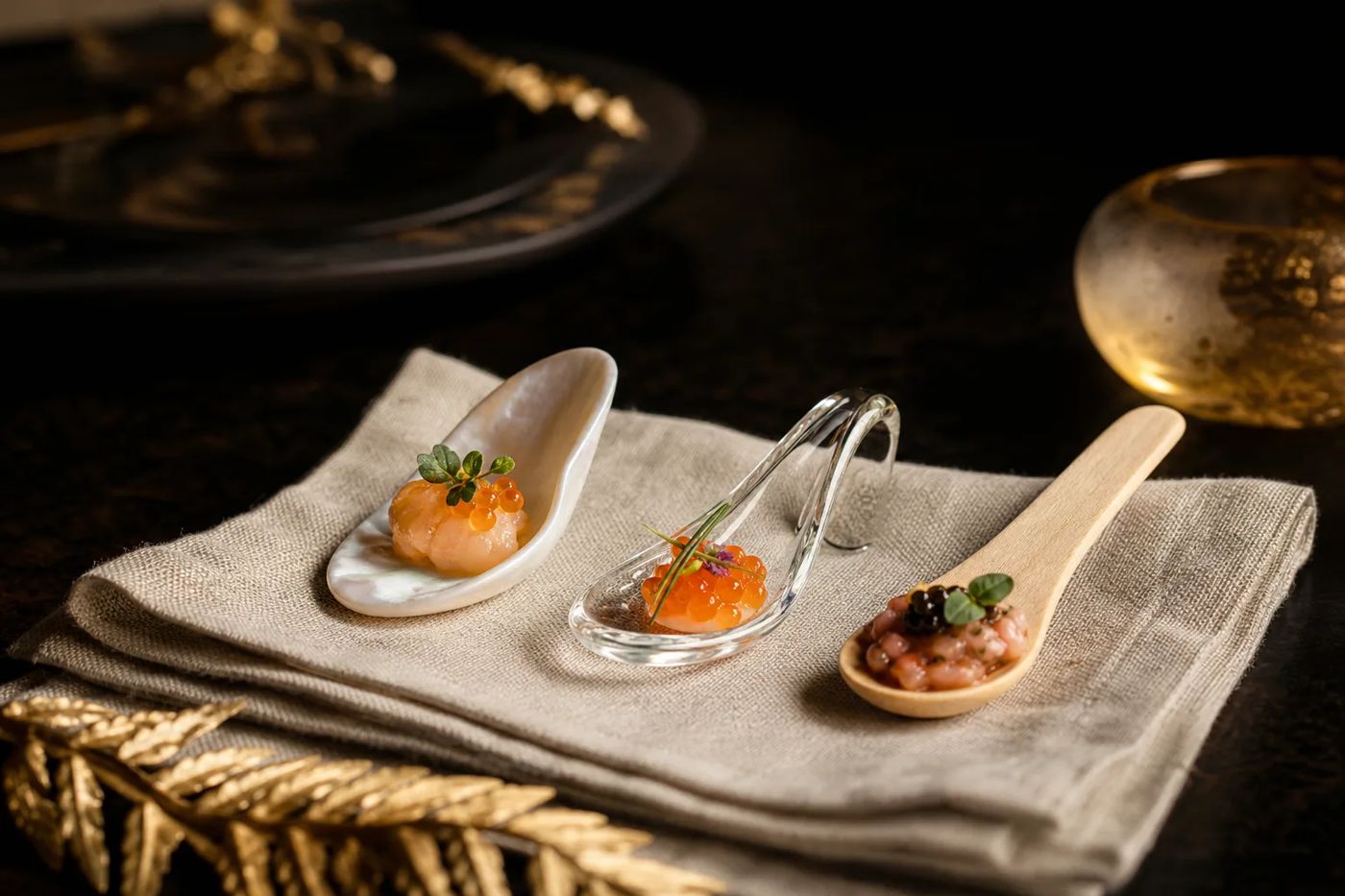
A small, shallow spoon makes a modest mouthful easy to lift. Choose a clean, smooth one made from mother-of-pearl, horn, bone, wood or glass, all established serving choices. It should let you lift the beads gently; an elaborate set of accessories is unnecessary.
The claim that every metal spoon immediately spoils caviar is too sweeping. Silver deserves separate consideration from other utensils; why not use a silver spoon explains the distinction and helps you decide what you need at home.
How to eat caviar, step by step
- Take out and chill
Prunier advises taking caviar out around 5 to 10 minutes before eating and presenting it on ice. Petrossian pages give serving ranges from 4 to 8°C up to 8 to 10°C; follow your product's instructions. Nestle the tin into crushed ice with its rim above the meltwater. Leave additional tins refrigerated until you need them.
- Open and look
Open the tin according to its maker's instructions, then pause over the undisturbed surface. Look at the beads: are they distinct, how glossy do they look, and are any eggs broken? Leave it intact rather than stirring everything together before you taste.
- Lift a small spoonful
Start with about 3 to 5 g rather than a heaped mouthful. Calvisius uses this amount for its tasting sample, and it makes a useful starting portion at home. Lift gently, keeping the rest of the tin undisturbed. Take this first spoonful plain, without bread, cream or garnish.
- Use your tongue
Place the caviar on your tongue and pause. Then press gently upwards against the roof of your mouth, following Calvisius's suggested tasting technique. Feel the beads resist and yield under light pressure rather than immediately grinding them between your teeth.
- Swallow, then wait
Leave a short pause before reaching for the next spoonful. What remains after swallowing: salt, a marine flavour, or something softer and harder to name? That lingering impression is the finish. Notice whether the flavour changes or fades.
- Try the next bite differently
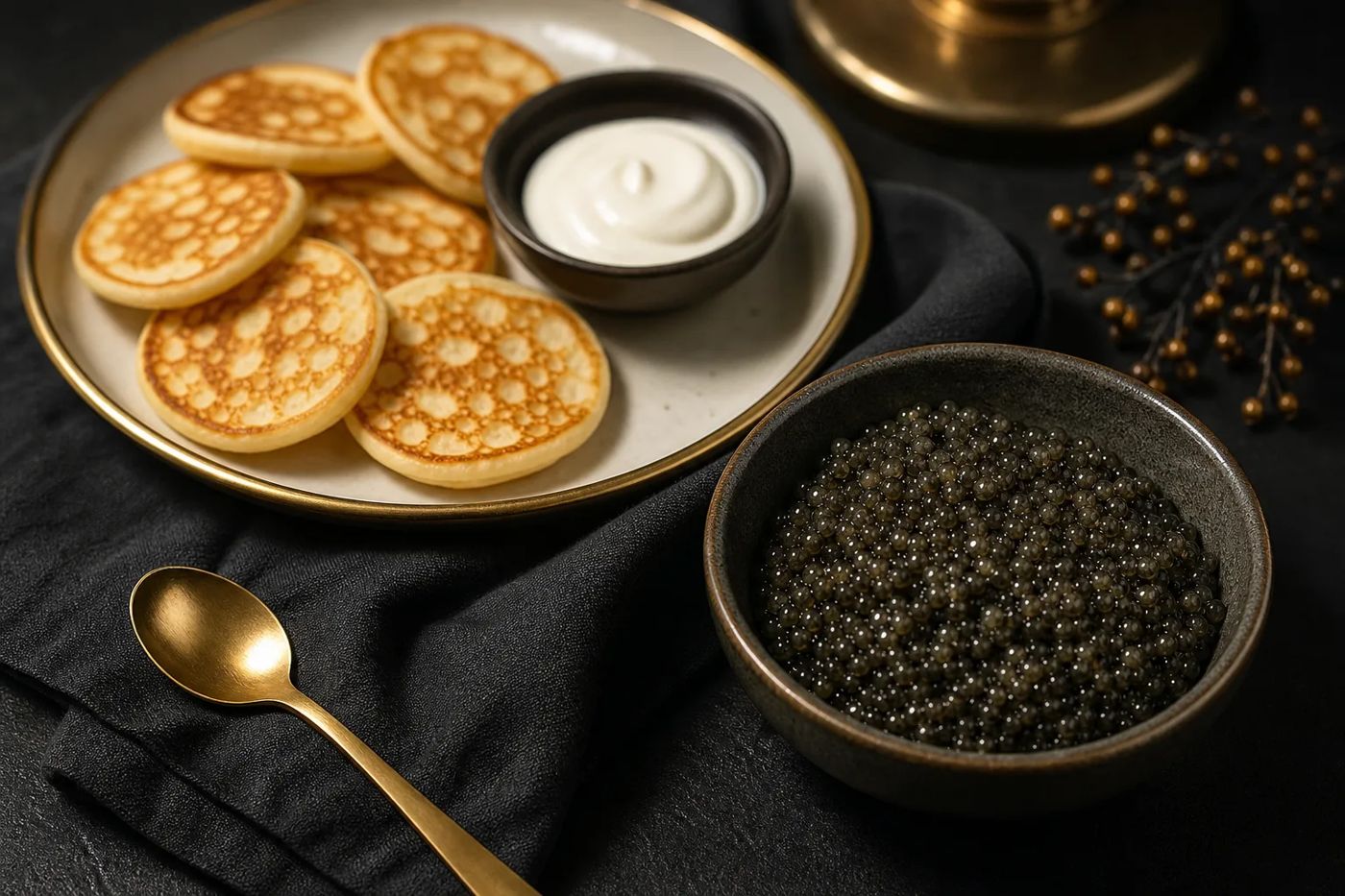
Take another small spoonful with plain bread or a blini, a small pancake often served with caviar. Petrossian recommends plain caviar first, or lightly buttered toast and blinis. Compare the bites, using the plain taste as your reference.
What to notice
Break the first spoonful into four things: aroma, salt, texture and finish. Ask one clear question at a time rather than trying to identify a species blind or reproduce somebody else's tasting note.
For aroma, bring the spoon close and sniff gently. Calvisius describes the expected aroma as faint and reminiscent of the sea rather than strongly fishy. Smell cannot establish whether chilled food has been handled safely throughout: keep that safety judgement separate from the sensory observation.
For salt, ask whether the first impression recedes enough for other flavours to emerge. “Salty at first, then milder” is a useful note. Describe what reaches you rather than searching for every flavour a producer mentions.
For texture, separate firmness from pop. Firmness is the resistance before a bead gives way; pop is the sensation when it breaks. Feel how much pressure each mouthful needs, and whether the beads melt or break distinctly. Notice the resistance first, then the release, rather than expecting every mouthful to deliver the same sensation.
For the finish, ask two questions: how long does it last, and what does it become? The flavour may disappear quickly, linger or change after swallowing. Describe its duration and character without treating length alone as a measure of enjoyment. Explore more tasting vocabulary when you want words for the next few spoonfuls.
Add accompaniments after the plain taste
Build the next bite gradually. Try a little bread, then perhaps a small dab of crème fraîche. Adding one thing at a time lets you taste what each brings, instead of losing the caviar beneath a fully loaded mouthful.
What remains after swallowing: salt, a marine flavour, or something softer and harder to name?
Keep whatever sits beneath the roe cool or lukewarm. Calvisius warns that hot food cooks the eggs and changes their sensory qualities. Strong additions such as raw onion can dominate too. Save those for later bites, when you have a clear impression of the caviar itself and can decide how much you want to add.
For an alternative to the spoon, the optional back-of-hand bump means tasting a small portion directly from the skin between thumb and forefinger. Read more about the caviar bump.
What to drink and how to reset
Water makes a simple reset between tastes. Keep a glass beside you and sip when you want to clear the previous mouthful. In his interview with Yasmin Fahr, Armen Petrossian recommends plain bread, toast or blinis between spoonfuls as a bread-based palate cleanser. Eat the bread separately if you prefer, rather than putting the caviar on it.
For an alcoholic pairing, Calvisius suggests dry sparkling wine; Caviar House also recommends champagne, white wine and vodka. Alcohol is optional. For a first tasting, start with water, then try a drink alongside another bite if you wish.
Keep the tasting cold
A food safety time limit is a ceiling, not a suggested tasting session. The guidance differs by jurisdiction:
- United States: the FDA's consumer guidance says seafood and other perishable food should not remain unrefrigerated for more than 2 hours, or 1 hour above 32.2°C (90°F). Treat these as outer limits, not a tasting timetable.
- England, Wales and Northern Ireland: the Food Standards Agency advises keeping chilled food out for the shortest possible time during preparation, with a maximum of four hours. This separate national guidance does not extend the FDA's limit or override your caviar maker's instructions.
Bring out only what you expect to eat and keep it cold on ice. Leave the rest refrigerated rather than displaying the whole supply on the table. A tin sitting beside melting ice does not establish its actual temperature, so the presence of an ice bowl is no reason to let the meal run indefinitely.
What to do with leftovers
Return any caviar you intend to keep to the fridge promptly, covered and at the temperature on its label. If it has exceeded the applicable guidance for time unrefrigerated, discard it. Use a clean serving utensil, and never return a spoon that has been in someone's mouth to the shared tin.
Follow the producer's instructions for how long the opened product keeps. Petrossian says to consume its opened caviar within 24 hours; Prunier recommends 48 hours. Each instruction belongs to that producer's product, so do not substitute one for the other. For practical help before and during eating, see serving temperature and keeping caviar cold.
Common mistakes
- Stirring the tin to loosen it. Leave the beads undisturbed until you lift a portion. Stirring adds unnecessary handling and loses the chance to assess the caviar as served. Take a small spoonful gently instead.
- Opening first and organising later. Find the spoon, prepare the ice and set out the accompaniments before taking the tin from the fridge. Caviar should not be warming on the table while you finish getting ready.
- Starting with strong garnishes. Onion or lemon can dominate the first impression. Begin plain, then add a little and compare, keeping those familiar flavours from obscuring your first taste of the roe.
Where to go next
- Caviar for Beginners: a broader introduction to caviar, its names and the basic choices worth understanding before your next encounter with sturgeon roe.
- How to Serve Caviar: The Complete Guide: practical guidance on presentation and accompaniments when you are serving guests rather than tasting a spoonful yourself.
Sources
-
Calvisius, The Use of Caviar in the Kitchen. Undated web edition, retrieved November 2026. Producer guidance specifying storage before serving at 0 to 4°C, avoiding hot supporting foods and limiting overpowering accompaniments. Source page.
-
Petrossian, Caviar world. Undated web edition, retrieved November 2026. Producer recommendation to serve caviar at 4 to 8°C, with plain tasting and simple accompaniments. Source page.
-
Petrossian, Frequently Asked Questions. Undated web edition, retrieved November 2026. Producer guidance on spoon materials, refrigerated storage, plain first tastes and consumption within 24 hours after opening. Source page.
-
Prunier, How should you eat caviar? Published 13 March 2024, web edition retrieved November 2026. Producer instructions to take caviar out around 5 to 10 minutes before eating, present it on ice and consume opened caviar within 48 hours. Source page.
-
Calvisius, Tasting Caviar. Undated web edition, retrieved November 2026. Producer tasting method using a 3 to 5 g sample, visual and aromatic observation, gentle handling and attention to the finish. Source page.
-
Calvisius USA, How to... / FAQ. Undated web edition, retrieved November 2026. Producer recommendation to press the roe against the roof of the mouth with the tongue; explanation of the back-of-hand bump. Source page.
-
LA Weekly, Lesley Jacobs Solmonson, How to Sip Vodka and Pop Caviar on Valentine's Day. Published 13 February 2015. Report of a tasting with Christopher Klapp, including contrasting melting and popping textures. Source article.
-
The Daily Meal, Yasmin Fahr, Caviar Q&A With Armen Petrossian. Published 17 November 2010. First-person interview supporting the attributed recommendation for bread, toast or blinis between spoonfuls. Source interview.
-
Caviar House, Caviar FAQ: Storage, Tasting and Choosing. Undated web edition, retrieved November 2026. Producer pairing preferences including champagne, white wine and vodka. Source page.
-
US Food and Drug Administration, Selecting and Serving Fresh and Frozen Seafood Safely. Current consumer web guidance, retrieved November 2026. United States advice on refrigeration, serving seafood cold and the two-hour limit, reduced to one hour above 90°F. Official guidance.
-
Food Standards Agency, How to chill, freeze and defrost food safely. Published 18 December 2017, current GOV.UK edition retrieved November 2026. Guidance applying to England, Northern Ireland and Wales, including following packaging instructions and minimising time outside refrigeration during preparation. Official guidance.
The piece was researched from retrieved producer instructions, attributed tasting accounts and national food-safety guidance; the numbered sequence is an editorial synthesis, not a reported tasting test.
Last checked: November 2026