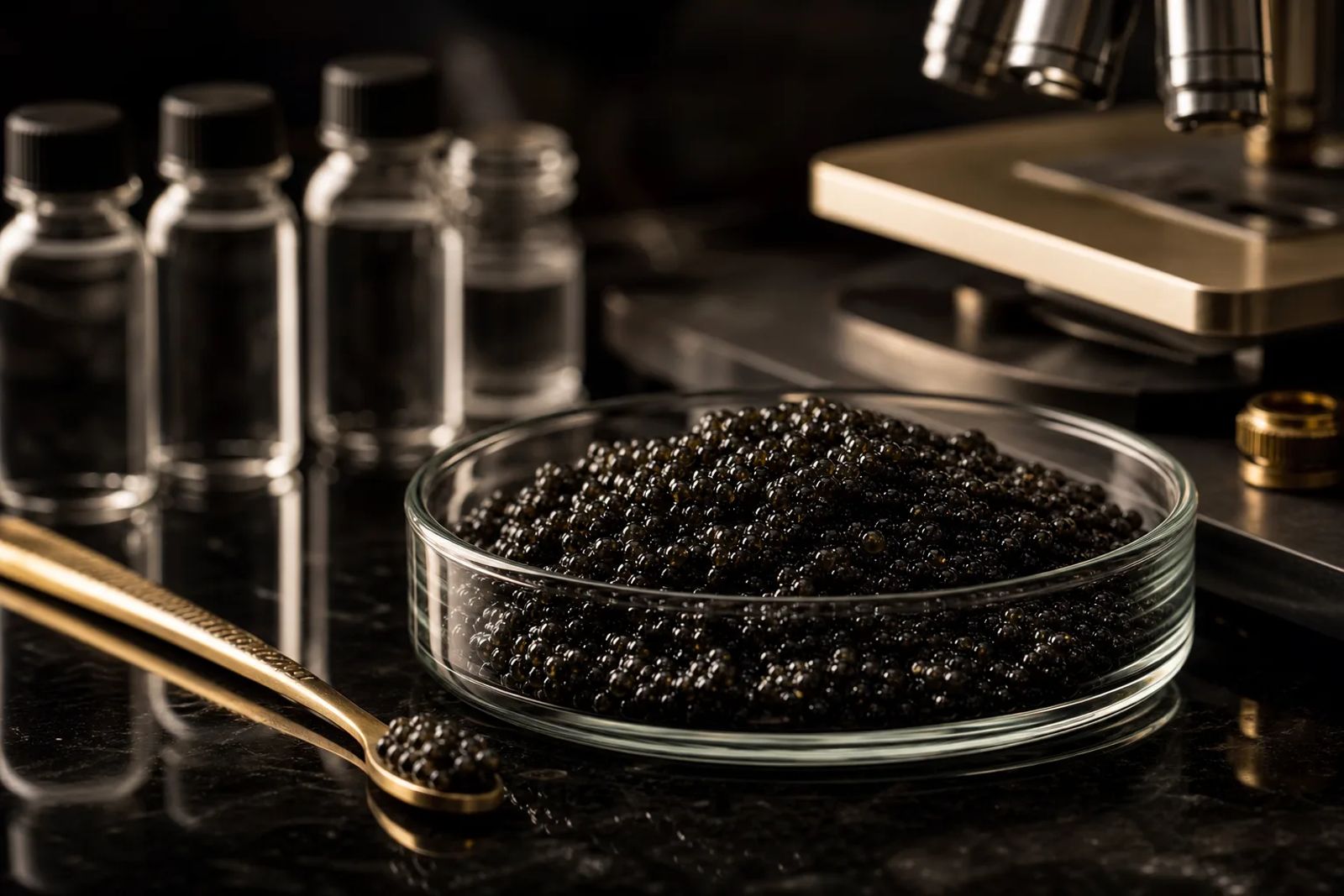
In one mature female sturgeon, researchers measured 0.028 mg/kg of mercury in gonadal tissue and 0.435 mg/kg in fillet. Same fish, very different concentrations. That finding, from Webb and colleagues’ 2006 study, captures the central challenge of understanding contaminants in caviar: what is in the flesh does not tell you what is in the roe.
Caviar can contain mercury, other metals and persistent pollutants, with amounts varying between samples. Published research supports neither a blanket warning of high contamination nor a promise of contaminant-free caviar. The evidence that matters is a test of the product, read against the rules covering it.
Mercury in caviar is not the same as mercury in flesh
Webb and colleagues studied wild white sturgeon from the lower Columbia River in 2006. Using cold vapour atomic fluorescence spectrophotometry, they measured total mercury in cheek muscle from 57 fish and gonadal tissue, the reproductive organs, from 49. Mean concentrations were 0.171 mg/kg in muscle and 0.0273 mg/kg in gonads, rounded from the published figures.
Those 49 gonad samples were not 49 samples of edible caviar: the main series included males and immature females. The mature female described above was examined separately. Together, the findings show how much concentrations can differ between tissues; they offer no conversion factor for predicting mercury in a tin.
Hosseini and colleagues measured mercury in wild Persian sturgeon caviar in 2013 using a direct mercury analyser. The abstract reports 1.39 to 1.50 µg/g mercury, but gives neither a sample count nor the weight basis needed to compare the result with limits.
What other studies have measured
A laboratory result is only as useful as its description. Total arsenic does not reveal how much is inorganic arsenic, the form used in several food limits. Total mercury does not separately quantify methylmercury. Metals and organic pollutants also require different analyses.
| Contaminant | Legal benchmark and jurisdiction | What was measured | Sample and study |
|---|---|---|---|
| Mercury | EU Regulation 2023/915: 1.0 mg/kg for specified sturgeon muscle, not specifically roe | Markedly different total mercury concentrations in muscle and gonads | Webb et al., 2006: 57 muscle samples; 49 gonad samples |
| Cadmium, lead and arsenic | No universal caviar limit; category and chemical form matter | Little difference between wild and farmed groups | Hosseini et al., 2013: beluga caviar; abstract gives no sample count |
| PCBs | FSANZ Schedule 19: 0.5 mg/kg for fish; comparisons depend on the PCB reporting scheme | Mean total PCBs: 15.4 ng/g wet weight | Wang et al., 2008: three sturgeon species imported from four countries |
Wang’s samples came from Azerbaijan, Bulgaria, Iran and Russia before the 2006 export restrictions. The researchers also measured pesticides, flame retardants and 23 metals. Their PCB results included dioxin-like congeners, particular PCB compounds with dioxin-like effects, rather than measurements of dioxins themselves. These historical study samples do not describe everything currently sold.
Research into dioxins in farmed fish has included sturgeon, including a 2020 study of fish from Polish and Vietnamese farms. Here, too, the tissue matters: results for fish meat cannot supply missing evidence about finished roe.
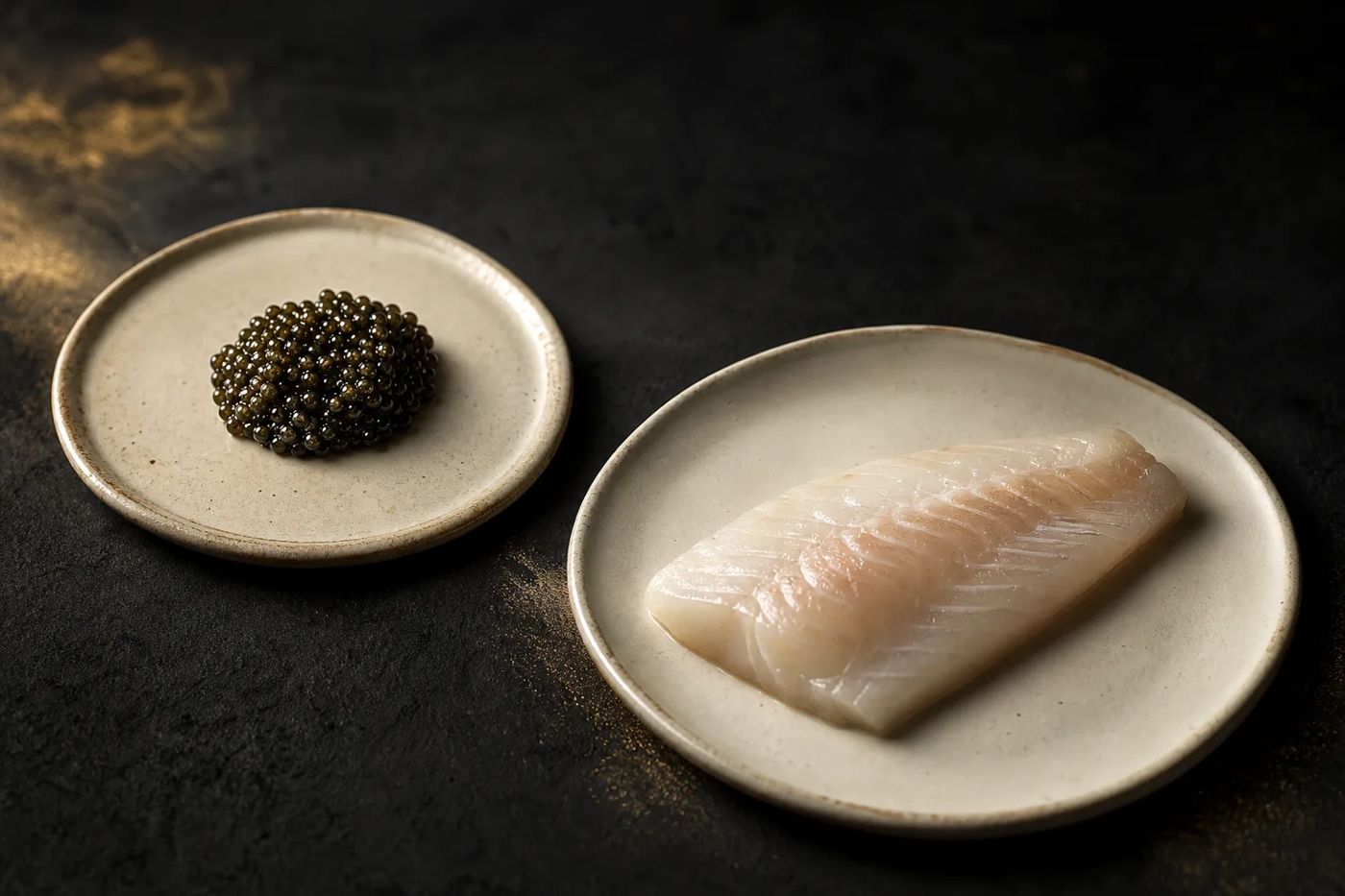
Wild versus farmed: follow the water and feed
Water and food shape a fish’s exposure to contaminants. Wild fish encounter them through their environment and diet; farms have opportunities to control water sources and feed ingredients. Contamination remains possible in either system.
The telling questions are what entered that particular production system and what monitoring found. In the 2013 comparison of beluga sturgeon, Huso huso, researchers found no large fluctuations between farmed and wild caviar groups for the metals examined. Neither group established a general advantage. See sturgeon feed and water quality for the production controls behind those differences.
Which legal limits actually cover caviar?
Start with the food category, the chemical measured and the jurisdiction. A maximum level governs a defined category; an action level guides enforcement. Neither is a recommended intake. Check the units, too: 1 mg/kg equals 1 µg/g, or one part per million.
A small portion reduces the amount ingested; it cannot make a non-compliant product acceptable.
EU and Northern Ireland. Annex I of Regulation (EU) 2023/915 lists sturgeon, Acipenser species, among fish whose muscle meat has a mercury maximum of 1.0 mg/kg. That is a muscle limit, not an established 1.0 mg/kg caviar limit. Lead and cadmium entries also need to be read for the tissue they cover, rather than borrowing a figure from fish flesh.
Great Britain. England, Scotland and Wales use the separately amended, assimilated Regulation (EC) No 1881/2006. The newest EU regulation does not apply automatically. Businesses need the applicable GB text and the correct product classification.
United States. FDA’s CPG 540.600 gives an action level of 1 ppm methylmercury in the edible portion of fish and other aquatic animals, including processed products. A total-mercury result above that figure does not itself measure methylmercury. FDA can also act against unsafe food under its broader food-safety powers.
Australia. FSANZ Schedule 19 places other fish and fish products outside its named higher-mercury group under a sampling scheme with a 0.5 mg/kg mean. The permitted maximum and sample requirements depend on the sampling situation, rather than imposing a simple 0.5 mg/kg ceiling on every sample. The same schedule lists fish limits of 0.5 mg/kg for lead and 2 mg/kg for inorganic arsenic.
Japan and China. Japan’s official summary lists provisional fish limits of 0.4 ppm total mercury and 0.3 ppm methylmercury, with exclusions including river fish. Confirm how these apply to the particular caviar product. China’s GB 2762-2025 applies from 2 September 2026; its caviar classification and limits need checking, and no figure is given here.
Codex. CXS 193-1995 is the international reference for contaminants, rather than automatically national law. Its species-specific methylmercury limits do not establish a universal caviar maximum. No roe-specific Codex benchmark was found.
Veterinary residues and official alerts
Veterinary medicines raise a different question from environmental mercury. FDA’s aquaculture controls identify drug residues, including unauthorised treatments, as hazards processors must consider. An official finding in farmed seafood concerns the named product or consignment; it cannot establish that sturgeon caviar generally contains that residue.
No reproducible set of records was found for caviar residue incidents or contaminant alerts from the EU’s Rapid Alert System for Food and Feed, RASFF. This page therefore gives no count of either.
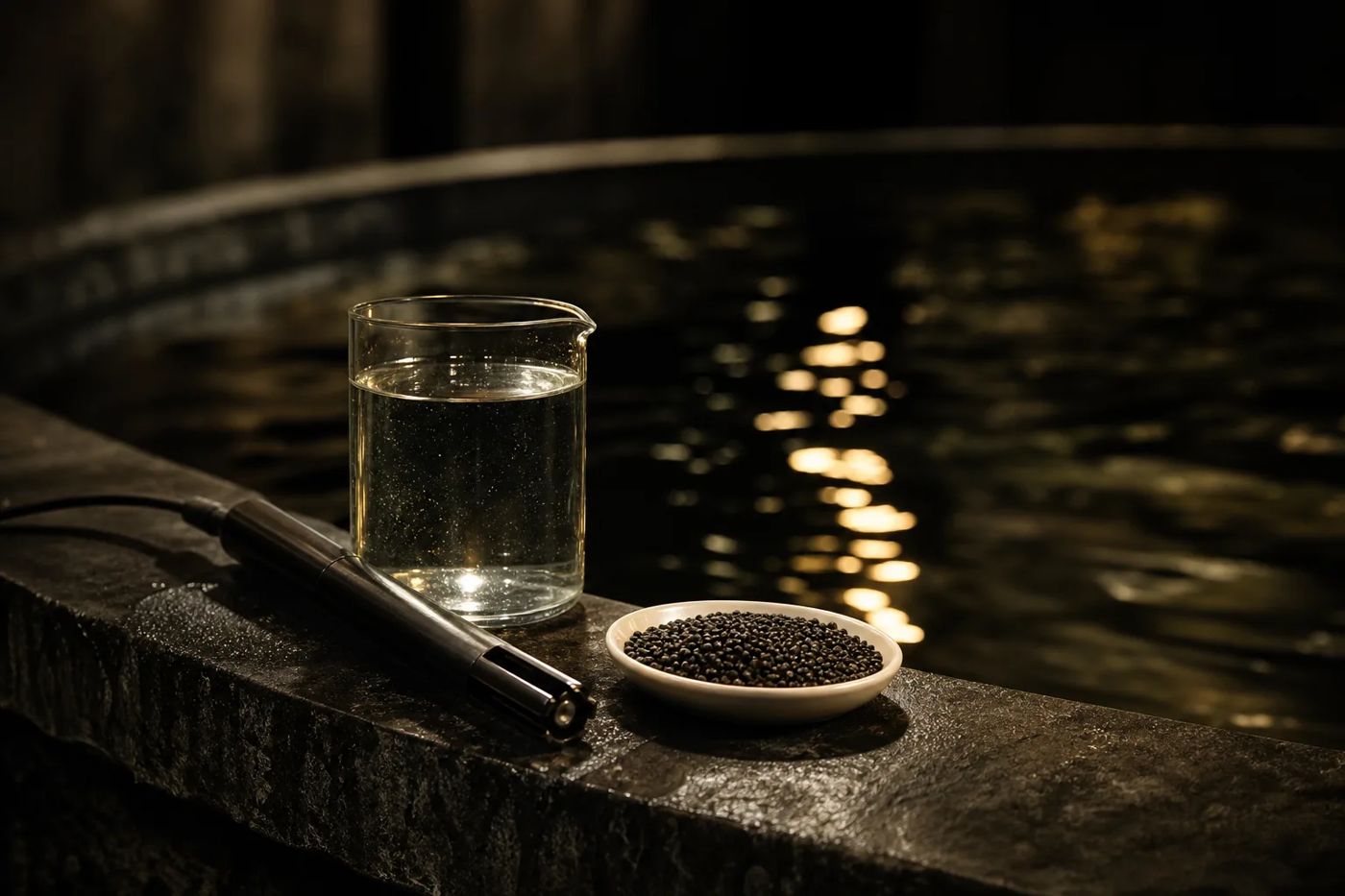
What a useful laboratory report tells you
A useful report identifies the batch, tests the roe itself and tells you exactly what was measured. Look for units and a clear wet or dry weight basis. Where relevant, it should distinguish total mercury from methylmercury, and total arsenic from inorganic arsenic.
Laboratories can measure metals using techniques such as inductively coupled plasma mass spectrometry, ICP-MS. Mercury can also be measured with dedicated analysers or atomic fluorescence methods. Organic pollutants need a different analytical panel: a metals result tells you nothing about PCBs.
Read “below detection” precisely. It means below that method’s detection limit, not absolute zero.
These are checks for producers and testing laboratories, not judgements you can make by tasting.
What should you do as a reader?
Count caviar as part of your total seafood intake. Exposure depends on the contaminant concentration, how much you eat and how often. A small portion reduces the amount ingested; it cannot make a non-compliant product acceptable.
US FDA and EPA fish advice gives neither sturgeon nor caviar its own category in the published choices chart. Australia’s FSANZ mercury advice also provides no caviar-specific allowance. An absent name is not an official low-mercury endorsement, and advice about a fillet cannot be converted into a weekly roe allowance.
Pregnancy advice also covers microbial hazards, not just metals. Read caviar during pregnancy, and ask a doctor or midwife about personal concerns, especially after repeated consumption of fish covered by a local advisory.
Finally, borax belongs to a different discussion. It is deliberately added as a preservative where permitted, making it an additive rather than an environmental contaminant.html) for the wider health guide.
Sources
-
Webb, M. A. H. et al. Mercury concentrations in gonad, liver, and muscle of white sturgeon Acipenser transmontanus in the lower Columbia River. Archives of Environmental Contamination and Toxicology 50:443 to 451, 2006. Author manuscript held by the US Environmental Protection Agency.
-
Hosseini, S. M. et al. Metal content in caviar of wild Persian sturgeon from the southern Caspian Sea. Environmental Science and Pollution Research 20:5839 to 5843, 2013. PubMed abstract.
-
Hosseini, S. V. et al. Heavy metal bioaccumulation and risk assessment for wild and farmed beluga sturgeon caviar. Environmental Monitoring and Assessment 185:9995 to 9999, 2013. PubMed abstract.
-
Wang, W., Batterman, S., Chernyak, S. and Nriagu, J. Concentrations and risks of organic and metal contaminants in Eurasian caviar. Ecotoxicology and Environmental Safety, 2008. Publisher abstract and indexed passages.
-
Concentration and risk of contamination with trace elements in acipenserid and salmonid roe. Journal of Food Composition and Analysis 110:104525, 2022. Publisher abstract.
-
Farmed Fish as a Source of Dioxins and PCBs for Polish Consumers. Peer-reviewed research article, 2020. Full-text repository record.
-
European Commission. Commission Regulation (EU) 2023/915 on maximum levels for certain contaminants in food. Consolidated text dated 8 October 2025, Annex I. EUR-Lex PDF.
-
Food Standards Agency. Retail Surveillance Survey Sampling Programme 2025/26. Research and Evidence report, 2026; legislative discussion distinguishing England and Wales from Northern Ireland. Report.
-
Food Standards Scotland. Chemical Contaminants in Plant Based Protein Survey. 2026, Table 2, comparison of GB and EU/Northern Ireland legislation. Report.
-
US Food and Drug Administration. Chemical Contaminants Transparency Tool: Mercury in fish, shellfish, crustaceans and other aquatic animals. Updated 20 March 2025; references CPG 540.600.
-
US Food and Drug Administration. Mercury in Food. Current online guidance retrieved November 2026. Guidance.
-
Australian Government. Australia New Zealand Food Standards Code, Schedule 19: Maximum levels of contaminants and natural toxicants. Compilation dated 1 September 2026, sections S19-4, S19-5 and S19-7. Federal Register of Legislation.
-
Ministry of Foreign Affairs of Japan. Table F04: Provisional Regulatory Limitations of Contaminants in Food. Undated official summary retrieved November 2026. Summary table.
-
National Health Commission of China. Regulatory documents index. Announcement dated 25 September 2025 concerning GB 2762-2025 and other national food-safety standards. Official index.
-
FAO/WHO Codex Alimentarius Commission. General Standard for Contaminants and Toxins in Food and Feed, CXS 193-1995. Indexed 2025 text extract retrieved; the complete current document could not be accessed.
-
US Food and Drug Administration. Aquacultured Seafood. Online regulatory overview, content current as of 19 September 2023. Overview.
-
US Food and Drug Administration and Environmental Protection Agency. Advice about Eating Fish. Current online advice and species chart retrieved November 2026. Advice.
-
Food Standards Australia New Zealand. Mercury in fish. Current online consumer guidance retrieved November 2026. Guidance.
This draft was researched using peer-reviewed tissue and caviar studies.
Last checked: November 2026