
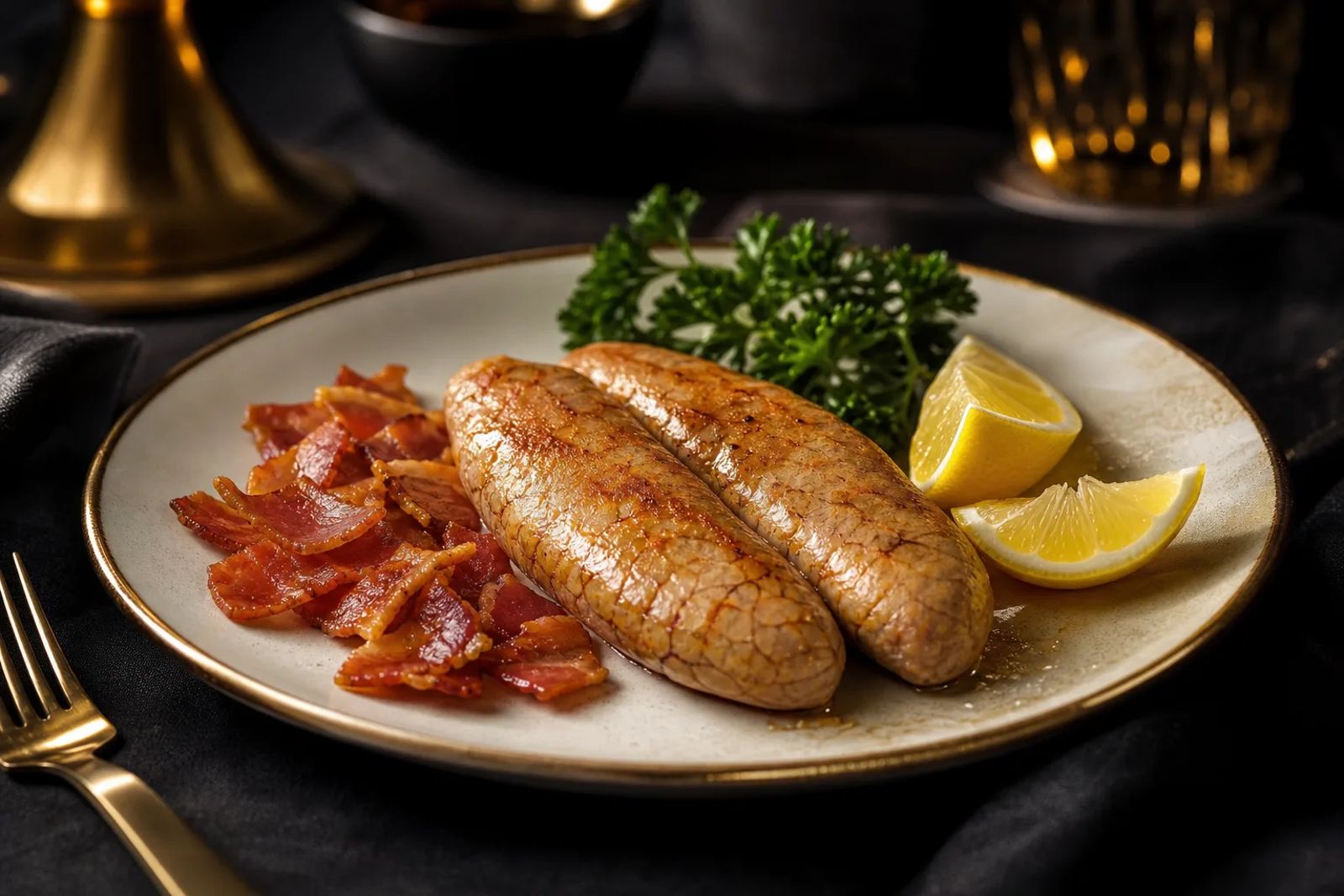
Lightly browned outside, firm within: the roe in NPR's Simple Shad Roe recipe is a cooked egg mass, not a spoonful of popping beads. Shad roe usually arrives as paired sacs, ready to cook whole rather than serve as loose, salted eggs. On North America's Atlantic coast, it belongs to spring and the spawning migrations. Whether a river can be fished is another matter, governed by its conservation rules.
Which fish produce shad roe?
American shad (Alosa sapidissima) is the principal fish in the American tradition. Hickory shad (Alosa mediocris) is a separate species, not another name for American shad. Even within the same state, their harvest rules can differ.
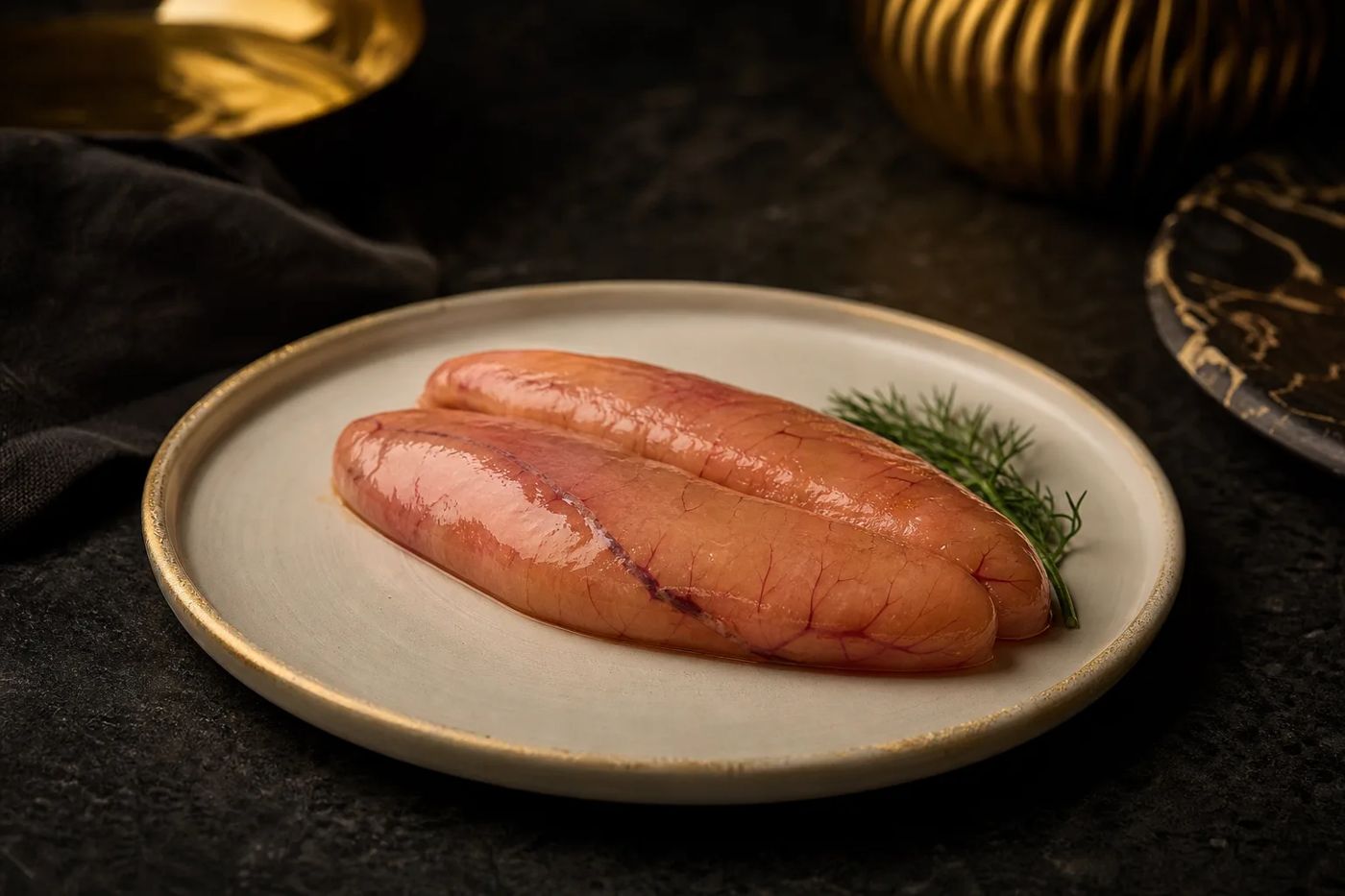
A set of roe means two egg sacs. For classic whole-sac preparations, keep their enclosing membranes intact. This is delicate whole-roe cookery, quite different from spooning cured eggs onto food. The guide to other fish roe places shad roe alongside other fresh and preserved roes.
When is it in season?
Spring brings shad back to the rivers. American and hickory shad are anadromous: they live at sea and return to freshwater to spawn. Those migrations explain the seasonal appearance of fresh roe, though its arrival at a fishmonger's says nothing about permission to fish the nearest river.
The Hudson and Delaware have documented histories of shad fishing and eating roe. In Chesapeake tributaries, Maryland's restoration team records memories of shad roe cooked like scrambled eggs. The Connecticut River still has a regulated American shad fishery. Each river has its own story and rules.
Ask the fishmonger two questions: which species is it, and where was it caught? A market or restaurant address does not identify the harvest river. Nor does a cherished spring dish establish that a local stock can support fishing.
Why conservation rules matter
American shad harvest fisheries need approved sustainable fishery management plans under the Atlantic States Marine Fisheries Commission's Amendment 3. The closure requirement took effect in January 2013; catch-and-release fisheries may be allowed where local rules permit.
New York: recreational and commercial American shad fishing remain closed in the Hudson River and the state's Marine District. The Hudson closure began in 2010. The Delaware fishery operates under a sustainable fishing plan covering 2022 to 2026.
Connecticut: the state's recreational guide permits American shad harvest only in the Connecticut River system, by angling. The daily limit is six fish combined with hickory shad.
Maryland: taking American and hickory shad is generally prohibited, with narrow regulatory exceptions. The American shad closure dates to 1980. Catch and release remains subject to local rules.
These selected state positions were checked in November 2026. Before fishing, consult the relevant state's current rules, including waterbody restrictions. They are not a complete account for every river mentioned, and recreational permission does not authorise commercial sale.
For the wider food history, read American caviar culture. A remembered tradition and a fishery open today are two different things.
How to cook shad roe
Gentle heat protects the sacs. Chef Ed, writing on One Block West's blog in 2008, described shad roe as mild, with a hint of fish. Keep that delicacy in mind: handle the roe without puncturing it, and avoid fierce frying.
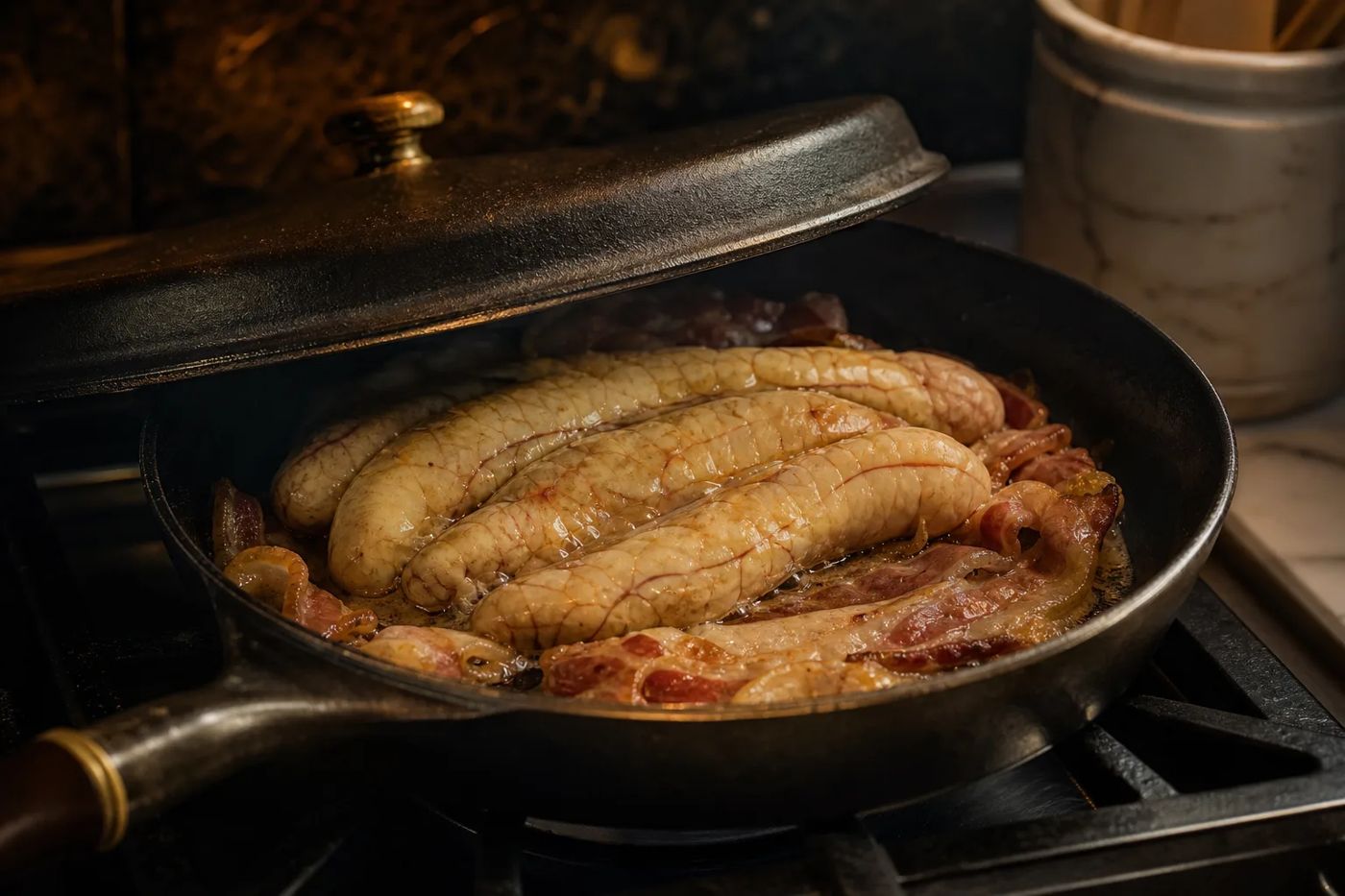
John McPhee's bacon-lined, covered-pan method, reproduced by the Maine Organic Farmers and Gardeners Association, calls for the lowest heat once sizzling begins. Steam that builds rapidly can burst the sacs.
For a simpler pan-fried version, New Jersey's seafood recipe collection offers the following method. The source uses approximately 680 g of roe, described as two pairs. These steps summarise its technique rather than constitute a separately tested recipe.
- Coat the intact roe lightly in flour. Place it carefully in butter and oil.
- Fry slowly until browned. The source suggests about six minutes on each side; check cooking temperature rather than relying on timing alone.
- Season and serve with parsley, crumbled cooked bacon and lemon wedges, as the source suggests. Omit the bacon for a simpler plate if preferred.
US FDA consumer guidance advises refrigerating seafood at 4°C (40°F) or below. Use fresh seafood within two days or freeze it. Its cooking temperature for most seafood is 63°C (145°F); follow any more specific validated instructions supplied with the roe. Neither browning nor smell is a safety test.
The flour-and-butter version contains fish, wheat and milk. For another whole-sac roe to understand before cooking, see cod roe: fresh, smoked and cured.
European shads are not a substitute to catch
Europe's allis shad (Alosa alosa) and twaite shad (Alosa fallax) are distinct relatives, not regional names for American shad. Both appear in Annexes II and V of the EU Habitats Directive. These address habitat conservation and management of taking from the wild, rather than imposing an identical fishing ban throughout Europe.
A remembered tradition and a fishery open today are two different things.
Both also appear in Appendix III of the Bern Convention, which requires regulated exploitation compatible with conservation. In Great Britain, the Wildlife and Countryside Act 1981 makes intentionally killing, injuring or taking either species an offence. For Northern Ireland, check the current position with the relevant authority.
Hilsa roe in Bangladesh and India
Hilsa (Tenualosa ilisha), also called ilish, is eaten in Bangladesh and eastern India. In Bangladesh, its roe is cooked, including by frying. A 2025 study examined roe from 90 fish collected at three landing centres and evaluated fried samples.
Bangladesh's 2026 nationwide brood-hilsa ban ran from 8 to 29 October. It covered catching, transport, storage, marketing and sale. Those dates applied to that year, rather than establishing a permanent annual calendar. Additional sanctuary and juvenile-fish restrictions need separate checking.
India's rules are regional. West Bengal's 2013 Notification 719, amending its Inland Fisheries Rules, prescribes fishing closures in declared hilsa sanctuaries during June to August and October to December. This is not an India-wide ban. Its marine Order 718 separately prescribes a spawning closure around the full moon within the period from 15 September to 24 October.
These are the provisions of the published instruments, rather than a verified 2026 local fishing calendar. Check current state notices before fishing or sourcing roe.
Sources
- New York State Department of Environmental Conservation. American Shad, current online account, undated. Species identity, Hudson and Delaware food history, Hudson closure and Delaware management plan.
- Maryland Department of Natural Resources. Shad Restoration, current online account, undated. Scientific names, Chesapeake fisheries and closure history.
- Virginia Department of Wildlife Resources. Hickory Shad, updated 18 July 2024. Anadromous migration and spring spawning.
- Maryland Department of Natural Resources. Survey Teams Fish for Signs of Successful Shad Restoration in Maryland’s Rivers, 13 November 2024. Recorded memories of cooking shad roe.
- Atlantic States Marine Fisheries Commission. ASMFC Approves American Shad Amendment, February 2010. Amendment 3, sustainable-fishery exceptions and January 2013 closure requirement.
- Connecticut Department of Energy and Environmental Protection. Freshwater Fishing Guide: Species Regulations, online edition incorporating 2026 changes. American and hickory shad recreational rules.
- Maryland Department of Natural Resources. Commercial Coastal Regulations, current online edition, undated. American and hickory shad harvest prohibitions, citing COMAR 08.02.05.05 and 08.02.05.06.
- One Block West, Chef Ed. Of Spring and Groundhogs: Shad Roe, 7 March 2008. Attributed flavour description and paired sacs.
- NPR, reproduced by VPM. Simple Shad Roe, 28 February 2008, updated 3 July 2023. Delicate membranes, paired sacs and cooked exterior.
- Maine Organic Farmers and Gardeners Association. Shad, online article, 2004. John McPhee's attributed covered-pan technique and warning about steam bursting roe sacs.
- State of New Jersey, seafood programme. Shad: Herald of Springtime, Recipes, undated PDF. “Sauteed Shad Roe”, ingredients, quantity and method.
- US Food and Drug Administration. Selecting and Serving Fresh and Frozen Seafood Safely, current online consumer guidance, undated. Refrigeration, use within two days and cooking temperature for most seafood.
- Environment Agency. Alosa alosa and Alosa fallax: literature review and bibliography, R&D Technical Report W1-014/TR, 2003. European legal and conservation framework, including Habitats Directive annexes and Bern Convention Appendix III.
- Natural England and Department for Environment, Food and Rural Affairs. Fish: advice for making planning decisions, current online guidance, 2022. Wildlife and Countryside Act protection against intentional killing, injury and taking.
- NatureScot. Allis shad and twaite shad, updated 11 September 2023. Species identities and prohibition on fishing for shad in Britain.
- Scientific Reports. Nutritional profiling and sensory evaluation of hilsa Tenualosa ilisha (Hamilton, 1822) eggs roe from three different locations of Bangladesh, 2025. Ninety fish from three landing centres; laboratory analyses and sensory evaluation of fried roe.
- Bangladesh Sangbad Sangstha. 22-day ban on hilsa fishing from Oct 8 to 29, 15 September 2026. Government taskforce announcement of the 2026 nationwide closure and associated restrictions.
- Government of West Bengal, Fisheries Department. Order 718 and Notification 719: hilsa fishing restrictions and conservation, dated 4 April 2013, published in the Kolkata Gazette on 9 April 2013. Marine spawning closure and inland sanctuary provisions.
Research combined fisheries-agency guidance, published legal instruments, attributed cookery accounts and a peer-reviewed hilsa study, keeping historical provisions separate from verified current notices.
Last checked: November 2026