
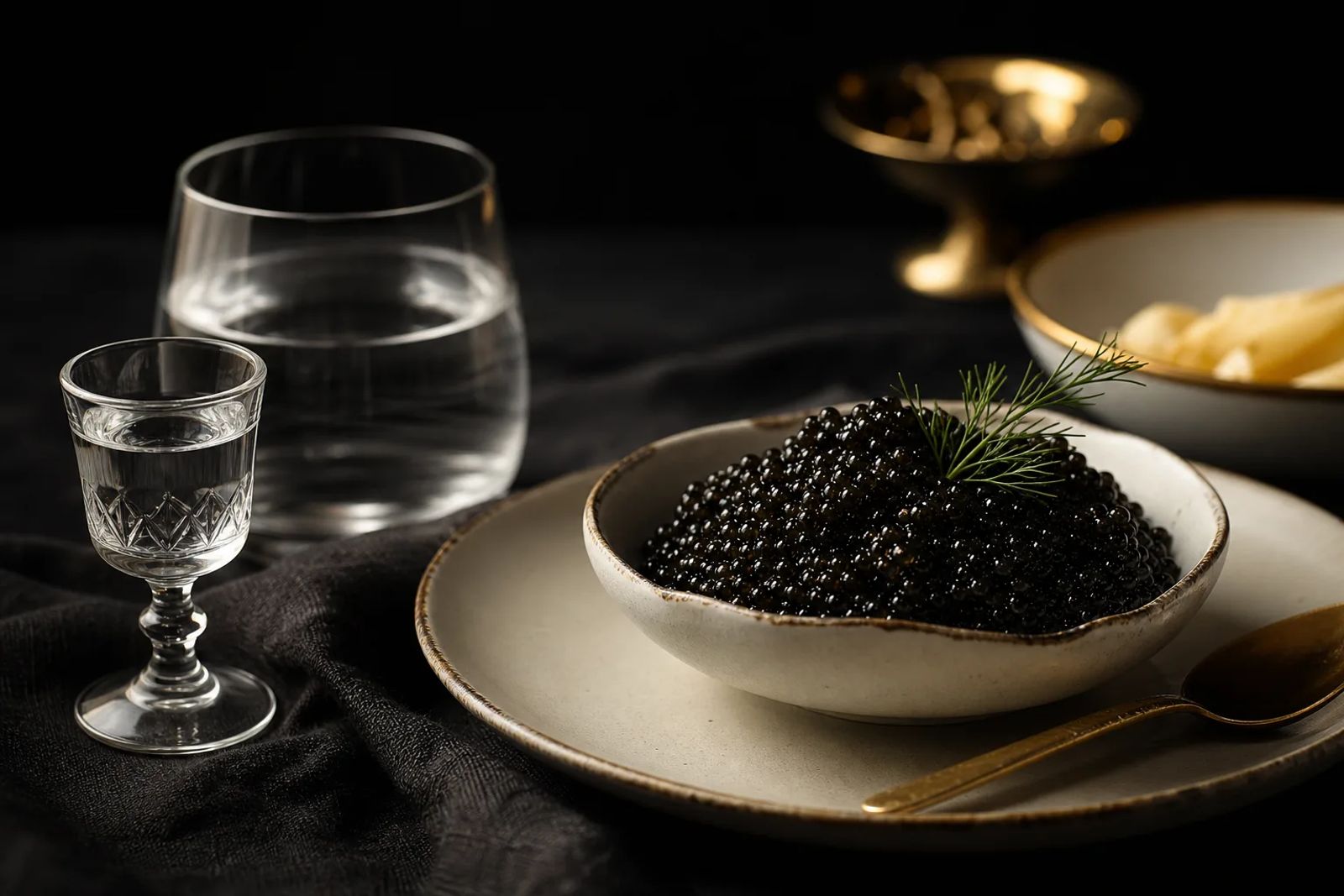
Vodka kept in the freezer becomes syrupy, says Williams Sonoma: a cold, quiet companion to a spoonful of caviar. Its appeal is restraint. The spirit should leave room for the roe, not take over the next mouthful.
Serve it well chilled in a small glass, with modest sips between bites. Start with plain vodka. Grain and potato can both work; the flavour in the bottle matters more than the crop on the label.
Why caviar and vodka work together
The best accompaniment lets you keep tasting the caviar. Williams Sonoma recommends ice-cold vodka for precisely that reason: its restrained flavour leaves the roe prominent rather than competing with it.
“Palate cleansing” describes the contrast you perceive between mouthfuls, rather than alcohol literally cleaning the mouth. The test is simple. After a sip, take another bite. Can you still follow the caviar's flavour, or has the spirit overwhelmed it?
For alternatives, explore drinks with caviar. For help deciding whether vodka belongs at the table at all, see must caviar be served with vodka?.
The table behind the tradition
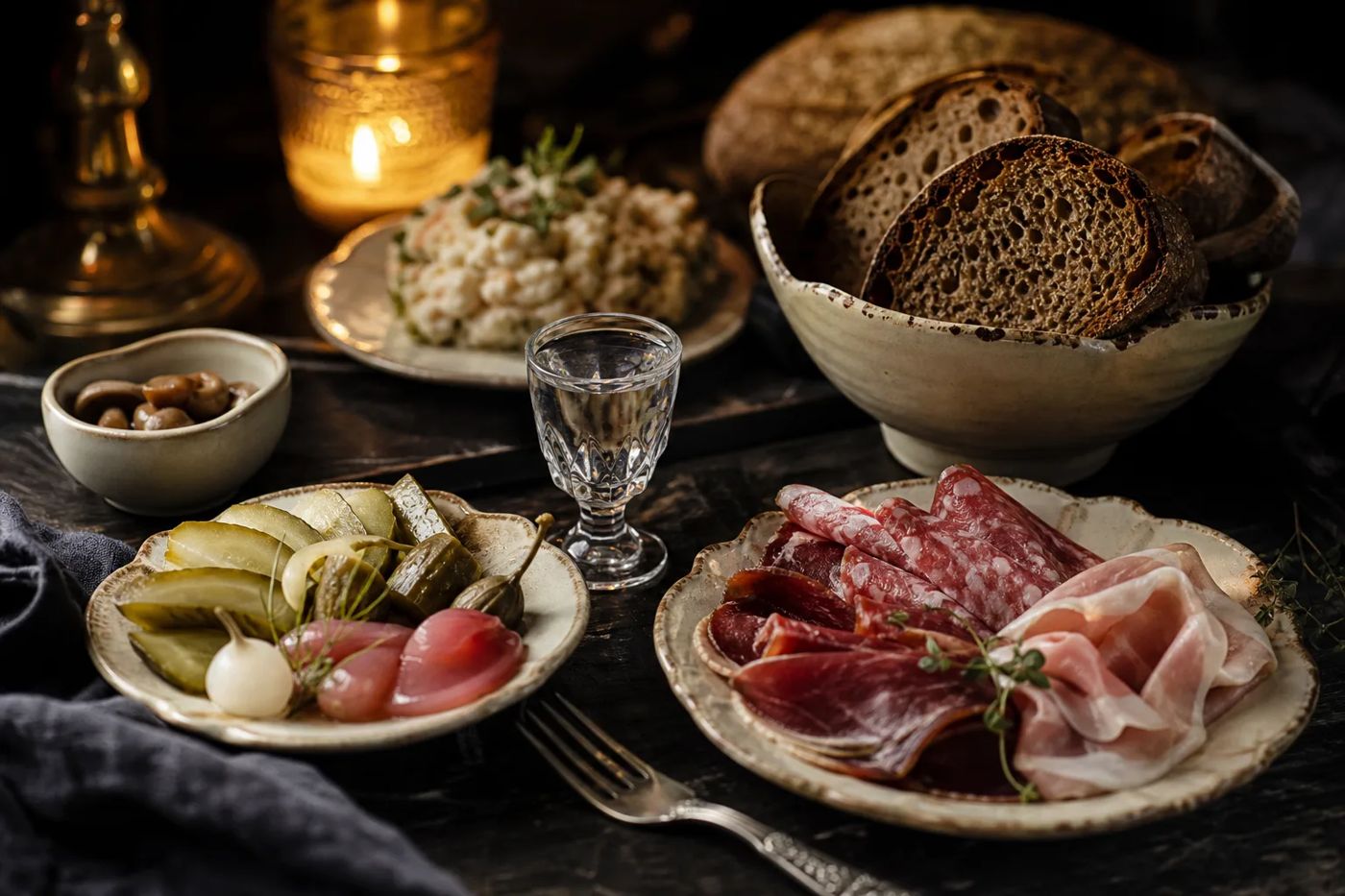
A toast, a small glass emptied together, then a bite from the table: historian Peter Pozefsky, writing for the College of Wooster, describes this rhythm of Russian zakuski. These small dishes arrive together, often alongside vodka: salted fish, pickles, bread and other savoury bites.
Saveur's account, drawing on food writer Anya von Bremzen, places caviar within that spread. Food and company are at the heart of the custom. That does not mean every Russian household serves caviar, or that guests should drink.
Poland has its own zakąski culture. Culture.pl, published by the Adam Mickiewicz Institute, describes small plates served with vodka, including herring, pickles and cured meats. The customs are related, but each has its own national setting. Explore Russian caviar traditions for the fuller cultural picture.
Choosing vodka: grain, potato or flavoured
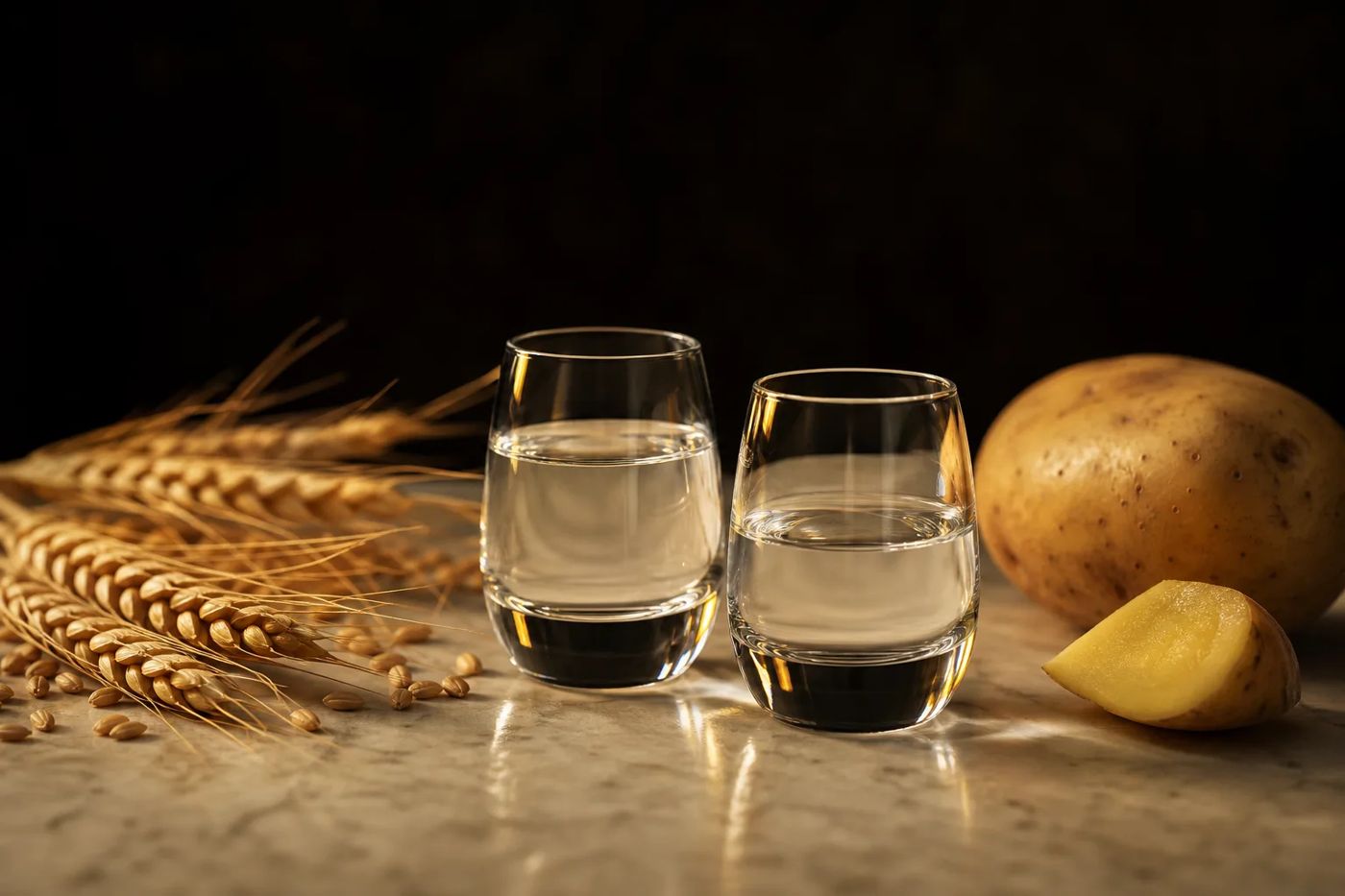
Choose a plain vodka that stays out of the caviar's way. A gentle wheat style is a useful starting point for restraint; a fuller potato vodka can also earn its place.
WSET educator Ed Wicks describes wheat vodka as potentially soft, with bread-dough aromas; rye as subtly spicy; and potato vodka as fuller-bodied, with earthy, root-like notes. These are style tendencies, not fixed characteristics of every bottle.
The raw material tells only part of the story. Wicks also identifies distillation, filtration and dilution water as influences on the finished spirit. Taste the vodka rather than ranking it by its ingredient.
For a first comparison, leave strong fruit, chilli and herbal flavours aside. They may compete with the roe, whereas the restrained flavour of ice-cold vodka is what Williams Sonoma recommends for keeping caviar prominent.
Flavoured vodka still has its place. Williams Sonoma reports that chef Daniel Boulud sometimes serves lemon-flavoured vodka with caviar, while von Bremzen's zakuski suggestions in Saveur include infusions. Try a restrained flavour separately before choosing it for the whole service.
How to serve caviar and vodka
Have the drink ready before opening the caviar. This straightforward home service keeps attention on the food; it need not reproduce a Russian ceremony. The portion below is a reference serving, not a reason to keep refilling glasses.
-
Plan the portions. Allow 15 g of caviar per person, the site's standard reference serving, or about half an ounce. Refrigerate it according to the producer's instructions until service. Measure the vodka: the height of liquid in a glass is a poor guide to the pour.
-
Chill ahead. Williams Sonoma suggests at least four hours or overnight. Wicks at WSET cites a cold-service range of -4 to 0 °C (25 to 32 °F). Use that as a serving preference, rather than a compulsory optimum.
-
Choose a small chilled glass. A plain shot glass or small stemmed glass is enough. Simon Difford describes small, cold glasses in Eastern European and Nordic service, and Russian stemmed glasses that keep hands off the bowl. Find the details in vodka and Champagne glassware.
-
Taste the caviar first. Take a small spoonful without vodka to establish its flavour. Follow with a modest sip, pause, then eat another bite. Compare the mouthfuls rather than swallowing caviar and vodka together.
-
Keep the table simple. Begin without mixers or garnishes, and provide water. Follow classic caviar service for the food arrangement and accompaniments. If the drink is too assertive, adding stronger flavours to the food is not the answer.
Freezer chilling and the pace of the table
The freezer is an option, not a requirement. Williams Sonoma describes freezer-kept vodka as syrupy, while Difford favours very cold service. Enjoying caviar does not require the coldest possible pour.
Treat lower-strength flavoured drinks and vodka cocktails separately. Their composition differs from plain vodka, so “vodka cannot freeze” is too broad to be useful storage advice. Follow the particular product's guidance.
The single swallow belongs to the communal toast Pozefsky describes, with food afterwards. For comparing caviar and vodka, sipping gives you more room to judge the pairing. Eat between sips and let guests set their own pace, including choosing no vodka.
A welcome should never depend on finishing a glass, accepting a refill or matching someone else's drinking. The custom describes a social rhythm, not a duty for the host to impose.
What vodka legally means
Vodka need not be made from potatoes. Nor does its legal name promise one universal flavour profile. These rules define the spirit and its naming, not the origin or labelling of the caviar.
| Jurisdiction | Definition and raw materials | Minimum bottled strength | Legal source | Checked |
|---|---|---|---|---|
| EU and Northern Ireland | Agricultural alcohol, fermented with yeast from potatoes, cereals or other agricultural materials; distilled to reduce raw-material and fermentation characteristics. | 37.5% ABV | Regulation (EU) 2019/787, Annex I, category 15 | November 2026 |
| Great Britain | Equivalent agricultural raw-material options under its separate assimilated regulation. | 37.5% ABV | Regulation (EC) No 110/2008, Annex II, category 15 | November 2026 |
| United States | Neutral spirits distilled from any suitable material at or above 95% ABV. | 40% ABV | 27 CFR 5.142 | November 2026 |
In the EU and Northern Ireland, vodka made from materials other than potatoes or cereals must identify them prominently in a “produced from” statement. Category 15 permits limited sweetening, up to 8 g per litre expressed as invert sugar, and restricts added flavourings. A drink with a predominant added flavour may qualify as flavoured vodka under that separate category's requirements.
WSET educator Ed Wicks describes wheat vodka as potentially soft, with bread-dough aromas; rye as subtly spicy; and potato vodka as fuller-bodied, with earthy, root-like notes.
Great Britain means England, Scotland and Wales, not the whole United Kingdom. DEFRA's guidance identifies Regulation (EC) No 110/2008 for GB category names and Regulation (EU) 2019/787 for Northern Ireland. The older GB text likewise requires identification of the raw materials when vodka is not made exclusively from potatoes or cereals.
In the US, 27 CFR 5.142 allows up to 2 g per litre of sugar and 1 g per litre of citric acid in vodka. Other flavouring or blending materials change its classification to flavoured vodka or a spirits specialty product, as appropriate.
The American 95% ABV distillation threshold describes production, not a suggested drinking strength. Distillation and bottling are different stages: the spirit is diluted before ordinary bottled vodka reaches the glass.
Amounts and alcohol guidance
For a small measured serving, pour 25 ml. At 40% ABV, that is one UK unit.
UK Chief Medical Officers advise not regularly exceeding 14 units weekly, spread over three or more days if drinking that much. The NHS advises no alcohol during pregnancy or when planning pregnancy.
Speak to a doctor, pharmacist or midwife about personal questions involving alcohol, medicines or pregnancy. These are UK recommendations; readers elsewhere should consult their own national guidance. A UK unit is not an international standard drink.
Where to go next
- Caviar and Champagne: compare a wine-led approach with plain-spirit service.
- Must Caviar Be Served with Vodka?: explore other drinks and an alcohol-free table before choosing the pairing.
Sources
-
Wine & Spirit Education Trust, Ed Wicks, Premium vodka and how to savour it, 2024 web article. Source.
-
Williams Sonoma, What to Drink with Caviar, undated web guide, retrieved November 2026 through its indexed text; direct opening returned a regional restriction. Source.
-
College of Wooster, Department of History, Peter Pozefsky, Russian Dacha, Vodka and Zakuski, 6 October 2010. Source.
-
Saveur, Benjamin Kemper, For a Garden Party to Remember, Bring out the Zakuski, updated 19 May 2021. Source.
-
Adam Mickiewicz Institute, Culture.pl, Zakąski Culture in Poland: What to Eat with Vodka?, Natalia Mętrak-Ruda, November 2020. Source.
-
Difford's Guide, Simon Difford, How to serve, vodka guide, undated retrieved web edition, checked November 2026. Source.
-
European Parliament and Council, EUR-Lex, Regulation (EU) 2019/787, 2019, Annex I, categories 15 and 31; official index retrieved during research. Source.
-
European Parliament and Council, legislation.gov.uk, Regulation (EC) No 110/2008, official consolidated edition dated 22 February 2016, Annex II, category 15. This historical edition was cross-checked against current DEFRA guidance for jurisdictional applicability. Source.
-
Department for Environment, Food & Rural Affairs, Labelling spirit drinks, updated 25 July 2025. Source.
-
US Department of the Treasury, Alcohol and Tobacco Tax and Trade Bureau, 27 CFR 5.142: Neutral spirits or alcohol, live eCFR edition retrieved November 2026. Source.
-
NHS, Alcohol units, live web guidance retrieved November 2026. Source.
-
NHS, Drinking alcohol while pregnant, live web guidance retrieved November 2026. Source.
Researched using spirits education, attributed culinary accounts, official regulatory material and national health guidance; serving preferences are distinguished from customs and binding definitions.
Last checked: November 2026