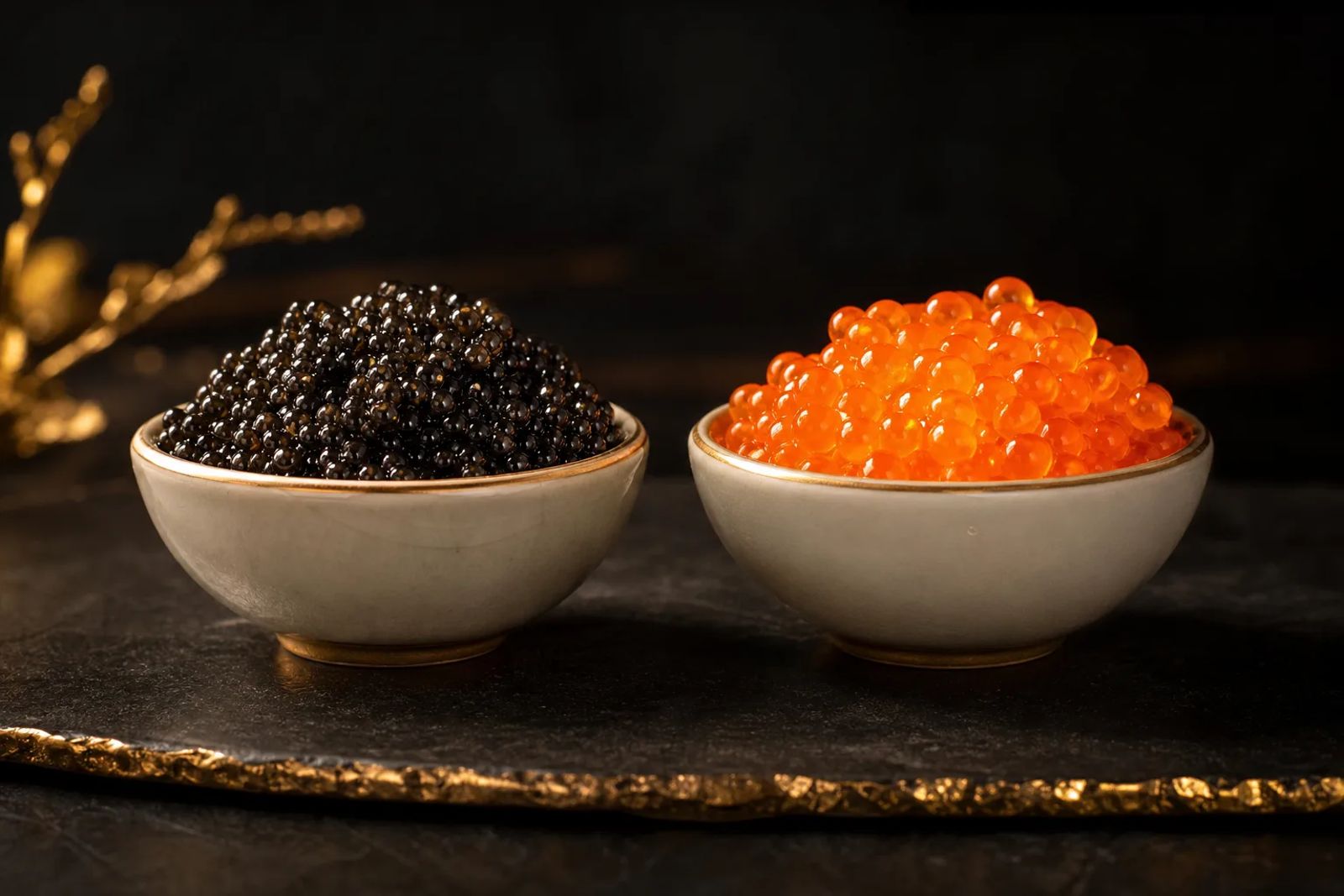
Processed, unfertilised paddlefish eggs count as caviar under international wildlife-trade rules, yet fall outside the international food standard for sturgeon caviar. Same eggs, different boundaries.
The everyday distinction is simpler: all caviar is roe, but not all roe is caviar. Roe means fish eggs; caviar is a prepared food made from them. The Codex food standard covers salted sturgeon roe. Food labels, customs paperwork and wildlife-trade rules each answer a different question.
- A customs category does not decide what may appear on a retail label.
- US FDA guidance calls for the fish name alongside “caviar”, in type of substantially the same size and prominence.
- Paddlefish falls inside the CITES wildlife definition, but outside the Codex sturgeon food standard.
Caviar vs roe: eggs and the food made from them
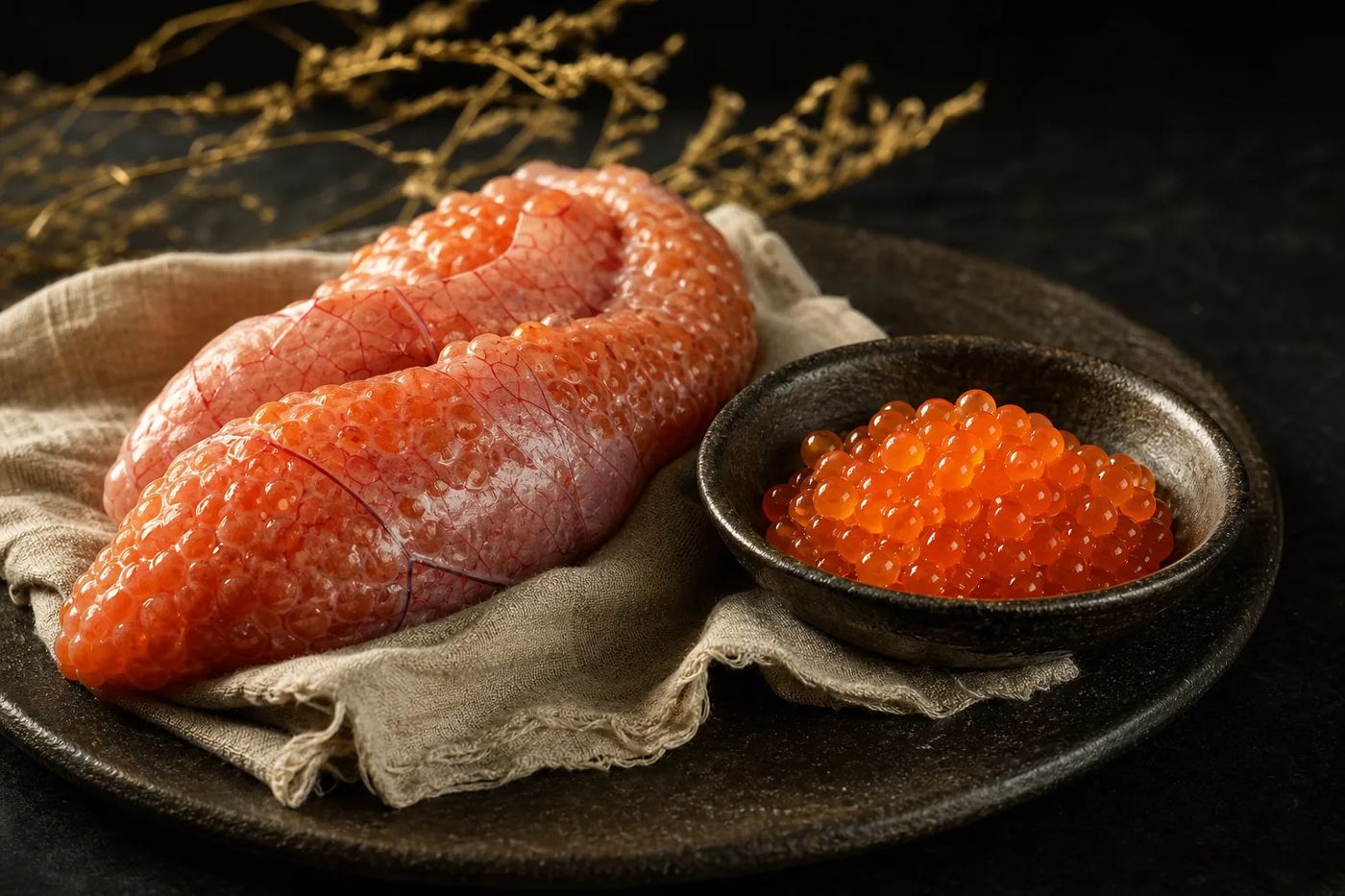
Roe begins in a female fish's ovaries, the organs where her eggs develop. The word covers eggs still bound together by ovarian tissue and eggs separated from it. It says nothing about whether they have been salted, cooked or otherwise prepared.
Milt is different. It is the male reproductive material containing sperm, not eggs, so it is not roe in the biological sense used here. Both come from fish reproductive organs, but they are not the same material.
Think of roe as the raw material and caviar as a named food made from it, rather than two unrelated ingredients. For a wider introduction to the fish and their eggs, see fish roe explained. The plain-English definition of caviar explores the narrower product.
Legal definitions: what each rule actually governs
“What legally counts as caviar?” has no single answer until the purpose of the rule is clear. A food standard describes a product. A tariff classifies traded goods. Consumer law governs what buyers are told, while wildlife law controls trade in protected animals and their products.
Codex: the sturgeon food standard
Codex CXS 291-2010, the Standard for Sturgeon Caviar, covers granular caviar from Acipenseridae, the family of true sturgeons. Its definition is direct: their eggs, treated with food-grade salt. Salmon, trout, lumpfish and paddlefish sit outside its scope.
Codex standards are voluntary international reference texts. They become legally binding where adopted into applicable legislation, rather than automatically carrying the force of national law. The standard therefore defines its product without settling every country's rules for naming food on a retail label.
EU: customs categories and consumer labels
EU customs draws a numbered line. The 2026 Combined Nomenclature places caviar under 1604 31 00 and caviar substitutes under 1604 32 00, both within heading 1604. Those codes classify goods crossing borders; they do not supply a complete vocabulary for packaging.
Consumer naming follows Regulation (EU) No 1169/2011. Article 17 requires the legal name, or, failing that, the customary name, or a descriptive name. Article 7 prohibits misleading information, including about a food's identity and composition.
A customs form saying “caviar substitute” therefore does not require those words to become the retail name. Equally, adding “salmon” or “lumpfish” does not automatically authorise “caviar” throughout the EU. The complete description must meet the applicable naming rules, including national legal names where relevant.
UK: Great Britain and Northern Ireland
The UK retained the distinction between customs classification and food naming after leaving the EU. The UK tariff separates caviar and caviar substitutes; the applicable food information rules govern the description consumers see. That general tariff distinction is separate from verification of the current Great Britain entries, which remains incomplete here.
The customs term “substitute” is no tasting verdict: it neither describes sensory qualities nor declares the food defective.
In Great Britain, the relevant version of Regulation 1169/2011 is assimilated law, amended for the domestic legal system. In Northern Ireland, EU food information law generally continues to apply.
For either market, make the fish clear. A customs description is no licence to use an ambiguous sales name.
US: name the fish clearly
The FDA's nonbinding guidance, CPG Sec. 540.150, says unqualified “caviar” should refer only to salted sturgeon roe. It says the term can properly apply to fish eggs prepared by a special method and accepts qualified names such as “salmon caviar” and “lumpfish caviar”, using the fish's common or usual name.
All words in the name should have substantially the same size and prominence; a large “caviar” beside a barely visible fish name does not follow the guidance. Artificial colour, where used, must be legally permitted and prominently declared. Ingredients should also be listed.
This guidance is not a statutory standard of identity. FDA's separate seafood naming guidance explains that unqualified “caviar” on non-sturgeon roe may nevertheless lead the agency to consider the food misbranded under federal law.
The rules side by side
| Source or jurisdiction | What counts as caviar | How other roe is named | Legal source | Checked |
|---|---|---|---|---|
| Codex | Salted eggs of Acipenseridae | Outside this product standard | CXS 291-2010 | November 2026 |
| EU | Customs: 1604 31 00; substitutes: 1604 32 00 | Legal, customary or descriptive name; not misleading | CN 2026; Regulation 1169/2011 | November 2026 |
| Great Britain | UK tariff separates caviar and substitutes; current GB distinction not verified | Applicable legal, customary or descriptive name; identify the fish clearly | Assimilated Regulation 1169/2011 | Naming and tariff checked November 2026; current tariff verification incomplete |
| Northern Ireland | Food naming, not customs classification, governs the consumer description | EU naming rules generally apply; identify the fish clearly | Regulation 1169/2011 | November 2026 |
| US FDA | Guidance: unqualified name should mean salted sturgeon roe | Fish name plus caviar, substantially equal size and prominence | CPG 540.150 | November 2026 |
| CITES and US wildlife | Processed sturgeon and paddlefish roe under current rules | Not a general consumer naming rule | Conf. 12.7 (Rev. CoP17); current 50 CFR 23.71 | November 2026 |
Why paddlefish counts under CITES
Paddlefish shares a wildlife-trade category with sturgeon because both belong to the order Acipenseriformes. CITES, the Convention on International Trade in Endangered Species of Wild Fauna and Flora, uses that broader biological group.
Resolution Conf. 12.7 (Rev. CoP17), Annex 1, defines caviar as the processed unfertilised eggs of Acipenseriformes, encompassing both sturgeons and paddlefishes. US wildlife regulation 50 CFR 23.71 likewise includes processed paddlefish roe in its international-trade controls.
The wildlife category determines whether trade falls within those controls; FDA's nonbinding food naming guidance addresses the separate question of the food's name. “Paddlefish caviar” identifies the fish.
The CITES resolution recommends a universal labelling system, with enforceable obligations set by each jurisdiction's implementing law. Those labels carry traceability information, rather than independently verifying the contents. Explore the boundary in paddlefish roe, or follow the wider framework in caviar labelling laws.
Does processing make roe into caviar?
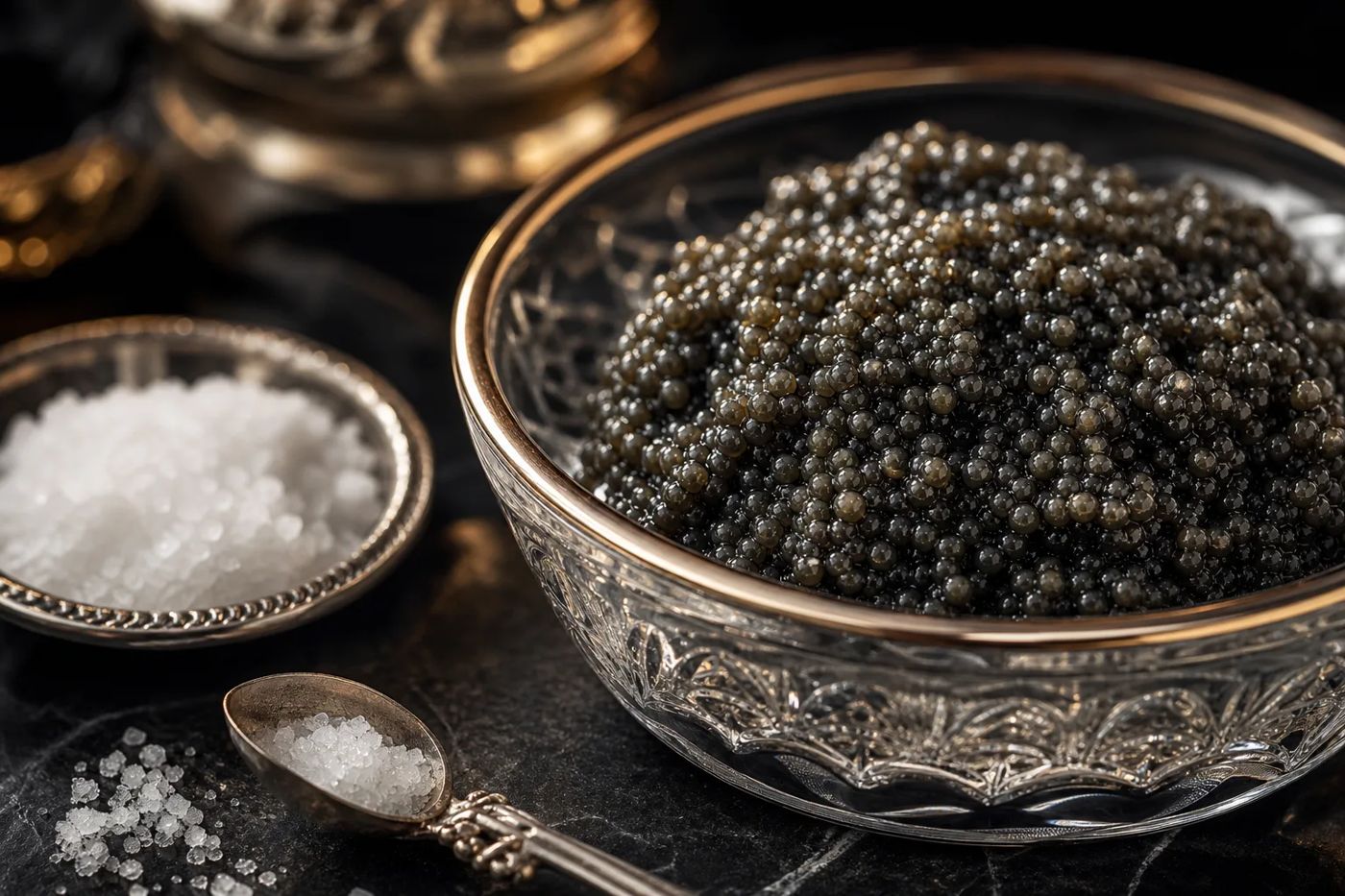
Salt matters, but so does the fish. Codex describes sturgeon eggs separated from ovarian tissue and treated with salt suitable for food. Lightly salting salmon or lumpfish eggs does not turn them into sturgeon caviar.
Other roe products follow their own routes from egg to finished food. FAO's technical account of lumpfish caviar describes heavy salting first, followed by desalting, blending with other ingredients and colouring. Pasteurisation is also common in that documented production system. This account does not imply that all non-sturgeon roe is coloured or heat-treated.
Pasteurisation does not draw the boundary either: Codex's practice code makes it optional for caviar. The heat treatment reduces microorganisms and can change texture. It is a separate process from salting and tells you nothing about which fish produced the eggs.
Read the fish name first
Read in this order: fish, preparation, legal context. “Salmon roe” identifies the source without claiming the sturgeon product; “salmon caviar” is a qualified name FDA guidance accepts for the salted preparation. In EU and UK markets, the wording must meet the applicable food naming requirements, not simply follow US policy.
Next, check the ingredients for salt, colours and flavourings, and look for any stated heat treatment. These details tell you more about what you will eat than “caviar” alone. The customs term “substitute” is no tasting verdict: it neither describes sensory qualities nor declares the food defective.
FAQ
Is fresh, unsalted sturgeon roe already caviar?
No. The Codex product definition requires treatment with food-grade salt. Before that preparation, the eggs are sturgeon roe.
“Sturgeon” tells you where the eggs came from. “Caviar” adds a claim about the finished food made from them. The fish alone is not enough to meet that product definition.
Does “caviar substitute” mean imitation eggs?
No. In the customs distinction discussed here, caviar substitutes are preparations made from actual fish eggs other than sturgeon roe. “Substitute” does not mean the eggs are artificial.
Plant-based beads raise a different identity question. Do not assume that every product marketed as a caviar alternative belongs in the same tariff category.
Where to go next
- Salmon Roe vs Sturgeon Caviar: a closer look at two distinct foods.
- Caviar Substitutes Compared: how the main alternatives differ as ingredients.
- What Is Caviar: the starting point for the wider subject.
Sources
-
FAO and WHO, Codex Alimentarius Commission. Standard for Sturgeon Caviar, CXS 291-2010, adopted 2010, last modified 2026. Sections 1, 2 and 7. The retrieved standard identifies 2024 as its latest amendment. Standard PDF.
-
FAO and WHO, Codex Alimentarius. All standards, live register, checked November 2026; and About Codex, undated online guidance. The register lists CXS 291-2010 as last modified in 2026; the guidance explains the voluntary status of Codex standards. Standards register and About Codex.
-
European Commission. Commission Implementing Regulation (EU) 2025/1926 amending Annex I to Council Regulation (EEC) No 2658/87, 2025, Combined Nomenclature applicable in 2026, Chapter 16, page 148. Official text.
-
European Parliament and Council. Regulation (EU) No 1169/2011 on the provision of food information to consumers, 2011, Articles 7 and 17. Official text. Court of Justice of the European Union, Monthly case-law digest: November 2024, discussion of food naming requirements under those articles. Court digest.
-
UK Government. Packaging and labelling, updated 4 September 2026. Distinguishes assimilated food information law in Great Britain from EU food information law in Northern Ireland. Guidance.
-
UK legislation. Regulation (EU) No 1169/2011, assimilated version, Article 17, live legislation record checked November 2026. Article 17.
-
UK Government. Interim Trade Partnership Agreement between the United Kingdom of Great Britain and Northern Ireland and the Republic of Ghana, 2021, tariff schedule entries 1604310000 and 1604320000. Historical corroboration of the UK tariff distinction, not a substitute for checking the current tariff. Agreement.
-
US Food and Drug Administration. CPG Sec. 540.150: Caviar, Use of Term, Labeling, October 1989, current guidance page retrieved November 2026. FDA guidance.
-
US Food and Drug Administration. CPG Sec. 540.750: Common or Usual Names for Seafood in Interstate Commerce, 2020. Section III discusses caviar naming and potential misbranding. FDA guidance PDF.
-
CITES. Resolution Conf. 12.7 (Rev. CoP17): Conservation of and trade in sturgeons and paddlefish, 2016 revision, especially paragraph 2(i) and Annex 1. The post-CoP20 resolutions index continues to list Rev. CoP17. Resolution and current resolutions index.
-
US Fish and Wildlife Service. 50 CFR 23.71: How can I trade internationally in sturgeon caviar?, live eCFR text, checked November 2026; paragraph (a) covers sturgeon and paddlefish (Acipenseriformes). Paragraph (a) supplies the wildlife definition; paragraph (b) covers labels. Federal record.
-
FAO, Johannesson, J. Lumpfish caviar: from vessel to consumer, FAO Fisheries Technical Paper No. 485, 2006. Abstract and production overview. Publication opening and overview.
-
FAO. Chapter 11: Technology for Fish Propagation, undated online edition. Fertilisation instructions distinguish eggs from milt supplied by males. Chapter.
The piece was researched by comparing official food standards, tariff schedules, legislation and authority guidance, with historical technical evidence used only for the processing example.
Last checked: November 2026