In 2006, China produced 0.7 tonnes of caviar. By 2018, that figure had reached 135 tonnes. Behind the leap were years of breeding and husbandry: female sturgeons growing to maturity before their roe could become caviar.
Chinese caviar is salted roe from sturgeons farmed in China. Commissioned CIC research cited in a 2026 stock exchange filing identifies China as the largest origin by 2025 sales, following decades of breeding, growing stocks of mature females and established export relationships.
China at a glance
| Field | Verified position |
|---|---|
| Species farmed | Male Amur and female Kaluga hybrid; Siberian and Amur sturgeons documented nationally. Kaluga Queen also reports Russian, Kaluga and beluga (Huso huso) stocks. 1,2 |
| Main farming regions | Hunan, Zhejiang, Yunnan and Sichuan, with production elsewhere. 1 |
| Country code | CN. 3,4 |
| CITES operations | Chinese entry totals, split by CITES P (processing) and R (repackaging) codes: not documented. Checked November 2026. 3 |
| Market access | China's CITES export framework; EU Regulation (EU) 2021/405; US Seafood HACCP and wildlife rules; Great Britain approved-country and establishment controls, plus CITES. Details below. 4,5,6,7,17 |
| PGI or PDO | No designation documented or asserted. 16 |
| Wild stocks | Native Amur, Kaluga and Chinese sturgeons were Critically Endangered in the 2022 IUCN update; Yangtze sturgeon was Extinct in the Wild. These species assessments do not establish recovery in Chinese rivers. Checked November 2026. 8 |
| Role | Roe origin, processor, exporter and domestic market. 1,9 |
China's industry extends far beyond one lake, and its caviar is no single, uniform product. Three details deserve separate attention: the identity of the fish, the country where its roe originated and the business that packed it.
How Chinese caviar production grew
Caviar takes years to build. FAO dates commercial sturgeon farming in China to the 1990s, followed by rapid expansion in the early twenty-first century. As more farmed females reached maturity, the supply of roe grew with them.
EUMOFA's analysis traces the foundations of that expansion. CITES trade records showed substantial imports of live sturgeon eggs from 2001, followed by stock building within China and declining egg imports from 2013. Establishing a processing business was only part of the task. First came a breeding population, then years of fish husbandry before caviar could follow.
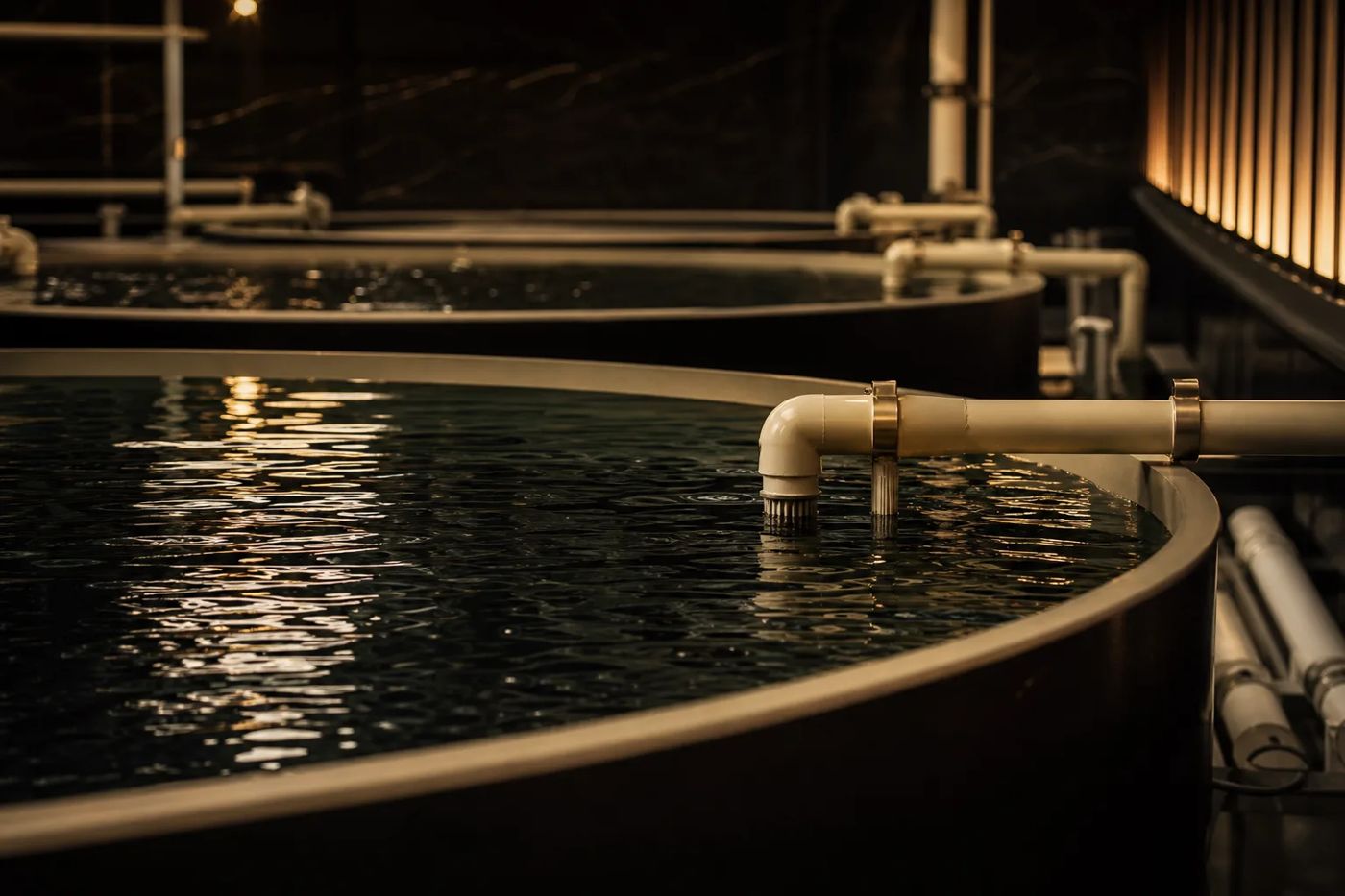
Sturgeon meat helped shape the farming system, too. This was never solely a caviar industry. EUMOFA records how environmental restrictions on inland cage farming pushed production towards land-based farms.
Qiandao Lake and the wider farming network
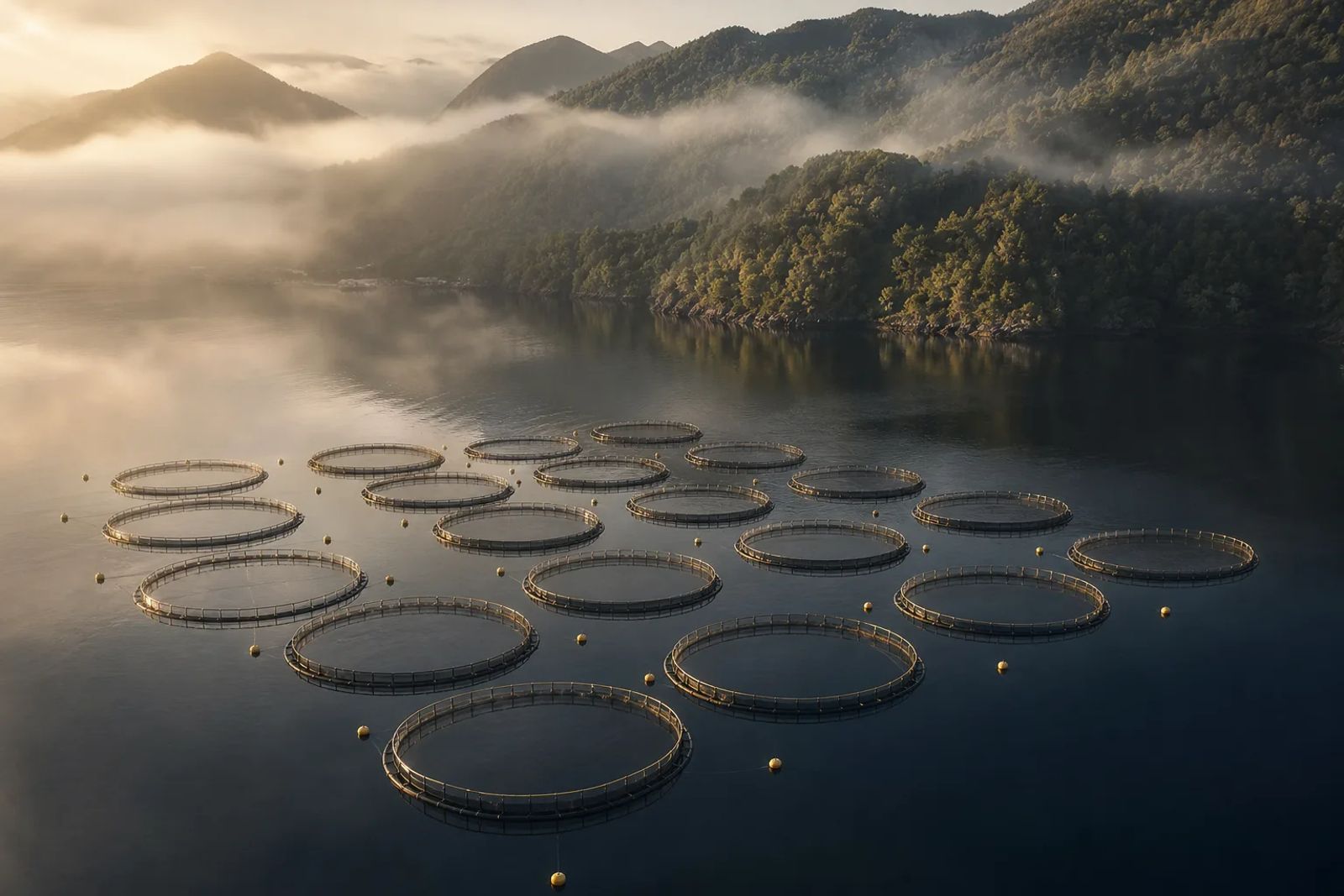
Qiandao Lake in Zhejiang is central to Kaluga Queen's international story. It is also one location within a wider farming network. The producer, Hangzhou Qiandaohu Xunlong Sci-tech Co., Ltd., lists lake cages there in its 2026 prospectus, alongside bases including Quzhou in Zhejiang, Yingjing in Sichuan and Qingshan Lake in Liaoning.
Where lake-level provenance matters, check the farm or production base. A company's association with Qiandao Lake does not mean every fish it handles grew there. A scenic photograph, company name or head-office address cannot establish the harvest location.
Which fish produce Chinese caviar?
Hybrids accounted for 80 percent of farmed sturgeons in FAO's 2019 national account, followed by Siberian sturgeon at 10 percent, and Amur sturgeon and others at 10 percent. Those proportions describe farmed fish, rather than finished caviar.
One important cross pairs a female Kaluga, Huso dauricus, with a male Amur sturgeon, Acipenser schrenckii, as documented in Liu and colleagues' mitochondrial-genome study. Siberian sturgeon is Acipenser baerii; Russian sturgeon is Acipenser gueldenstaedtii. The separate guide to the kaluga and amur hybrid explores the cross itself.
Scientific names and trade documents do not always move in step. On 22 October 2025, the IUCN Sturgeon Specialist Group rejected both 2025 genus proposals but backed dissolving Huso; Eschmeyer's Catalog lists Acipenser dauricus. The established names remain here so that species descriptions and trade records can be read together.
How large is China's caviar industry?
The clearest independent production figure in the verified record measures whole fish. EUMOFA, drawing on FAO statistics, estimated Chinese aquaculture sturgeon production at 104,280 tonnes in 2020: 84% of a world total of about 123,476 tonnes.
For caviar, the prospectus cites commissioned China Insights Consultancy (CIC) research estimating China's 2025 sales at 436.8 tonnes, or 54.0% of global sales totalling 808.4 tonnes. CIC also assigns Kaluga Queen 36.1% of global caviar sales by volume. These are commercial estimates rather than independently verified FAO caviar statistics.
A French brand or German repacker does not turn Chinese-origin roe into French-farmed or German-farmed caviar.
China leads the industry, but its precise share depends on the dataset: whole-fish production is distinct from caviar sales, and neither should be substituted for exports.
Where the caviar goes
Chinese caviar travels far beyond China. FAO recorded exports rising from 0.6 tonnes in 2006 to 93 tonnes in 2017. European trade offers a particularly clear view of the distribution network that carries it onwards.
EUMOFA's 2021 caviar study identifies China as the EU's dominant external supplier, with Germany and France the main importers of caviar from outside the EU. The company prospectus names the United States, Germany and France among its major overseas markets. Chinese roe can therefore reach the table through a European distributor.
The prospectus's customer list records producer-reported relationships, rather than independently verifying product quality or origin or assessing every Chinese farm.
Market access is not a quality grade
A caviar shipment must clear two distinct hurdles: wildlife-trade rules and food-import rules. CITES labelling and permission to enter a food market serve those purposes, rather than grading eating quality. Importers must also check the establishment and the individual consignment.
China: The Regulations on Administration of Import and Export of Endangered Wild Animals and Plants provide the national framework for CITES-controlled exports. Export documentation and the destination country's permission to admit the food are separate requirements.
EU: China appears in Annex IX of Implementing Regulation (EU) 2021/405 without a restriction remark, subject to approved establishment and consignment requirements. Aquaculture consignments also require the testing declaration under Decision 2002/994/EC. Relevant permits and caviar labelling remain compulsory under EU wildlife-trade rules; food authorisation does not replace them.
US: The Food and Drug Administration's Seafood HACCP regulation, 21 CFR Part 123, applies to foreign processors, alongside electronic entry screening and import alerts. HACCP means hazard analysis and critical control points: a system for identifying and controlling food safety hazards. Separately, USFWS requirements under 50 CFR 23.71 govern caviar labels and CITES documents.
Beluga, Huso huso, also falls under the Endangered Species Act special rule in 50 CFR 17.44(y). For Chinese aquaculture, exemption from the threatened species permit requirement depends on an individual facility qualifying under paragraph (y)(5). Farming the fish outside the Caspian and Black Sea states is not enough. A Chinese-origin beluga consignment therefore needs its own admissibility checks.
UK: Great Britain requires approved countries and establishments, notification and applicable border documentation under its fishery-product import regime. China-specific controls under assimilated Decision 2002/994/EC remain relevant, alongside separate CITES permits.
Direct commercial imports from China into Northern Ireland follow the applicable EU food import requirements: an authorised country and EU approved establishment, appropriate health certification, advance notification and entry through a designated inspection point. These market-access rules were checked in November 2026.
What Chinese origin tells a buyer
Origin is a traceability detail, not a flavour description. To judge a batch, begin with its identity, condition and handling rather than its nationality.
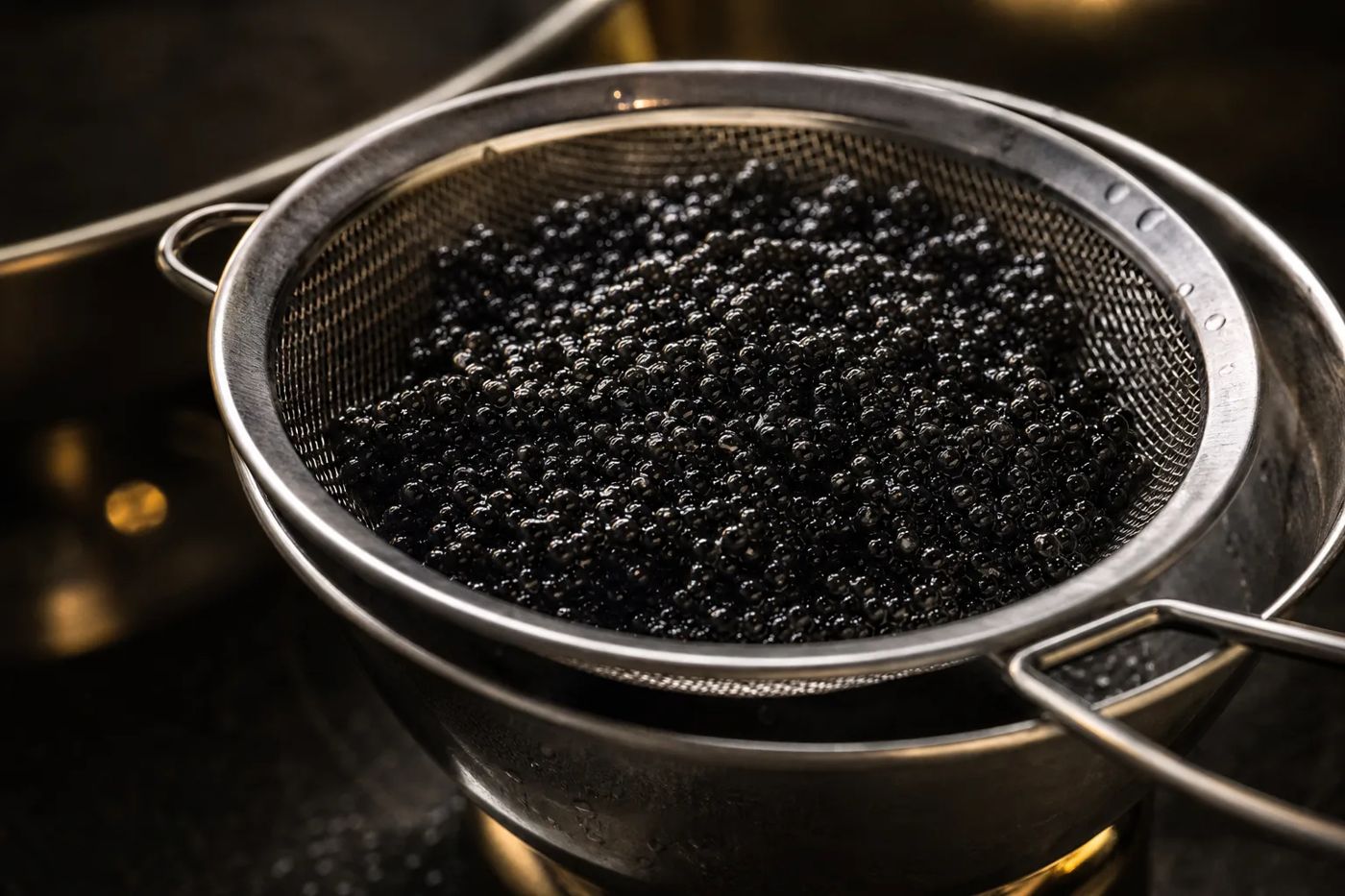
The international reference standard Codex CXS 291-2010 addresses sturgeon caviar's identity, processing and defects. Its criteria include objectionable odours, broken eggs and excessive fluid: concrete details that matter more than a broad national reputation. Codex itself is not automatically national law.
Ask for batch documentation identifying the species or hybrid, ingredients, harvest or repacking details and validated storage instructions. Compare like with like. Chinese roe encompasses different fish and batches, not one fixed style.
For safe handling, follow the producer's validated instructions. An attractive bead and a pleasant smell cannot establish safety, so neither should be a reason to improvise on storage or handling.
Reading Chinese origin on a label
Look for CN in the country-of-origin field of the non-reusable CITES label. That is the field that identifies Chinese origin.
On repacked caviar, the roe's origin remains separate from the repacking plant's details, which may carry another country code. A French brand or German repacker does not turn Chinese-origin roe into French-farmed or German-farmed caviar.
Read each field, rather than scanning the code for a familiar nationality. The label supplies a route for tracing the product; it does not independently verify what is inside the container. For a closer explanation, see country of origin and repacking and the CITES caviar code.
Not the wild Chinese sturgeon
“Chinese sturgeon” names a particular protected species: Acipenser sinensis. It is not a collective name for all sturgeons farmed in China.
The distinction matters. Commercial aquaculture's success does not establish the recovery of wild stocks. The conservation story belongs in Asia's endangered sturgeons, while the country's eating traditions are explored in caviar in China.
Outlook: capacity, water and traceability
FAO's 2019 assessment envisaged a move from quantity growth towards quality improvement. The producer's 2026 prospectus sets out expansion ambitions instead. Each records an institutional or commercial view at a particular date, rather than a promise of future output.
The next developments are best followed farm by farm: which sites expand, which species supply the roe, and how clearly exporters document its origin. Those are concrete questions with records to examine. They reveal more about Chinese caviar's direction than reputation alone.
Sources
-
FAO GLOBEFISH. Chinese sturgeon and caviar industry, 30 September 2019.
https://www.fao.org/in-action/globefish/news-events/news/news-detail/Chinese-sturgeon-and-caviar-industry/en. (fao.org) -
Hangzhou Qiandaohu Xunlong Sci-tech Co., Ltd. Global Offering Prospectus, 22 June 2026. Company disclosures and commissioned CIC research, distinguished from independent statistics.
https://www1.hkexnews.hk/listedco/listconews/sehk/2026/0622/2026062200025.pdf. (www1.hkexnews.hk) -
US Government, electronic Code of Federal Regulations. 50 CFR 23.71: How can I trade internationally in sturgeon caviar?, current text retrieved November 2026.
https://www.ecfr.gov/current/title-50/chapter-I/subchapter-B/part-23/subpart-E/section-23.71. (ecfr.gov) -
European Commission. Implementing Regulation (EU) 2021/405, consolidated 3 September 2026, read with Implementing Regulation (EU) 2026/2228, 14 October 2026.
https://eur-lex.europa.eu/legal-content/EN/TXT/PDF/?uri=CELEX:02021R0405-20260903
https://www.boe.es/doue/2026/2228/L00001-00016.pdf. (eur-lex.europa.eu) -
US Food and Drug Administration. Aquacultured Seafood, web guidance, retrieved November 2026.
https://www.fda.gov/food/seafood-guidance-documents-regulatory-information/aquacultured-seafood. (fda.gov) -
UK Government. Importing fishery products or bivalve molluscs, current web guidance; and Importing or moving fish to the UK, updated 15 August 2024.
https://www.gov.uk/government/publications/importing-fishery-products-or-bivalve-molluscs/importing-fishery-products-or-bivalve-molluscs
https://www.gov.uk/guidance/importing-or-moving-fish-to-the-uk. (gov.uk) -
APHA and Defra. Check if you need a CITES permit to import or export endangered species, updated 23 June 2026.
https://www.gov.uk/guidance/cites-imports-and-exports. (gov.uk) -
North American Sturgeon and Paddlefish Society, Molly Webb. IUCN Assessment 2022, 1 August 2022, reporting the IUCN Sturgeon Specialist Group update.
https://nasps-sturgeon.org/iucn-assessment-2022/. (nasps-sturgeon.org) -
European Commission, EUMOFA. The caviar market: production, trade and consumption in and outside the EU, 2021 update of the 2018 report.
https://op.europa.eu/en/publication-detail/-/publication/469aa399-c4e0-11eb-a925-01aa75ed71a1. (op.europa.eu) -
European Commission, EUMOFA. Sturgeon meat and other by-products of caviar: production, trade and consumption in and outside the EU, February 2023.
https://eumofa.eu/documents/20178/432372/Sturgeon%20meat.pdf. (eumofa.eu) -
Liu, X. and colleagues. The complete mitochondrial genome of the hybrid sturgeon of Huso dauricus (female) × Acipenser schrenckii (male), Mitochondrial DNA Part B, volume 2, issue 1, 2017.
https://pubmed.ncbi.nlm.nih.gov/33473698/. (pubmed.ncbi.nlm.nih.gov) -
World Sturgeon Conservation Society, Paolo Bronzi. IUCN SSG summary report, 13 November 2025.
https://www.wscs.info/iucn-ssg-summary-report/. (wscs.info) -
FAO and WHO, Codex Alimentarius Commission. Standard for Sturgeon Caviar, CXS 291-2010, amended 2026.
-
European Commission. Decision 2002/994/EC concerning certain protective measures with regard to products of animal origin imported from China, consolidated 13 June 2023.
https://eur-lex.europa.eu/legal-content/EN/TXT/PDF/?uri=CELEX:02002D0994-20230613. (eur-lex.europa.eu) -
UK Government. Foodstuffs with GB import restrictions, current web guidance, China section, retrieved November 2026.
https://www.gov.uk/government/publications/foodstuffs-with-gb-import-restrictions/foodstuffs-with-gb-import-restrictions. (gov.uk) -
European Commission, Directorate-General for Agriculture and Rural Development. Geographical indications registers, current register directory, retrieved November 2026. This identifies the verification resources, not a confirmed Chinese caviar designation.
https://agriculture.ec.europa.eu/farming/geographical-indications-and-quality-schemes/geographical-indications-registers_en. (agriculture.ec.europa.eu) -
China, State Council; National Forestry and Grassland Administration. Regulations on Administration of Import and Export of Endangered Wild Animals and Plants, amended 2 March 2019, official Chinese text.
https://www.forestry.gov.cn/main/3950/20170314/459876.html. (forestry.gov.cn) -
European Commission and TRAFFIC. EU Wildlife Trade Reference Guide, Annex XIV, updated October 2026.
https://environmental-data.ec.europa.eu/cites/reference-guide/chapters/annexes_xiv.html. (environmental-data.ec.europa.eu)
The piece was researched against the supplied China fact sheet, retrieved official regulations, FAO and EUMOFA publications, a peer-reviewed genetics paper and explicitly attributed company disclosures.
Last checked: November 2026