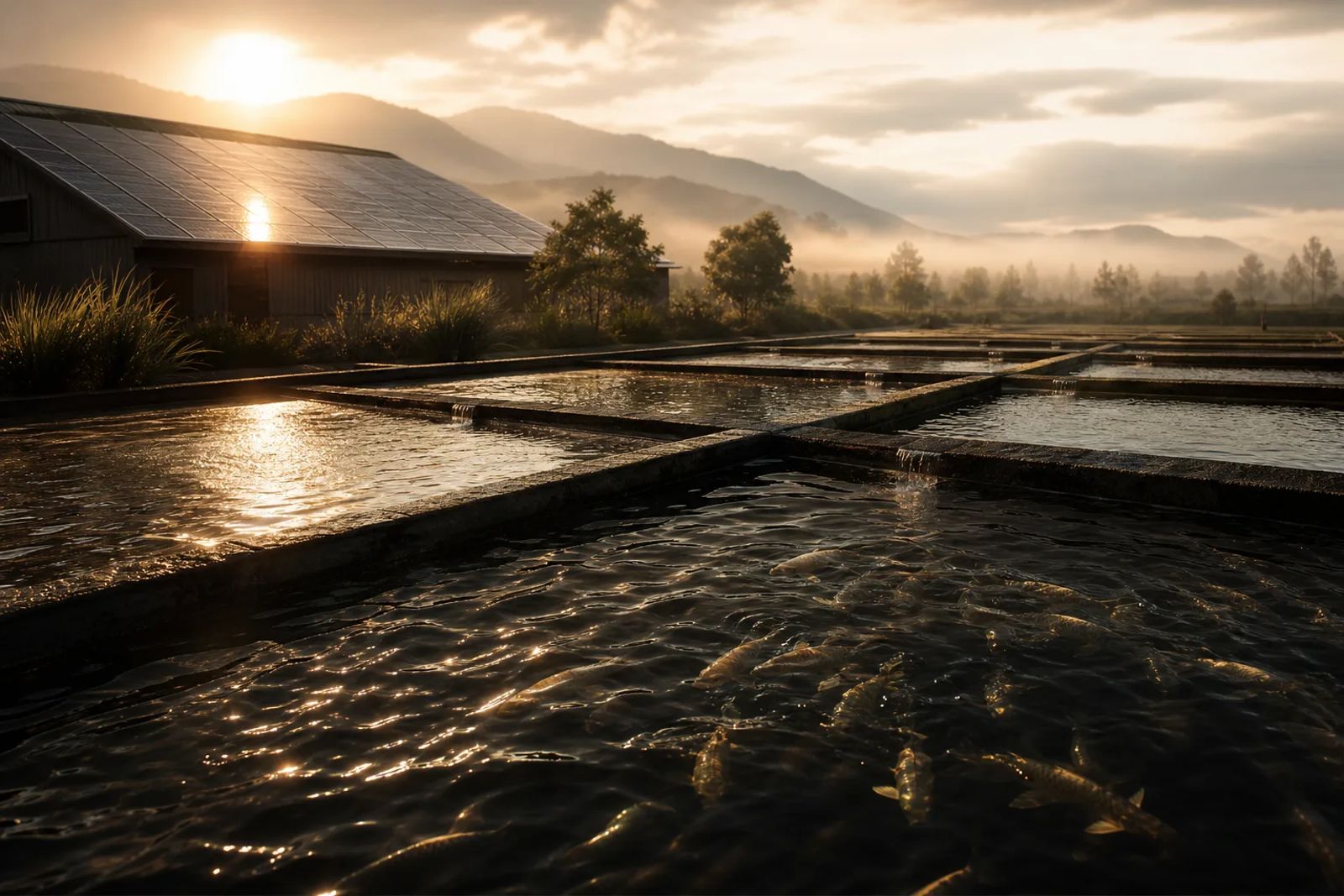
In a Danube sample, researchers identified five likely hybrids involving native and non-native sturgeon. Their 2009 study used mitochondrial and nuclear markers to reveal the contact between them. For caviar farming, the lesson reaches beyond the tank: what escapes matters too.
Farmed caviar can be produced more responsibly, but farming alone does not make it sustainable. The answer lies in water use and discharge, energy, feed, land use, carbon emissions, escapes, fish health and welfare, and whether the supply chain protects or exploits wild sturgeon.
In short
- A study of one Italian farm identified feed and energy as major contributors to its environmental footprint.
- Seafood Watch rated US farmed white sturgeon green overall in 2025, with weaker results for feed and escapes.
- EU organic rules cover freshwater sturgeon but restrict closed recirculation production facilities.
What does sustainable farmed caviar mean?
Sustainability means more than producing roe without catching wild adult sturgeon. FAO's 2025 Guidelines for Sustainable Aquaculture balance environmental protection, social well-being and economic viability. Keeping farmed fish alive is only part of that picture.
Certification schemes turn selected goals into auditable requirements. Seafood rating programmes assess fisheries or farming systems against their own criteria. Legal status and brand descriptions cannot replace an environmental assessment; an environmental rating, in turn, cannot settle every ethical question.
A credible claim rests on documented performance across these separate measures. One favourable feature cannot speak for the whole farm. The wider sustainability and ethics guide brings these questions together.
The environmental measures that matter
Start with the water: how much does the farm withdraw, and what does it send back? A large flow through tanks is different from water consumed, but abstraction can still affect a river, especially during low flows. Clean-looking tanks tell little about discharge. Look instead at nutrients, suspended solids and the condition of the receiving water.
Energy runs the pumps, oxygen supply, filtration and temperature control. Recirculating systems reuse water and can capture waste, but their electricity demand makes the power source important. Feed assessment needs equal scrutiny: fishmeal and fish oil content, where those ingredients come from, and how much feed the fish use across their production cycle.
Replacing marine ingredients with crops shifts the resource question rather than settling it. Crops need land and resources too. Land assessment should include feed production as well as the farm itself. Carbon accounting should state its boundaries and explain how impacts are divided between caviar and meat.
A 2025 life cycle assessment examined four sturgeon species at one Italian farm, counting resource use and emissions across a defined production chain. Feed and energy were major contributors; renewable electricity improved the modelled results. The environmental footprint of caviar farms sets out the detailed accounting.
How the farming systems compare
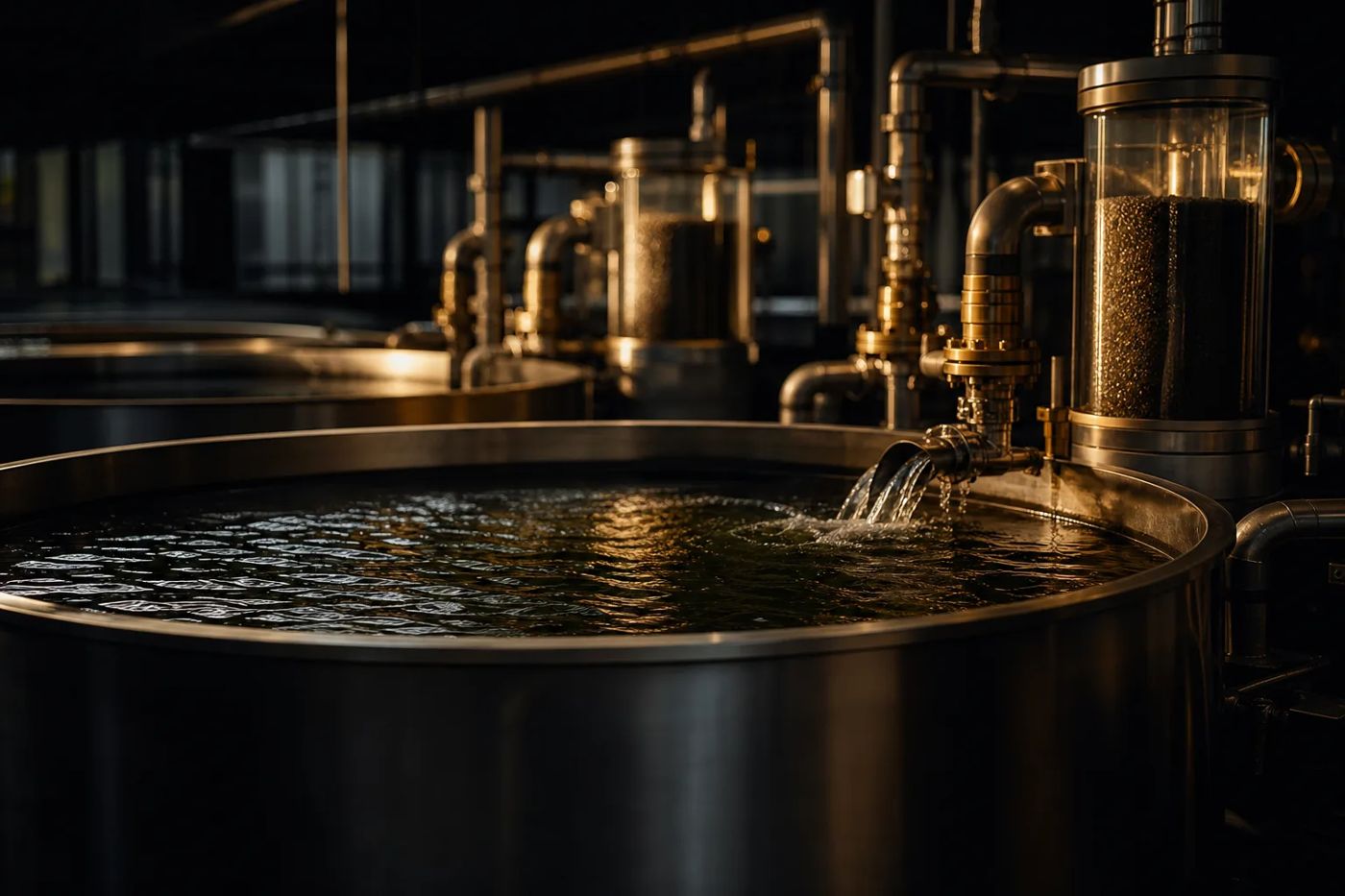
Recirculating aquaculture systems, usually shortened to RAS, filter and reuse water. Their strengths are control over water quality, waste collection and containment. Their demands are reliable equipment, electricity and emergency systems. Assess recirculating aquaculture systems as complete working farms, rather than judging them on water savings alone.
A fish surviving collection may still experience stress, injury or longer-term harm.
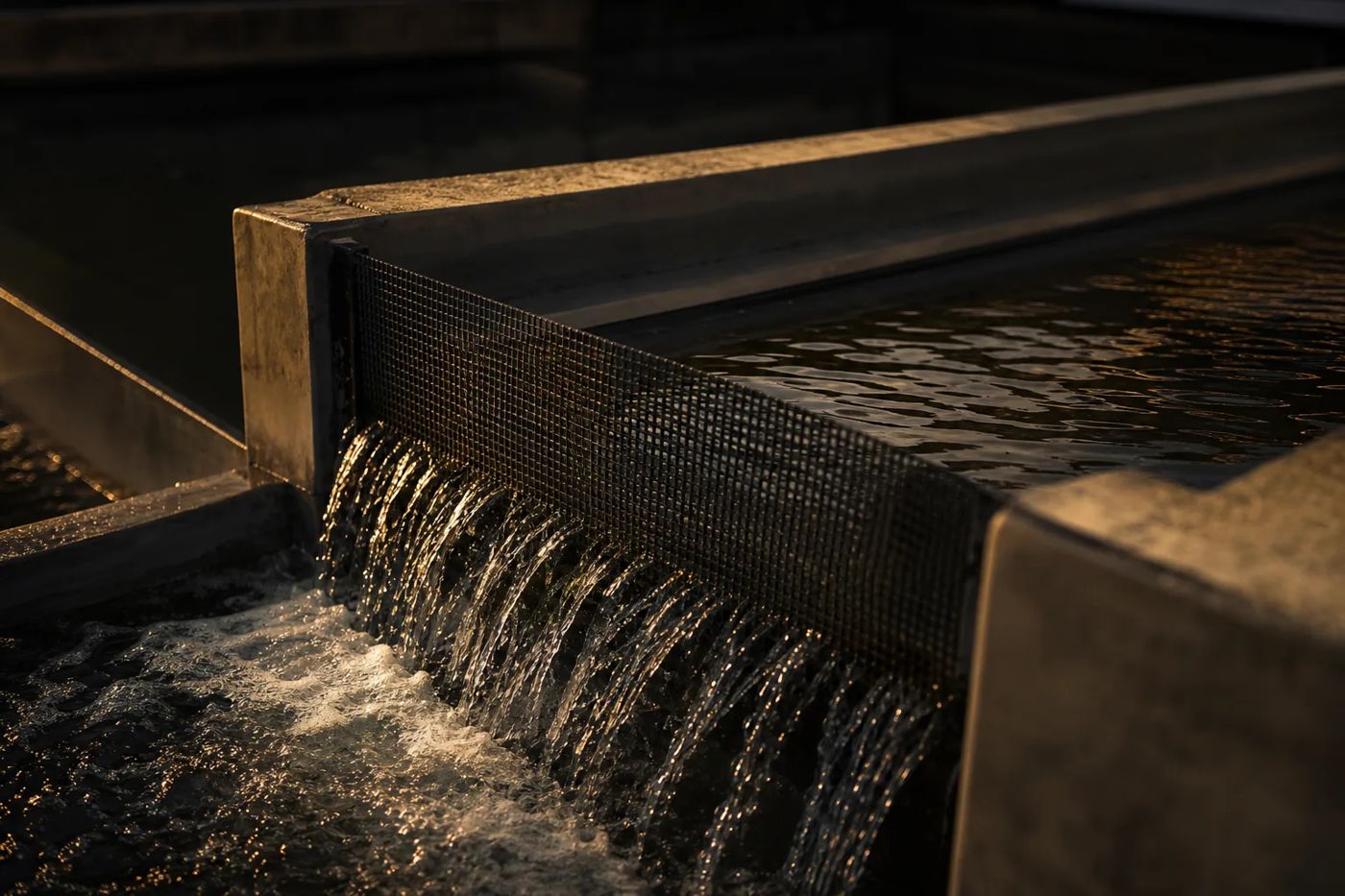
Flow-through raceways and tanks draw water in and release it downstream, putting abstraction and effluent treatment at the centre of assessment. Ponds need land and careful management of accumulated waste and drainage. Cages exchange water directly with a lake or reservoir, so the site strongly shapes waste dispersal and escape prevention. The system describes how a farm works; its measured performance reveals how well.
What the evidence shows
| Question | What the evidence shows | Source | Year |
|---|---|---|---|
| What drives the footprint? | Feed and energy were major contributors in a four-species Italian farm assessment. | Napolitano and colleagues | 2025 |
| Can escapes affect wild fish? | Mitochondrial and nuclear markers identified five likely native and non-native sturgeon hybrids in a Danube sample. | Ludwig and colleagues | 2009 |
| Does any rating cover sturgeon? | US farmed white sturgeon rated green overall; feed and escapes rated yellow. | Seafood Watch | 2025 |
| Is there recent RAS research? | A Swedish case study examined trade-offs through a literature review and six stakeholder interviews. | Djerf and colleagues | 2026 |
Escapes, disease and medicines
Escaped non-native sturgeon bring genetic risks as well as concerns about competition and disease. The Danube hybridisation finding makes that contact tangible. At farms connected to natural waters, ask about screens, flood protection, stock inventories and recorded escapes. Do not assume hybrids cannot reproduce.
Good disease management begins before treatment: healthy incoming stock, biosecurity, suitable water quality and monitoring. Request mortality and treatment records, including antibiotics. An 'antibiotic-free' statement says little about the rest of a fish's health. Seafood Watch's 2025 US assessment reported minimal antibiotic and chemical use across the industry it assessed.
Medicines also have firm legal boundaries. In the EU, Regulation (EU) 2019/6 restricts preventive antimicrobial use and prohibits routine use or use to compensate for poor husbandry. Great Britain has its own Veterinary Medicines Regulations 2013, amended in 2024; Northern Ireland follows the applicable EU veterinary medicines framework. In the US, FDA drug approvals specify species, uses and withdrawal periods. Approval for another fish does not automatically authorise a medicine for sturgeon.
Environmental law provides a baseline
The farm's location determines its environmental oversight, not the brand's address. These examples concern farm regulation rather than permission to import or sell caviar. They were checked in November 2026.
- EU: farms, including those in Italy and France, operate under EU environmental requirements and national licensing arrangements. The Water Framework Directive is central to freshwater protection.
- UK: controls are administered separately. In England, wastewater discharges may need an Environment Agency permit. In Northern Ireland, DAERA identifies abstraction licensing requirements for fish farms and hatcheries.
- US: point-source pollutant discharges to waters of the United States require NPDES permit coverage. Qualifying concentrated aquatic animal production facilities also face additional effluent guidelines.
- China: Article 57 of the Water Pollution Prevention and Control Law requires aquaculture operators to protect waters and manage stocking density, feed and medicines to prevent pollution.
Fish welfare is a separate test
A smaller environmental footprint does not settle how a fish is treated. Water quality, stocking conditions, handling and harvest matter throughout a sturgeon's life.
A 2026 European producer interview study found differing views on slaughter and non-lethal egg collection. A fish surviving collection may still experience stress, injury or longer-term harm. Some people reject killing fish for roe; others accept farming when welfare is protected. Environmental efficiency cannot resolve that disagreement. Sturgeon welfare, slaughter and no-kill examines the procedures and evidence.
Does farming help wild sturgeon?
Farming can produce caviar without taking the producing female from the wild. Demonstrating recovery of wild populations is a different task from demonstrating that substitution.
Conservation researchers also warn about escapes from captivity and laundering: passing illegally caught wild fish or roe off as farmed. A CITES label supplies traceability information; it does not independently verify the contents or environmental performance. Can caviar be sustainable? explores conservation and trade, while is farmed caviar worse than wild? examines the comparison.
What certifications and ratings can tell you
Sturgeon has verified coverage in ratings and organic rules. The useful question is exactly what that coverage includes.
Seafood Watch's October 2025 assessment rated US farmed white sturgeon green overall, with feed and escapes identified as weaker areas. That recommendation covers the assessed origin and farming methods. It is not a certificate for every tin.
EU organic aquaculture law explicitly covers freshwater sturgeon. Regulation (EU) 2018/848 provides the framework, with sturgeon production rules in Implementing Regulation (EU) 2020/464, Annex II, Part V. Closed recirculation grow-out facilities are excluded from EU organic production, except for hatcheries, nurseries and organic feed-organism production. Organic and RAS therefore mean different things.
Northern Ireland follows the EU organic framework. Great Britain uses separate assimilated organic legislation, including Regulations 834/2007 and 889/2008 as amended. For any logo, check the scheme's records for the named operator, certified site, species, activities and certificate validity. Caviar certifications and seafood ratings explains what these different assurances cover.
How to judge a claim on a tin
First, identify who is making the claim: farmer, brand, certifier or rating body. Then establish its scope. Does it cover the farm, processing operation, supply chain or this particular product? A retailer's nationality does not tell you where the roe was farmed.
Ask for evidence rather than another adjective:
- Farm location and farming system.
- Recent discharge monitoring.
- Electricity consumption and source.
- Feed composition.
- Treatment records and escape history.
For a carbon claim, request the calculation year, production boundaries and independent review. For certification, ask which standard and version were audited.
A precise, dated answer about one measure is worth more than an unqualified 'eco-friendly' claim. Match the evidence to the promised benefit. Renewable electricity addresses energy supply; it does not, by itself, answer questions about feed, discharge, welfare or protection of wild fish.
Where the evidence stops
The evidence supports judging individual farms, not awarding the whole industry a sustainability verdict. Comparable, independently verified farm data remain inconsistently available across origins and systems. Interviews capture reported practices rather than measured outcomes.
Study boundaries matter too. Different electricity supplies, feed formulas and local ecosystems can change the result, so findings from one producer cannot simply be transferred to another. The strongest answer remains a specific one: a named farm, clear measures and documented performance.
Sources
- FAO. Guidelines for Sustainable Aquaculture, first edition, 2025, official publication overview. FAO overview.
- European Commission, EU Aquaculture Assistance Mechanism. Guidelines for Sustainable Aquaculture, March 2025, description of the FAO framework. Commission summary.
- Napolitano, R. and colleagues. Environmental performance of sturgeon caviar production. An LCA study on luxury food. Aquaculture, volume 608, article 742766, 2025. Publisher record and abstract.
- Djerf, H. and colleagues; Swedish University of Agricultural Sciences. Is sustainable caviar production possible? A Swedish case study. Aquaculture Reports, volume 49, article 103747, 2026. University publication record.
- Ludwig, A. and colleagues. First evidence of hybridization between endangered sterlets (Acipenser ruthenus) and exotic Siberian sturgeons (Acipenser baerii) in the Danube River. Biological Invasions, 2009, first published online in 2008. Research article.
- Monterey Bay Aquarium Seafood Watch. New and updated ratings and recommendations, October 2025; white sturgeon assessment released 6 October 2025. Assessment summary.
- Frontiers in Fish Science. Animal welfare in European caviar production: insights from sturgeon producers, research article, 2026. Full article.
- US Geological Survey. Genetic evidence for the presence of wild-caught sturgeons in commercial markets in Georgia, publication record and research abstract, 25 April 2024. USGS record.
- European Commission. Commission staff working document on regulatory and administrative frameworks for aquaculture, 2024, section 3.2.4 on environmental and water protection requirements. Working document.
- Environment Agency. Discharges to surface water and groundwater: environmental permits, live guidance, edition retrieved November 2026. England discharge guidance.
- DAERA. Abstraction and impoundment licensing requirements, live guidance, edition retrieved November 2026. Northern Ireland abstraction guidance.
- US Environmental Protection Agency. Aquaculture NPDES Permitting, live guidance, edition retrieved November 2026; references 40 CFR 122.24 and Part 451. EPA permitting guidance.
- China, Ministry of Ecology and Environment. Water Pollution Prevention and Control Law of the People's Republic of China, amended 2017, official English text published 2020, Article 57. Official law text.
- European Union. Regulation (EU) 2019/6 on veterinary medicinal products, 2019, Article 107. EUR-Lex text.
- Veterinary Medicines Directorate. Veterinary medicines legislation, live guidance, edition retrieved November 2026, separate GB and NI legislative frameworks. VMD guidance.
- US Food and Drug Administration. Letter to Aquaculture Professionals, current web edition retrieved November 2026. FDA letter.
- European Union. Regulation (EU) 2018/848 on organic production and labelling of organic products, 2018, Article 15 and Annex II, Part III. EUR-Lex record.
- European Commission. Implementing Regulation (EU) 2020/464, 2020, Annex II, Part V, “Sturgeon in fresh water”. EUR-Lex record.
- European Commission, Directorate-General for Agriculture and Rural Development. Organic rules, frequently asked questions, web edition retrieved November 2026, explanation of closed recirculation under Annex II, Part III, point 3.1.5.1. Official questions and answers.
- UK Government. Explanatory memorandum on Regulation (EU) 2018/848 and Northern Ireland impacts, 17 March 2022, paragraphs 23 to 26. Government memorandum.
- UK legislation service. Council Regulation (EC) No 834/2007 on organic production and labelling of organic products, 2007, amended UK text retrieved November 2026. UK legislation.
- US Fish and Wildlife Service; eCFR. 50 CFR 23.71: How can I trade internationally in sturgeon caviar?, current electronic edition retrieved November 2026. Federal regulation.
This article was researched through primary research papers, official environmental and veterinary guidance, organic legislation and the rating body's own assessment, without relying on producer marketing claims.
Last checked: November 2026