Welcome to Caviar Science, where you can explore what gives caviar its flavour and texture, how it is preserved, and how its origin is tested. Follow the guides to find evidence behind the experience and a clear place to start.
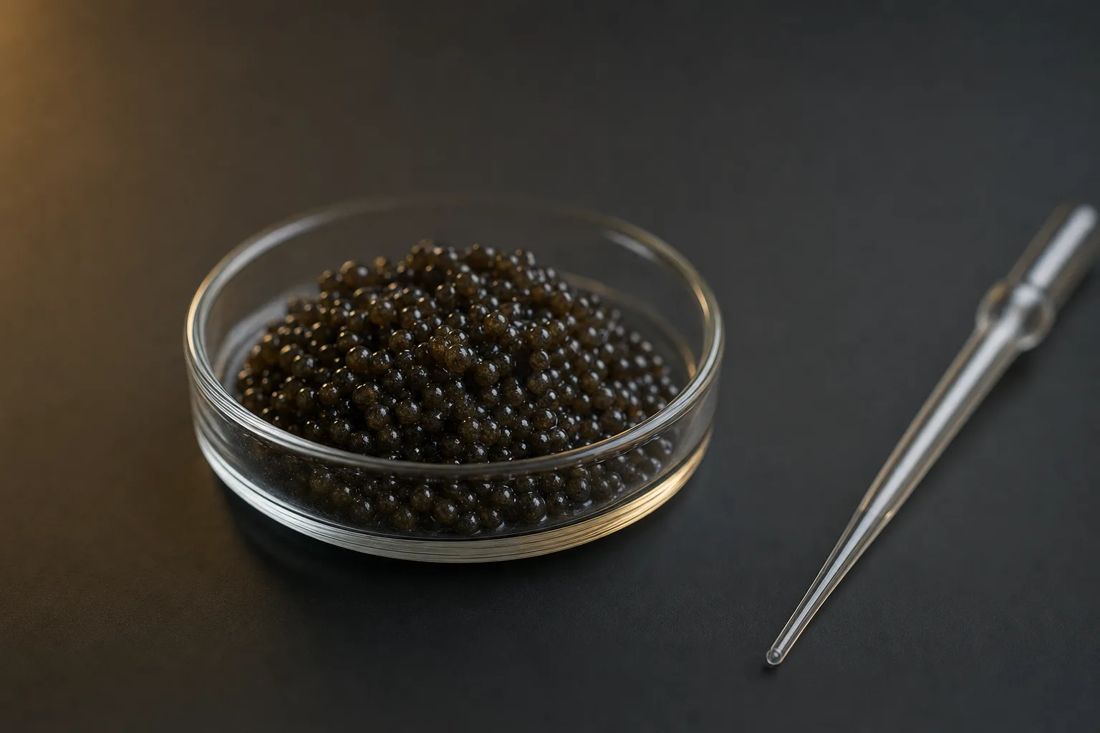
Discover how salt, savoury compounds, aromas and the way caviar’s fat behaves in your mouth combine to shape its flavour.
Read →Why Caviar Pops: The Egg MembraneDiscover why caviar pops and how egg structure, development and salting shape the sensation.
Read →How Salt Preserves CaviarDiscover how salt slows microbial growth in caviar, why salt measurements differ and why refrigeration still matters.
Read →Caviar Aroma CompoundsDiscover which aroma compounds studies have found in caviar, how they are identified and why a chemical profile is not a tasting note.
Read →Lipids, Oxidation and Caviar Shelf LifeDiscover how caviar fats change during storage, what affects oxidation and how producers assess its impact on flavour and shelf life.
Read →Caviar MicrobiologyDiscover which microorganisms studies have found in caviar, where contamination can enter and how processing and storage help control the risks.
Read →Caviar Forensics: DNA, Isotopes and Origin TestingDiscover how DNA and chemical tests investigate caviar’s species, ancestry and production history, and what they can and cannot reveal about its origin.
Read →Key Caviar Research and StudiesExplore research on caviar conservation, authenticity and composition, and discover what the findings can and cannot tell you.
Read →